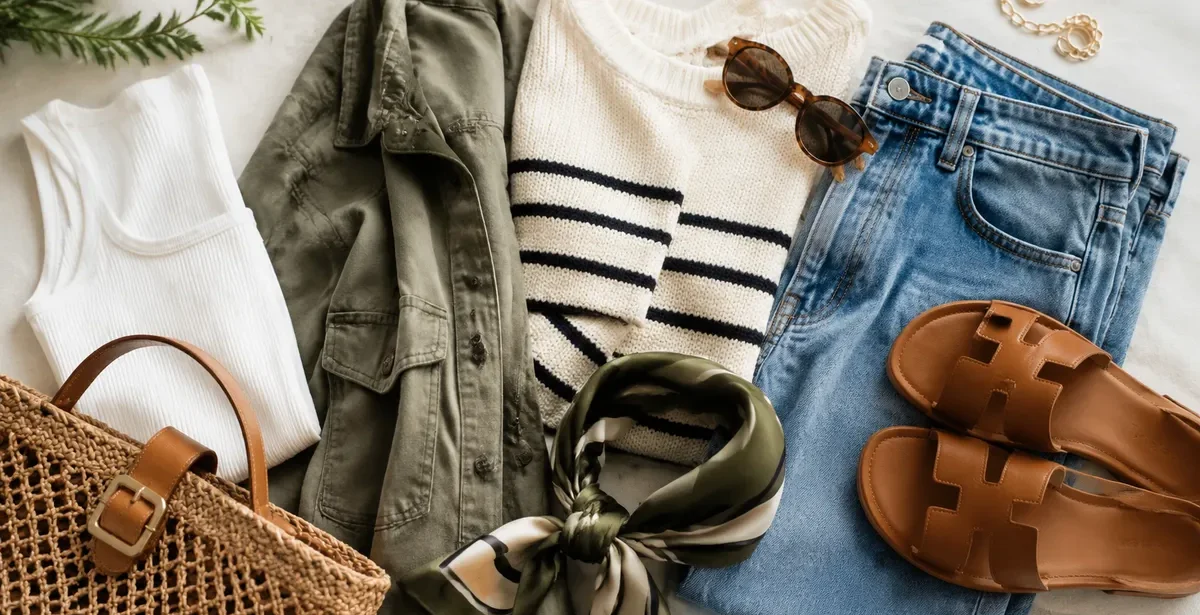
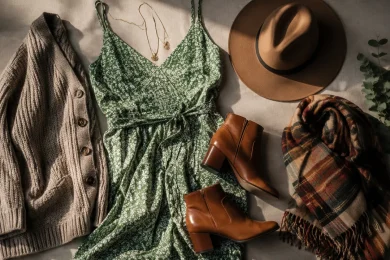
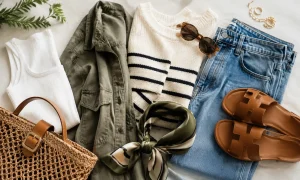
Transitional weather breaks a simple premise: that getting dressed is a problem with a solution. In winter, the problem is cold. In summer, it is heat. Both yield a clear answer. But the shoulder seasons, those weeks in March and October when a morning might sit at eight degrees and an afternoon climbs to nineteen, present a genuinely different kind of problem. The temperature is not stable. The conditions are not consistent. And clothing, almost without exception, is designed for stable, consistent conditions.


That gap is where all the frustration lives.

A Problem of Layers, Not Garments

The standard advice for dressing in transitional weather is to layer. It is correct advice, and it is also nearly useless as stated. Layering is obvious. What is less obvious is that layering requires every individual garment to do something specific, and most wardrobes have not been built with that logic in mind. A thick jumper worn under a coat is not a layer. It is two garments fighting over the same job.

A real layering system has three distinct roles: a base that manages moisture against the skin, a mid-layer that provides warmth, and an outer layer that blocks wind and rain. Most people skip the base entirely, wear a mid-layer that is far too heavy, and then own an outer layer that is either a full winter coat or a thin mac that does almost nothing. The in-between garment, a structured mid-layer with actual insulation that can stand alone on a mild day, is the one piece most wardrobes are missing.

This is not a trivial gap. A quilted gilet, a wool-blend jacket, a structured fleece with a proper collar: these are garments that function across a temperature range because they can be worn open or closed, indoors or out, over a thin shirt or under a rain shell. They are also the least glamorous items in any wardrobe, which is probably why people keep reaching for the heavy winter coat two weeks too late and the light summer jacket two weeks too early instead.

How Fabric Choices Become a Liability

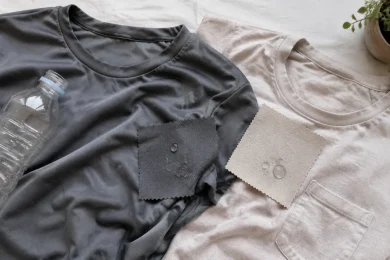
Cotton is the dominant fabric in most people’s everyday wardrobes, and it is a poor choice for transitional weather in a specific and underappreciated way. Cotton absorbs moisture readily and releases it slowly. On a cold morning commute, a cotton shirt worn close to the skin will hold sweat from the walk to the bus and stay damp, making the wearer feel colder once they stop moving than the air temperature would suggest. The temperature has not changed. The fabric has made it worse.

Merino wool and synthetic base layers manage moisture differently. Theywick it away from the skin and disperse it so it evaporates faster. On a day that shifts from chilly to mild and back again, this matters considerably. A walk, a heated office, a lunch outside, another commute: a merino t-shirt handles all of that without becoming a liability. A standard cotton crew does not.

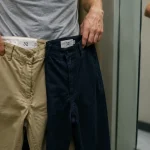
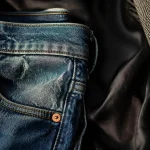
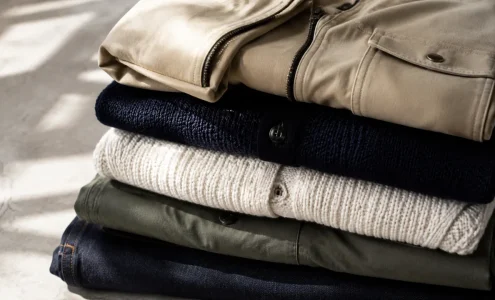
Denim is the other common offender. It is heavy, slow to dry, offers no meaningful insulation when wet, and stiffens in genuine cold. On a mild but unpredictable October day, a pair of heavier chinos in a brushed cotton or a slim wool-blend trouser will keep a person more consistently comfortable than jeans, while looking just as considered. The problem is that most people have not made this distinction consciously. Jeans are the default, and defaults resist scrutiny.

The Coat Trap

October is the month that reveals how few people own a coat that suits the actual temperature. What most wardrobes contain is a gradient from summer jackets to heavy winter coats, with a gap where a mid-weight outer layer should be. The result is a binary choice between being too warm and being under-dressed, made anew every single morning for about six weeks.

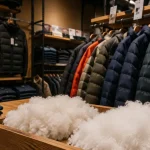
A mid-weight outer layer, by which this means something genuinely different from both a shirt jacket and a padded parka, is a water-resistant wool overcoat, a softshell with some insulation, a short waxed jacket with a collar that actually closes. Something that handles wind and a light shower and temperatures anywhere from seven to fifteen degrees without demanding another layer beneath it. These garments exist, they are not especially expensive at the mid-market, and yet they remain the most common gap in an otherwise complete wardrobe.

Part of the reason is seasonal retail. Shops present autumn collections in August, when nobody wants to think about cold, then pivot to full winter stock by mid-October, when the mid-weight options have already sold through or been marked down and moved out. The window for buying the right coat for October weather is, perversely, late August or early September. Most people do not think about it until they are already cold, and by then the choice has narrowed.

The Indoor Problem No One Names

Transitional weather is harder than it looks partly because the temperature outside is only one of the variables. In autumn particularly, building heating is erratic. Some offices and shops have switched on the radiators in full for the first cold snap and have not adjusted since. Others have not turned the heating on at all. A person might be mildly cold at the bus stop, overheating in the office by nine, comfortable walking to lunch, and genuinely chilly on the return journey. Four different thermal states across a single day, none of which a single fixed outfit can resolve.

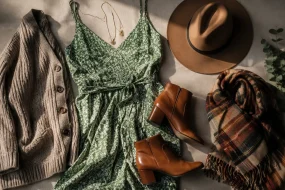
This is where cardigans and zip-neck jumpers earn their value in a way that crewnecks and hoodies do not. A garment that can be opened or removed without disappearing entirely into a bag is worth several degrees of flexibility. A zip-neck wool jumper worn over a thin merino base and under a light jacket covers an enormous range of conditions with no additional bulk. A heavy crew-neck worn under an unlined mac does not.

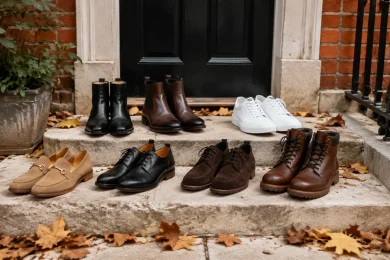
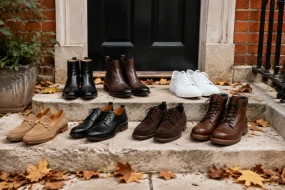
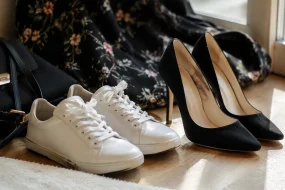
The logic extends to footwear, which is where transitional weather causes its most specific suffering. Chelsea boots in dark leather handle a light shower, a cold pavement, and an overheated restaurant with equal composure. White leather trainers handle none of those things, and canvas ones are made actively worse by rain. The person who has delayed switching from summer footwear to something sturdier is the person standing on wet pavement in September wondering why their feet are cold and their mood has collapsed accordingly.

What Colour Actually Does in Shoulder-Season Dressing

There is a practical case for the colour choices that naturally cluster around autumn dressing, and it has nothing to do with seasonal palettes or fashion cycles. Darker, richer mid-tones, the olives, navies, burgundies, and tans that tend to populate transitional wardrobes, are more forgiving of the minor staining and weathering that comes from genuinely mixed conditions. A sudden downpour, a wet bench, the hem of a coat catching road spray: these leave marks that are far more visible on pale or bright garments.

This sounds minor. But getting dressed for uncertain weather already carries cognitive overhead: checking a forecast that will likely be wrong by midday, deciding whether to carry an umbrella on a dry morning, choosing between being too warm on the walk in and too cold on the walk back. Removing the variable of “will this get ruined if the weather turns” is a small but genuine reduction in that overhead. Dressing for transitional weather well is largely an exercise in removing small failure modes, one at a time.

The Specific Failure of the Scarf-and-T-Shirt Compromise

There is a particular outfit that appears throughout British cities every spring and autumn: a t-shirt, sometimes with a thin overshirt, paired with a scarf wound fairly thick around the neck. It is an attempt to address cold at the extremities while keeping the core relatively light. It does not work especially well, because the neck is not where most body heat is lost in mild conditions, and a thick scarf worn over inadequate mid-layers leaves the arms and torso underdressed while creating a strange thermal concentration around the collarbone.

The instinct is not wrong, accessories do extend the range of an outfit, but the execution reveals the underlying wardrobe gap. If the mid-layers were right, the scarf would be a genuine addition rather than a patch. A thin knit scarf worn over a properly weighted jacket is elegant. A chunky scarf worn over a thin cotton shirt is a sign that the jacket is missing.

Getting dressed for transitional weather is harder than getting dressed for clear seasonal conditions because it demands that each item in the outfit does a specific and distinct job, and that all those jobs fit together across a range of possible temperatures rather than one fixed state. Most wardrobes have not been assembled with that logic. Most wardrobes have been assembled by accumulation, by what was on sale in August, by whatever survived last winter, by the jumper that was a gift and the jacket that was an impulse. That accumulation works well enough in July and January. In October and March, it shows every seam.

Leave a Reply

Your email address will not be published. Required fields are marked *