


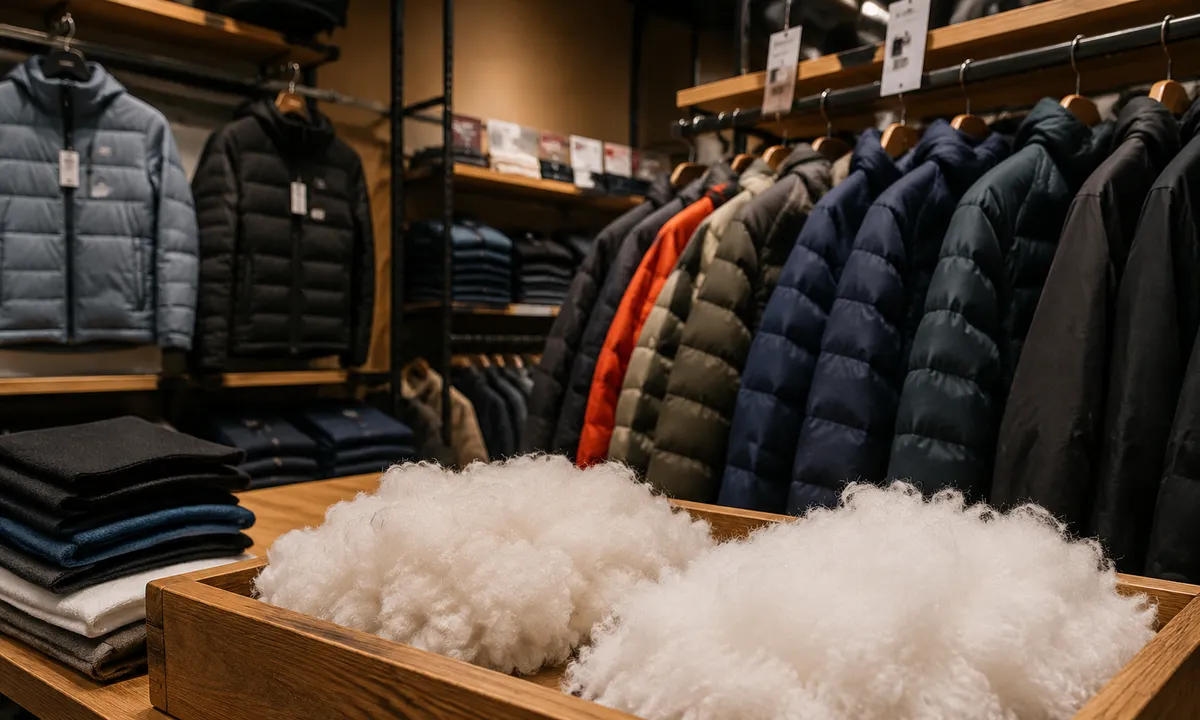
Wet cold is a different problem than dry cold. Dry cold is uncomfortable, but it is forgiving: a down parka that loses a few degrees of warmth in the mountains is still useful. Wet cold is relentless. Once insulation loses its loft and stops trapping air, warmth disappears, and it does not come back until the material dries. That single fact is what drives every useful decision about coat insulation in climates where rain, sleet, and damp fog are the normal conditions and not the occasional exception.
Why Down Falls Short in Rain
Down is the best dry-cold insulation on the market. The fill power figure, which measures how much space anounce of down occupies, tells you how efficiently the material traps air. A 900-fill-power cluster is a remarkable thing: airy, light, compressible to the size of a softball. But down clusters are hygroscopic. They absorb moisture from rain, sweat, and ambient humidity, and once they are wet, they mat together and collapse. A soaked down jacket can lose most of its warmth in minutes and take hours to dry, even in a warm space.
Hydrophobic down, treated with a durable water repellent (DWR) finish at the fiber level, delays that collapse. It handles light drizzle, brief rain, and sweat vapor better than untreated down. But it has real limits. A sustained downpour, or a full day in heavy coastal fog, eventually saturates even treated clusters. For genuinely wet climates, hydrophobic down is a meaningful upgrade over standard down, but it is still a compromise, not a solution.
Synthetic Insulation and the Wet-Weather Advantage
Synthetic insulations are made from polyester fibers, typically structured to mimic down clusters but without down’s water sensitivity. The key property is this: synthetic fibers do not absorb liquid water. When a synthetic-filled jacket gets wet, the fibers stay essentially the same shape, which means they continue to trap air and retain a meaningful portion of their warmth. The jacket feelsclammy and heavy, but it still works. That distinction matters enormously when temperatures are sitting around 35 to 45 degrees Fahrenheit and the rain is coming sideways off the Pacific.
Synthetic insulations also dry faster than down, which is a practical advantage that is easy to underestimate. If a hiker spends a day in steady rain, gets to camp, hangs the jacket near a heat source or their sleeping bag, a synthetic jacket can be functional again within an hour or two. A saturated down jacket needs considerably longer.
The trade-off is real: synthetic insulation is heavier and bulkier per unit of warmth than high-quality down, and it compresses less cleanly. A synthetic jacket that matches the warmth of a 700-fill-power down jacket will weigh more and pack into a larger stuff sack. Over time, repeated compression also causes synthetic fibers to break down faster than down clusters, shortening the useful life of the garment. For everyday wet-climate use, those trade-offs are entirely worth accepting. For an ultralight thru-hike through a dry mountain range, they would matter more.
How Insulation Type Interacts with Shell Fabric
The outer shell of an insulated jacket is not a passive wrapper. It is the first line of defense, and it shapes how much work the insulation inside has to do. A tight-woven nylon or polyester shell treated with DWR will shed rain for a while before it wets out, meaning before the fabric stops beading water and starts absorbing it. Once the shell wets out, moisture migrates toward the insulation regardless of what that insulation is.
A waterproof-breathable shell, the kind that uses a membrane like Gore-Tex or a comparable proprietary laminate, stops liquid water from penetrating even after the DWR degrades. Insulated jackets built with these membranes, often called hardshells with insulation or insulated waterproof jackets, give synthetic fill the best possible environment: the insulation rarely encounters liquid water at all, because the shell is blocking it. In consistently wet climates, a jacket in this category, synthetic insulation under a genuine waterproof membrane, is the most reliable single-garment option for cold rain.
Soft-shell jackets with insulation, or jackets with a DWR-only outer fabric, are better suited to variable or damp conditions rather than sustained heavy rain. They are worth owning. They are flexible, breathable, and comfortable in the shoulder seasons. They are a poor choice for standing in the rain for six hours on a December fishing trip in coastal Oregon.
The Layering Variable Most People Ignore
Body moisture is a separate problem from rain, and in many wet-climate situations it is the more dangerous one. When a person exerts themselves in a waterproof jacket, sweat vapor has nowhere to go. It condenses against the insulation, adding internal moisture that degrades warmth from the inside. This is the mechanism behind the common experience of feeling cold and sweaty inside a jacket that looked perfect on paper.
Breathability ratings on technical fabrics measure how much water vapor can pass through the membrane in 24 hours, and the differences between products are large. A jacket with a high-breathability laminate allows much more vapor transfer than a basic waterproof coating. For active use, such as hiking, skiing, or working outdoors, that breathability gap translates directly into how comfortable and how warm a person stays over a long day. Synthetic insulation handles moderate internal moisture better than down, which is another mark in its favor for active use in wet climates.
A midlayer of synthetic insulation under a separate, highly breathable waterproof shell often outperforms a single insulated hardshell for people who are moving and generating a lot of heat. The system allows the insulating layer to be removed when climbing and added when stopped. That flexibility is harder to replicate in a single all-in-one jacket, no matter how technically sophisticated it is.
Specific Situations Where Down Still Makes Sense
Wet and cold climates are not one thing. Seattle in January involves persistent gray drizzle and temperatures in the low 40s. Interior British Columbia in February involves deep cold with snowfall that stays powder because the temperatures rarely rise above freezing. Those are different problems.
In genuinely cold and snowy conditions, where precipitation is frozen and temperatures stay well below 32 degrees Fahrenheit, down performs well because powder snow brushes off rather than wetting insulation through. A well-sealed down parka in those conditions stays drier inside than the same jacket worn in a Pacific coastal rainstorm. High-loft down at minus-20 Fahrenheit in the Canadian interior is delivering warmth that no synthetic insulation at comparable weight can quite match.
Hydrophobic down fills the gap between these two scenarios usefully. For someone whose wet-cold climate means cool rainy days that occasionally dip to snowy nights, a well-constructed jacket with hydrophobic down under a waterproof-breathable shell covers most of the range without the weight penalty of synthetic. The key is the shell doing its job so the down never has to confront sustained liquid water.
Reading Insulation Weight as a Practical Guide
Jacket listings typically state the fill weight in grams: 60g, 100g, 140g, 200g. Higher numbers mean more insulation and more warmth, regardless of type. For wet and cold rather than just cold, a synthetic jacket with 120 to 180 grams of insulation covers the range from cool fall rain to hard winter sleet for most active use. Sedentary use, such as standing on a boat deck or watching an outdoor event, calls for more fill weight because there is no body heat to supplement the insulation.
Some brands now offer zoned insulation, placing thicker synthetic fill across the core and thinner or more breathable panels under the arms. The goal is to concentrate warmth where the body loses it fastest and allow vapor escape where the body generates the most heat. In practice, these designs work reasonably well for moderately active use in rain, and they represent the current best effort to resolve the breathability-versus-warmth tension in a single garment.
For anyone buying a single coat to live in through a wet Pacific Northwest winter or a damp North Atlantic climate, the honest answer is synthetic insulation,120 grams or more, under a waterproof-breathable shell with taped seams and a DWR treatment that gets refreshed every season or two with a low-heat dryer cycle. That combination keeps performing on the third straight rainy day when every other option has quietly given up.