


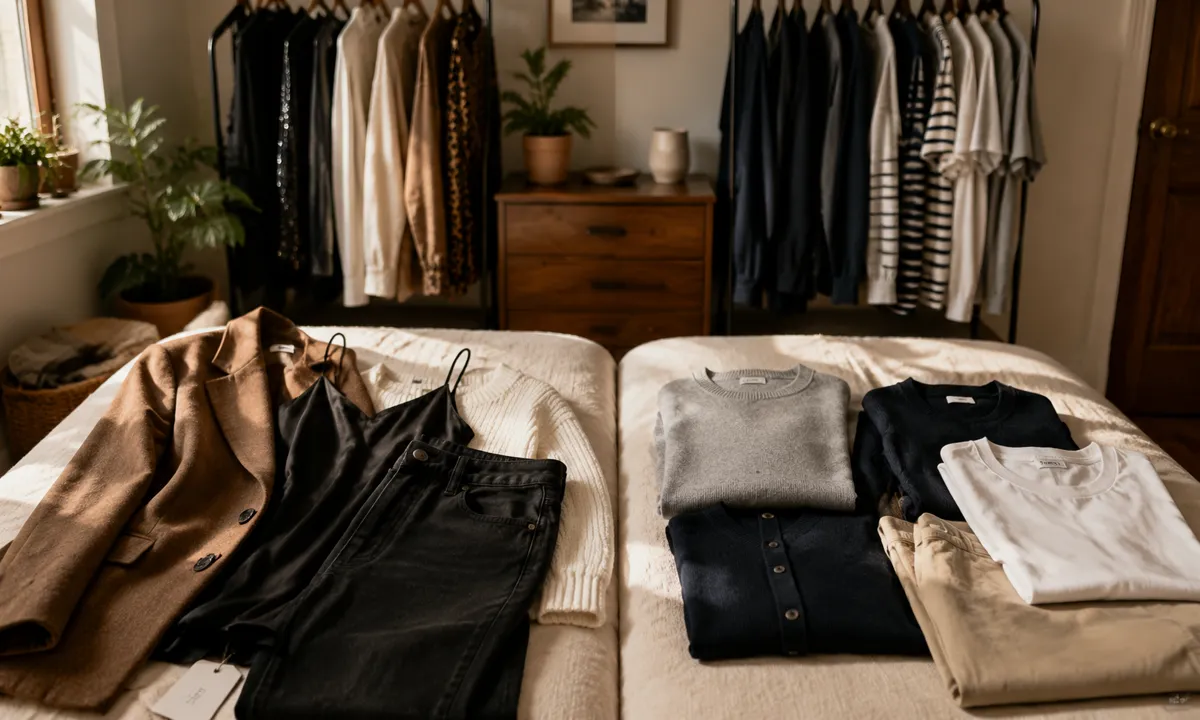
Zara and Uniqlo are both global, both affordable, both inescapable in every mid-size city on earth. That is where the similarity ends. Spending a week rotating through pieces from each brand makes the difference obvious in a way that no spec sheet can quite capture.
Zara operates on the logic of the moment. The brand runs new drops constantly, tracks what is selling in real time, and pulls pieces that go cold. The whole system is designed to make shoppers feel that what is on the rack right now will not be there next week, because it probably will not be. That urgency is the product as much as the clothes are.
Uniqlo runs on the opposite logic. ItsLifeWear line exists to be restocked year after year. A Supima cotton crewneck that sold in 2018 might be on the shelf in 2025, barely changed. The brand bets that people want to replace the same thing, not discover something new.
What Zara Gets Right
Zara’s tailoring is genuinely sharp for the price point. A structured blazer in a neutral, a wide-leg trouser with a real break at the ankle, a linen shirt cut slim enough to look intentional rather than boxy: these are pieces that photograph well and read as put-together. The brand has an eye for silhouette that most competitors at the same price cannot match.
The fabrics, though, are a different story. Polyester blends dominate even in pieces that are priced to suggest otherwise. A blazer that looks like it cost twice what it did will sometimes pill after a handful of wears. The lining in Zara trousers has a tendency to bunch at the knee by mid-afternoon. Nothing catastrophic, but noticeable.
The other thing Zara does well is trend translation. The brand moves fast enough that when something appears on the runway in February, a version of it is hanging in stores by spring. For someone who wants to look current without paying current prices, that speed has real value.
What Uniqlo Gets Right
Uniqlo’s best products are genuinely engineered. The Heattech underlayers, the Ultra Light Down jacket that compresses into its own chest pocket, the AIRism base layer that stays dry through a sweaty commute: these are not just garments, they are small solved problems. Wearing a Heattech crewneck under a work shirt in January genuinely changes the calculus of how many layers a person needs to carry.
The fabric quality on Uniqlo’s core basics is consistently higher than what Zara offers at a comparable price. A Uniqlo Oxford button-down is made from a heavier cloth with a tighter weave. It holds its shape through dozens of washes. The collar does not go limp. These are unremarkable sentences to write, but they describe an experience that is genuinely rare in sub-$60 shirts.
Uniqlo’s silhouettes are cut to disappear. Nothing is too fitted, nothing is too oversized, the proportions land in a moderate zone that reads as clean rather than fashionable. That is a feature for some people and a flaw for others.
The Everyday Wardrobe Test
An everyday wardrobe lives differently from a going-out wardrobe. It gets washed frequently, worn in quick rotation, and subjected to the low-grade abuse of a commute, a desk, and a grocery run. The question is which brand holds up to that specific grind.
On longevity, Uniqlo wins clearly. A Uniqlo fleece jacket bought three years ago is still in daily use in households across the country. The same cannot reliably be said about Zara outerwear at a similar price. Zara makes a case for itself on the grounds that fashion has a shelf life anyway, that wearing a trendy piece for two seasons before it looks dated is fine if the cost was low. That argument holds in some cases. It does not hold for basics.
For the pieces that anchor a wardrobe rather than accent it, the math favors Uniqlo. T-shirts, crewnecks, chinos, trousers for the office: Uniqlo’s versions last longer, wash better, and lose less shape. They are also more likely to still be available in the same cut next year if a replacement is needed.
Zara’s case is strongest for the pieces that are supposed to be occasional, not foundational. A blazer worn a few times a season, a statement coat, a pair of shoes bought to complement one specific outfit: these are categories where silhouette and surface appeal matter more than durability, and where Zara’s design instincts pay off.
Fit Across Body Types
Zara’s sizing leans toward a European fit: narrower shoulders, higher armholes, a slimmer cut through the torso. This works well on certain frames and creates real problems on others. The brand has expanded its size range over the years, but the proportions in the cut itself still assume a relatively narrow body. Someone who carries width in the shoulders or fullness in the chest will find that Zara’s slim blazers gap or pull in ways that can not be fixed by sizing up.
Uniqlo’s proportions are more forgiving. The relaxed and oversized fits in particular accommodate a wider range of body types without requiring alterations. Uniqlo also sells a broader range of inseam lengths for pants than most fast-fashion competitors, which matters practically for anyone outside the median height range.
Price as a Moving Target
Both brands run sales, but they behave differently. Zara marks down end-of-season inventory in two windows: after Christmas and at the end of summer. Outside those windows, the prices are mostly fixed. Uniqlo runs weekly limited-time sales that rotate through specific items, meaning a particular piece might drop from $40 to $20 if a shopper checks the weekly circular. Buying Uniqlo basics at full price is fine; buying them during a sale feels almost mandatory once the rhythm is familiar.
The broader cost-per-wear arithmetic still favors Uniqlo for anything worn frequently. A Zara wool coat at $180 that starts to look tired after two winters is a worse value than a Uniqlo cashmere blend at $150 that stays presentable for four. The headline price is rarely the whole story.
Where the Two Brands Actually Overlap
The overlap zone is smaller than it looks at first. Both sell trousers, both sell knitwear, both sell outerwear. But the use cases are largely different. Uniqlo wins on the layer nobody sees: the thermal base, the packable jacket, the plain black crewneck under everything else. Zara wins on the piece that is supposed to be noticed: the texture of a coat, the cut of a trouser, the detail on a collar.
Where they genuinely compete on equal terms is in casual weekend dressing: jeans, simple shirts, lightweight layers. Both brands offer decent options here. Uniqlo’s slim-fit jeans in a dark wash are quietly excellent and wear well over time. Zara’s straight-leg denim is cut with more attitude and photographs better. The honest answer in this specific category is that preference wins out over any objective metric.
The Collaboration Factor
Uniqlo’s designer collaborations are a legitimate differentiator. The ongoing partnership with Jil Sander produced pieces that by any measure belonged in a conversation with clothescosting three or four times as much: clean proportions, quality fabric, considered construction. The +J line developed a genuine following among people who would otherwise never set foot in Uniqlo.
Zara does collaborations too, but they tend to read as an extension of its own aesthetic rather than a genuine outside influence. The result is a product that looks like Zara, priced like Zara, with a famous name attached. That is a different proposition.
The Wardrobe That Uses Both
A sensible everyday wardrobe pulls from both brands according to what each does well. The foundation layer, the pieces worn most often and washed most often, comes from Uniqlo. The visible layer, the coat someone sees first, the blazer that shapes an outfit, the trouser that signals something beyond function, is where Zara earns its place. Running the two brands against each other as competitors misses the way most people who dress well actually shop: opportunistically, selectively, from wherever the right piece happens to live.
The risk with Zara is buying something because it looked strong on a hanger and realizing six months later that it no longer fits the wardrobe, the body, or the moment. The risk with Uniqlo is buying something that fits perfectly and lasts for years but never quite makes anyone look up. Neither risk is fatal. Knowing which one applies to a given purchase is the actual skill.