


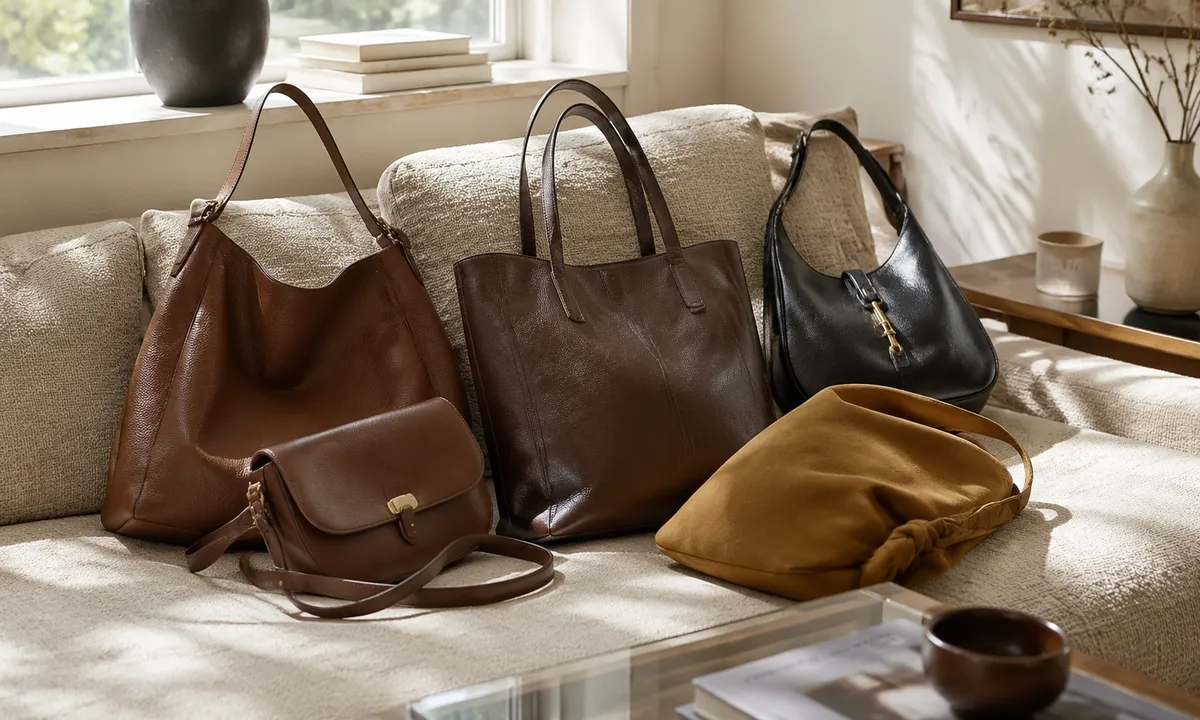
Stylists shop differently to the rest of us. Not in the sense of having unlimited budgets, though some do, but in the sense that their eye has been trained to see the object rather than the logo. After years of pulling looks for editorial shoots, dressing clients for red carpets, and assembling wardrobes for people who genuinely have to think about what they are being photographed in, they develop a quiet allergy to the brand names that everyone else is scrambling after.
The Chanel flap bag, the Louis Vuitton Neverfull, the Bottega Veneta Jodie in its heyday: these are not bad bags. That is almost the point. They have been so thoroughly validated, so universally acknowledged as correct, that wearing one communicates almost nothing except that the person carrying it had a few thousand pounds and wanted to spend them on something recognisable. For a stylist, that is close to the worst possible outcome.
What the It-Bag Actually Signals Now
Luxury it-bags operate on aspiration cycles. A house introduces a shape, it gets photographed on a handful of the right people, the waiting list builds, and then, with a lag of somewhere between eighteen months and three years, it appears everywhere: airport departure lounges, lunch spots, the arms of women who saved up for it and women who did not need to. At that point the bag has completed its journey from desire object to social currency to shorthand. It still costs the same. It still says the same house name on the hardware. But what it communicates has fundamentally shifted.
Stylists read this shift immediately. Once a bag becomes a way of announcing arrival rather than expressing taste, it stops being useful to them professionally. Their job is specificity. A red-carpet look built around an ultra-recognisable bag is a look that gets photographed for the bag, not the person wearing it.