September arrives and a perfectly good summer dress gets folded away, not because it has stopped working, but because nobody told it autumn was coming. That is a small domestic tragedy repeated in wardrobes across the country every year, and it is almost entirely unnecessary.

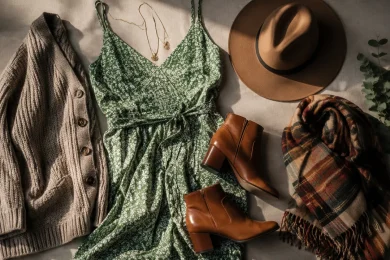
The dress itself is rarely the problem. A midi slip in sage green, a broderie anglaise sundress, a wrap in printed cotton: these are not summer objects the way a paddling pool is a summer object. They are pieces of cloth cut into a particular shape, and cloth does not know what month it is. What changes is everything around the dress, and that is precisely where the work happens.

Layering From the Inside Out
The most reliable transition technique costs almost nothing and requires no new purchases. Wear a long-sleeve fitted top underneath the dress. A ribbed cotton or modal crew neck in a neutral, ivory, stone, dark navy, works under almost any neckline. The sleeves visible below a short-sleeved dress add a layer of warmth and, more importantly, change the visual register of the whole outfit from summer casual to something that reads as deliberate. A thin fitted turtleneck does the same job with more drama, especially under a slip dress with a cowl neck or a wide scoop.
This is not a trick or a workaround. It is how clothes have been worn for most of fashion history. Separates layered together is simply dressing, and the fact that this era tends to treat each garment as a single sealed unit is the recent oddity.
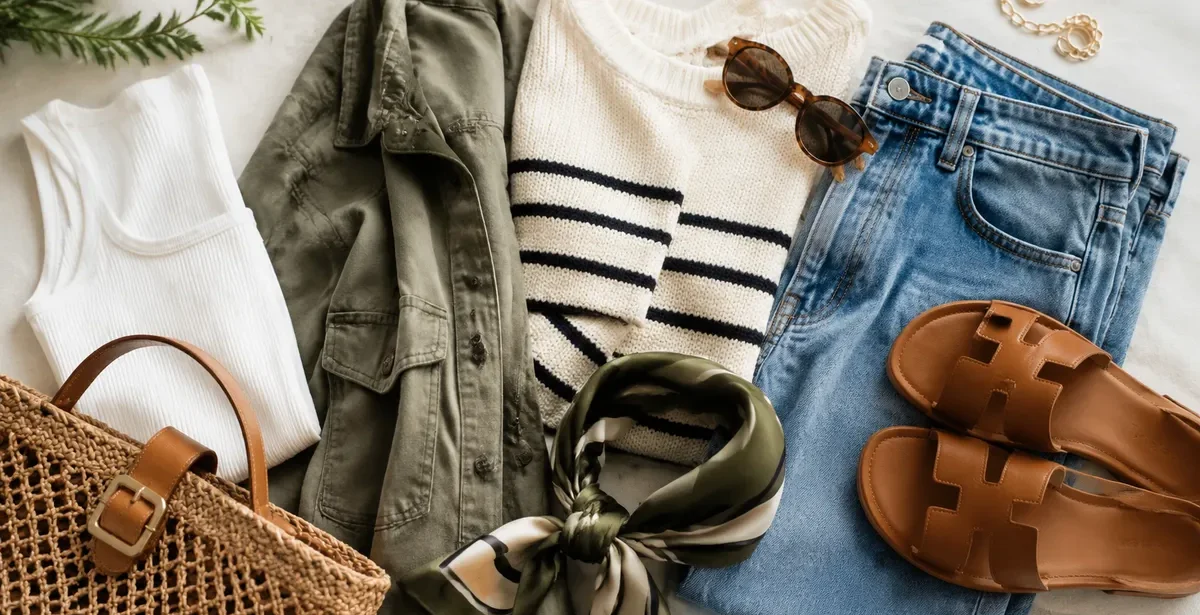
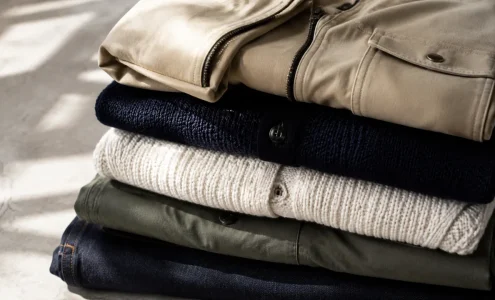
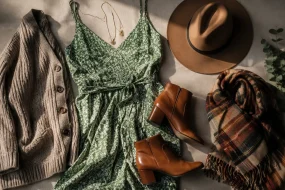
The outside layer matters just as much. A tailored blazer over a floral wrap dress immediately shifts it from picnic to office. A chunky oversized cardigan in oatmeal or rust draped over a strappy midi dress reads as intentional and warm without swallowing the dress underneath. An unstructured linen or cotton overshirt, left open, bridges the gap between late summer heat and early autumn chill without committing to either.
What Tights Actually Do to a Silhouette
Bare legs in October send a signal, and the signal is not “stylish”; it is “underprepared”. Tights are the single fastest way to tell a summer dress that it lives here now. A 40 or 60 denier opaque in deep green, burgundy, chocolate brown, or classic black anchors a floaty floral dress to the season in a way that feels considered rather than coincidental.
Sheer tights in a skin tone are a different tool entirely, softer and less definitive, better suited to the transitional weeks of late September when the afternoons are still mild. By late October they look underdressed. Go opaque earlier than feels strictly necessary and the outfit will look more composed for it.
Knee-high socks over tights, when done with care, add another layer of warmth and visual interest. A ribbed cream sock folded over the top of an opaque black tight, worn with a knee-length cotton dress and a square-toed loafer, is the kind of specific combination that photographs well and, more usefully, keeps a person warm on a grey Tuesday commute.
Shoes Change Everything and Boots Change It Most
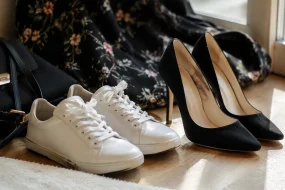
Summer sandals and autumn dresses are a mismatch that no amount of clever layering will fully rescue. The footwear reads as an afterthought, and the whole outfit suffers for it.
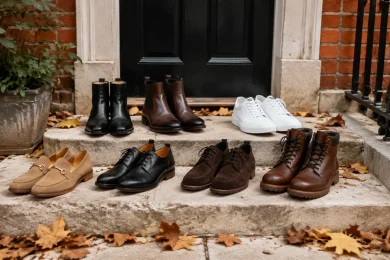
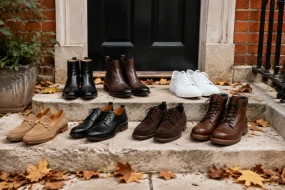
Ankle boots are the obvious answer, and they are obvious because they work. A low-block-heeled ankle boot in tan leather or suede under a knee-length wrap dress does something clean and satisfying to the proportion. Chelsea boots, in cognac or worn black, work across nearly every dress length from just above the knee downward. The visual break between boot and dress is part of the look, not a problem to solve.
Knee-high and over-the-knee boots change the equation more dramatically. A midi dress that hits mid-calf paired with knee-highs creates a small gap of visible fabric between the boot top and the hem, which can look either deliberate or confused depending on the proportions. The deliberate version works when the dress has enough weight and structure to hold its own: a heavier crepe, a pleated satin, a thick jersey. With very floaty or sheer fabrics, the gap tends to look accidental.
Mary Janes and loafers are underused with dresses in autumn. A chunky-soled loafer in dark leather under an A-line cotton dress has a very specific 1990s reference point that has been cycling back through fashion for a few years now, and it earns its keep. The shoe adds groundedness where a strappy sandal would float.
The Fabric Question: Which Dresses Make the Journey and Which Do Not
Honest assessment matters here. Some summer dresses do not cross over, and forcing them costs more effort than it is worth.
Very thin cotton voile or lawn dresses with no lining look cold in autumn even when the wearer is warm. The visual transparency of the fabric registers as inadequate regardless of what is worn underneath. These pieces are genuinely seasonal, and there is no layering trick that changes the fact of them.
Silk, satin, heavier cotton, linen (surprisingly, in the right weight and colour), jersey, broderie anglaise, and crepe all move into autumn without apology. A heavy cotton smock dress in a deep rust or forest green barely reads as a summer piece at all once boots and a coat are added. A silk slip in dusty rose with a fitted black rollneck underneath is one of those combinations that looks as though it took effort, and takes almost none.
Colour is part of the fabric question too. A linen shirt dress in pale yellow reads as summer however it is styled. The same shape in terracotta, deep teal, or ochre reads as autumn. Dyeing a dress is rarely practical, but keeping this in mind when buying means the investment pieces in the wardrobe are the ones that travel, and the very pale, very summery pastels stay where they belong.
Belts, Scarves, and the Small Things That Shift the Season
A belt does more than define a waist. Cinching a loose summer dress with a wide leather belt in a rich tan or dark brown pulls the whole silhouette into a different register. The belt adds structure where a summer dress tends to be casual and easy. It also breaks up the dress visually, which is useful when the print or colour reads as warm-weather: a small intervention that changes the overall temperature of the outfit.
Scarves, specifically heavier ones in wool or cashmere, worn loosely around the neck, introduce an unmistakably autumnal texture. A mustard or deep plum scarf against a floral print dress does something that no amount of clever layering underneath can replicate: it announces the season on sight. The neck is visible. The warmth reads immediately.
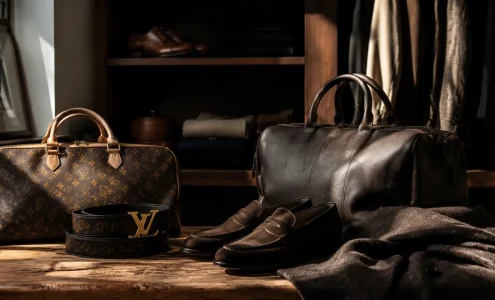
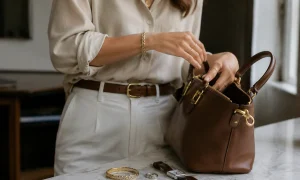
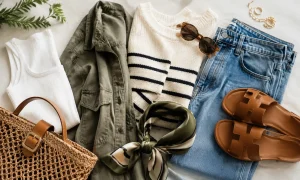
Bags follow the same logic as shoes. A wicker or canvas tote keeps a dress in summer. A structured leather bag in a warm brown or forest green confirms that the transition is real. These are small adjustments, but dressing well is almost entirely composed of small adjustments. The large gestures, buying a new coat, building a capsule wardrobe, take the credit. The small ones do the actual work.
The Coat as the Final Argument
A great coat resolves every remaining doubt about whether a summer dress belongs in October. The dress becomes almost irrelevant when a long wool coat in camel or charcoal is thrown over it. What reads at ankle level is boots and tights and a flash of fabric. What reads at eye level is the coat. The dress underneath is a foundation, warm, comfortable, easy, and completely appropriate to the season because the coat has made the argument on its behalf.
This is why a single excellent wool coat is worth considerably more wardrobe real estate than its square footage suggests. It does not just keep a person warm. It extends the working life of half the pieces already hanging in the wardrobe, the summer dresses included, by absorbing the seasonal risk and converting it into a year-round asset. A floral tea dress that looked finished in September, worn under a long camel coat with black opaques and ankle boots, becomes entirely at home in November. The dress did not change. The argument around it did.