Britain has not always taken heat seriously. The national instinct, forged over centuries of drizzle and grey skies, has been to treat warmth as a gift to be received gratefully rather than a condition to be dressed for. So when the temperature climbs into the mid-thirties, as it now does with uncomfortable regularity, most wardrobes are caught entirely unprepared: full of synthetic blends, tight cuts, and dark colours that were never intended to perform in genuine heat.

Getting dressed during a heatwave is not a matter of wearing less. That misunderstanding is where most people go wrong.
What Fabric Is Actually Doing to Your Body
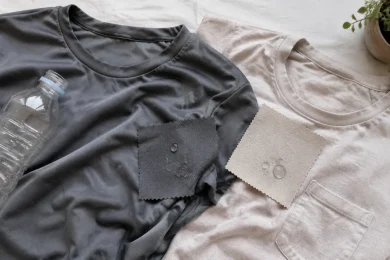
Sweat is the body’s cooling mechanism. It works by evaporating off the skin, and that evaporation pulls heat away. Fabric either assists that process or obstructs it, and the difference in how a person feels by two in the afternoon comes almost entirely down to that one variable.
Polyester, modal blends, nylon and most performance-branded “breathable” synthetics trap moisture against the skin. They maywick sweat away from the surface, but they then hold it within the weave, creating a humid microclimate between cloth and body. Worn in an air-conditioned office, this is barely noticeable. Worn on a thirty-four degree afternoon in south London or central Manchester, it becomes genuinely unpleasant within twenty minutes and potentially a health concern for anyone elderly or with a circulatory condition.
Linen and cotton behave differently. Linen in particular has a loose, open weave that allows air to circulate, and it absorbs moisture readily while drying quickly. The wrinkles people try to iron out of linen are structural: they are what creates the small channels of air that make the fabric useful. A heavily pressed linen shirt is, counterintuitively, slightly less effective than a lived-in one.
Lightweight cotton voile, cotton lawn, and open-weave cotton muslin function similarly. They are not glamorous fabrics. They do not photograph well. But they are the reason traditional dress in hot climates the world over has converged on the same answer for thousands of years.
The Colour Problem Nobody Mentions at the Right Time
British summers have produced an odd wardrobe habit: dark-coloured linen and cotton, sold as “summer” pieces because the weight is light, but in navy, slate, deep olive, and charcoal. These colours absorb radiant heat. Worn in direct sun, a dark navy linen shirt can feel markedly warmer than a white or pale yellow one in the same fabric and cut.
The effect is real but often underestimated indoors. In shade or inside a building, the colour difference matters far less than the fabric and fit. But anyone spending time in direct sunlight, walking between meetings, standing at an outdoor event, waiting for a bus, will notice it. Pale colours reflect rather than absorb. Cream, white, sand, soft sage, and dusty pink are functional choices in this context, not merely aesthetic ones.
There is a secondary issue with dark fabrics and sweat visibility. Synthetic darks show sweat marks prominently and retain odour more readily than natural fibres in lighter shades. Neither of these is a catastrophic problem, but they compound the general discomfort of dressing badly for heat.
Fit, Coverage, and the Counterintuitive Case for Covering Up
The instinct during a heatwave is to expose as much skin as possible. Shorts, vest tops, sandals: maximum surface area to the air. This works perfectly well in shade or with a breeze. In direct sunlight, exposed skin absorbs radiation directly, and without adequate airflow, bare arms and legs can feel hotter than covered ones.
Loose, long-sleeved linen in a pale colour creates a layer of trapped air between fabric and skin that insulates against radiant heat while still allowing evaporation. This is not a novel discovery: it is the principle behind a djellaba, a kurta, a traditional field shirt. The garments worn in the hottest parts of the world tend to cover more skin, not less, and they do so in light, loose, breathable cloth.
For practical British purposes this translates to: wide-leg trousers over tight shorts, a loose shirt over a fitted vest, and a generous silhouette over anything tailored and close. The closer a garment sits to the skin, the less air it traps, and the more it simply conducts body heat back inward.
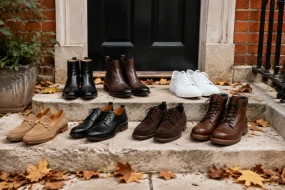
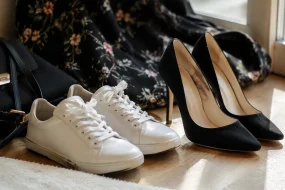
Footwear matters here too. Enclosed trainers in synthetic mesh may bill themselves as breathable, but they retain heat and moisture in ways that leather sandals or open canvas shoes do not. A leather sandal is not a fashion statement during a heatwave. It is the practical choice.
What Most British Wardrobes Are Actually Full Of
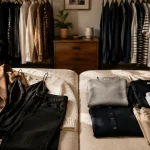
Pull open most wardrobes in this country and the hot-weather options are thin. A couple of cotton T-shirts, some jeans that have been swapped out for lighter jeans, possibly a midi dress in a viscose blend, a pair of synthetic-lined chino shorts. This is adequate for a mild July in the south of England. For a sustained heatwave, the kind that now arrives once or twice a summer and sits for several days, it is genuinely insufficient.
The problem is partly one of investment. Good quality linen costs more than a synthetic summer dress from a fast-fashion retailer. Wide-leg cotton trousers cut generously enough to allow airflow are not cheap if they are made well. Most people buy for a notional summer rather than for actual heat, and so they end up with a drawer of things that are technically lightweight but functionally inadequate.
There is also a workplace dimension. British professional dress codes evolved in a cooler climate, and many offices still expect something resembling formal wear. A person turning up to a meeting in wide linen trousers and a loose cotton shirt may feel more comfortable than their colleague in a structured suit, but they may also face an unspoken judgment that has nothing to do with how effective they are. Heatwave or not, office dressing in Britain remains largely unreformed.
Building a Functional Hot-Weather Wardrobe Without Starting From Scratch
The case for buying specifically for heatwave conditions is stronger now than it was a decade ago, simply because the conditions are more frequent. But wholesale replacement is both expensive and wasteful. The more practical approach is targeted.
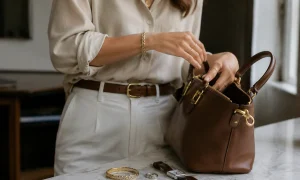
Two or three pieces of genuine quality linen, in pale or mid-toned colours, will outperform a much larger collection of synthetic summer wear. A single well-cut linen shirt in off-white or pale blue, worn loose and untucked, works over shorts and over lightweight trousers. It can be dressed up adequately for most casual professional contexts. It washes well, dries fast, and if it is 100% linen rather than a linen-polyester blend, it gets softer with each wash rather than harder.
Cotton poplin shirts in white or cream perform nearly as well and are easier to find. Cotton seersucker, if you can locate it, is a particular pleasure in heat: the puckered weave keeps the fabric off the skin almost entirely.
For the bottom half, the aim is loose and unlined. Lining, even light lining, defeats the purpose of any breathable fabric above it. Unlined wide-leg cotton or linen trousers, or a full, unlined skirt in a natural fibre, will do more for comfort than any tight-cut item regardless of how light it feels on the hanger.
The Accessory That Makes the Most Difference
Hats get dismissed in Britain as theatrical or foreign. They are neither. A wide-brimmed hat in straw or cotton canvas keeps direct sun off the face, neck, and upper chest, which are among the most heat-sensitive areas of the body. This is not a style opinion. Shade on the head and neck has a measurable effect on how hot a person feels during direct sun exposure. The fact that Britons associate hats with tourism or period drama is a cultural quirk with real physical consequences.
A simple cotton sun hat, crushable enough to fit in a bag, costs very little. A woven straw hat costs slightly more and lasts years. Either one, worn without self-consciousness on a 34-degree afternoon, represents a more meaningful intervention than any amount of careful fabric selection below the neck.
When the Wardrobe Reveals Its Gaps
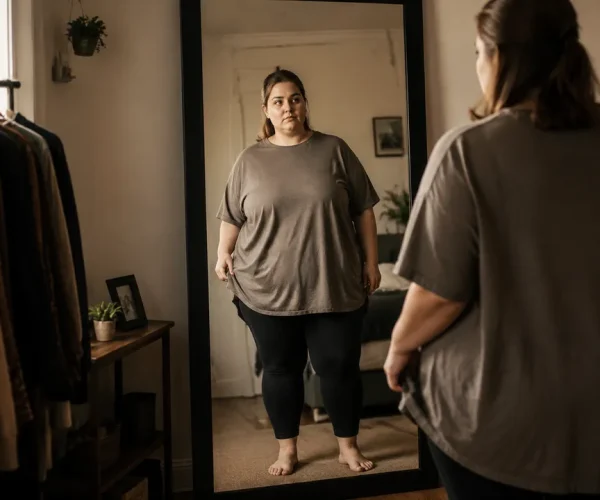
The question in the title tends to answer itself the moment the first proper hot day arrives. There is a specific, recognisable moment: standing in front of an open wardrobe at half eight in the morning, already warm, pulling out option after option and putting each one back. The linen trousers are at the dry cleaner. The cotton shirt has a stain on the cuff. The one dress that actually breathes is slightly too formal for today. The backup option is a synthetic blend that was fine for April.
That moment of wardrobe paralysis, repeated across several days of a heatwave, is the accumulated cost of dressing for a theoretical summer rather than the one that actually turns up. The answer is already known: fewer, better, lighter, looser, paler, natural fibre. The question is whether it gets acted on before the next forecast or after.