Forty pounds for a ninety-minute consultation, and a woman named Priya telling me to donate the grey crewneck I had owned since 2014. That was the beginning.
The decision had been made on a Tuesday, impulsively, after staring at a wardrobe full of clothes and reaching for the same three things again. A personal stylist felt simultaneously indulgent and completely rational. The maths, when I thought about it, were on the side of going ahead: I had spent years buying things I wore twice, or never, and the rough sum of those mistakes was considerably more than the cost of a month with someone who actually knew what they were doing.
Priya ran a small independent practice out of east London. She was not affiliated with a department store, which mattered to me: store-affiliated stylists are often, in practice, commission-influenced shoppers, and I wanted advice rather than a tour of the new-in rails. Her rate was forty pounds for the initial wardrobe audit, then a day rate for anything involving actual shopping, and a separate fee for a “personal style report” she produced at the end of the engagement. I paid for the audit and the report and one half-day of shopping. Total outlay over the month: two hundred and thirty pounds, plus whatever I subsequently bought.

The Wardrobe Audit
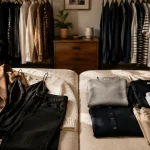
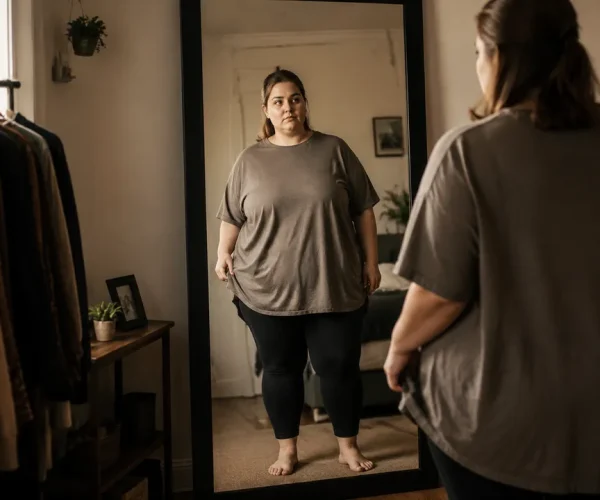
She came to the flat on a Saturday morning with a takeaway coffee and no clipboard, and stood in front of the open wardrobe for a long time before saying anything. The first thing she said was: “You dress from anxiety, not preference.” I wanted to argue. I could not, quite, because she had just met me and was already correct.
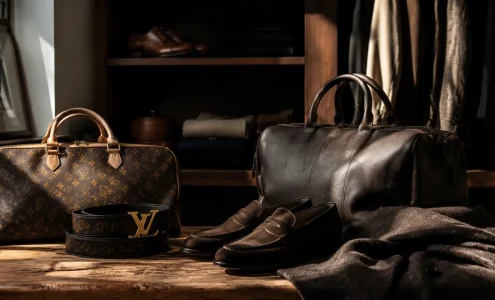
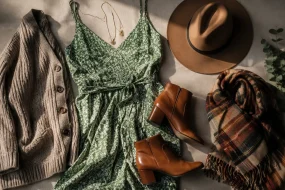
What she meant was this: most of the wardrobe was defensive. Colours chosen not to clash with anything. Cuts chosen not to draw attention. Fabrics chosen not to require effort. There were whole categories of items bought for events I had attended and then never worn again. A linen shirt for a garden party in 2021. Two pairs of trousers purchased for a job that no longer existed. A blazer that fit, technically, but communicated something about the person I had imagined I might become rather than who I actually was.
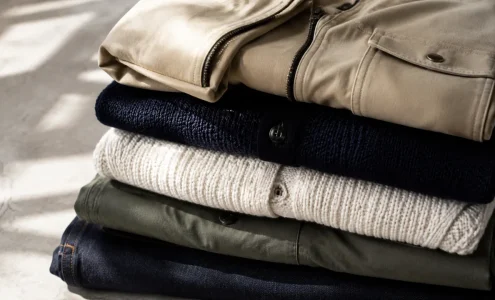
She made three piles. Keep, consider, release. The grey crewneck went into release immediately. So did a surprising number of things I had believed were “classics” but which she identified, notunkindly, as things I owned because owning them felt responsible rather than because I reached for them.
The keep pile was smaller than I expected. Perhaps fifteen pieces. The interesting finding was that almost everything in it was at least three or four years old. The newest items in my wardrobe, the things I had bought in the past eighteen months, almost all went into release or consider. She had a theory about this which I think is probably right: newer purchases reflect aspiration, older ones reflect what you actually live in.
Shopping With Someone Who Disagrees With You
The half-day of shopping was the most uncomfortable and most useful part of the arrangement.
I had given Priya a brief beforehand: work clothes that didn’t read as trying too hard, and something for evenings that wasn’t a blazer. She had given me a list of what she planned to source and approximate price points. Nothing on the list surprised me. What surprised me was how often I stood in a changing room holding something she had chosen and feeling a low-grade resistance, a kind of “I wouldn’t have picked this”, and then putting it on and it being better than what I would have picked.
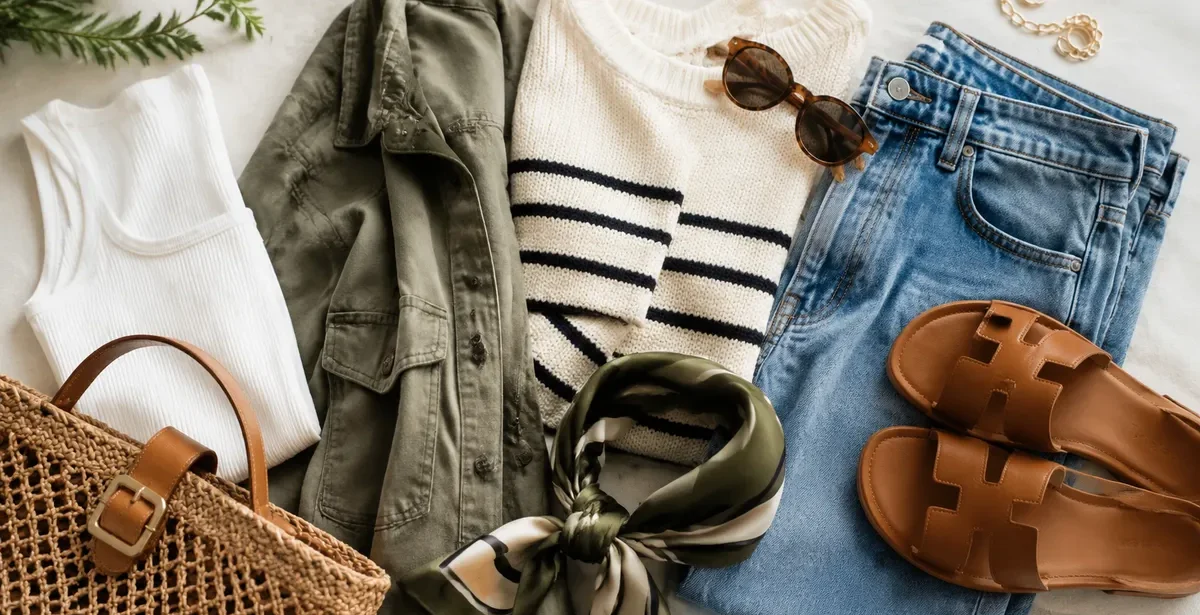
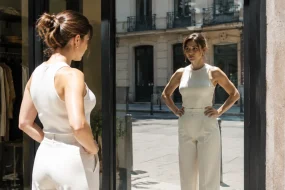
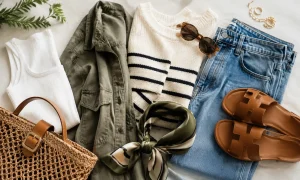
The specific example I keep returning to: a pair of wide-leg trousers in an olive green, slightly heavier than expected, with a clean front pleat. I had spent years avoiding wide-leg trousers on the basis of some half-remembered thing someone had said to me about proportions. Priya looked at me in them and said, flatly, “Those are your trousers.” She was right. I have worn them more in three months than anything else I own.
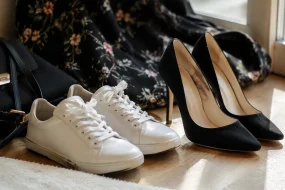
She also talked me out of two things I wanted. A dark navy overshirt I had circled for several minutes she held up, examined, and put back. “That’s a version of what you already own. You don’t need another one.” And a pair of shoes I had liked on the shelf she looked at and said: “They’re for a different person’s life.” Both calls were correct, and both would have cost me money had she not been there.
What the Style Report Actually Said
At the end of the month, Priya delivered a document. It ran to seven pages. I had been slightly sceptical about this artefact in advance, expecting something generic: palettes and body-shape diagrams and references to “your personal brand.” That is not what it was.
The most useful section was what she called “your wardrobe logic,” which was essentially an account of the patterns she had observed: what I gravitates towards and why, where my purchases tend to go wrong, what I consistently under-buy and what I consistently over-buy. She had noticed, for instance, that I owned an excess of layering pieces and almost nothing that functioned as a centrepiece of an outfit. I had lots of things to go over other things and very few things that could stand alone. This is, she suggested, a form of commitment avoidance in dressing. I found this analysis genuinely irritating, which is usually a sign that something has landed accurately.
She also included specific brands and shops where she thought I was likely to find things that suited me, and a short list of items she considered priority gaps: one good heavyweight knit, a pair of leather shoes with a slightly heavier sole than I usually buy, a proper coat. No affiliate links, no brand partnerships. Just a list.
On the Question of Cost
Two hundred and thirty pounds is not nothing. It is also, when measured against the average annual waste on clothes bought and discarded, not as steep as it sounds. The harder question is whether the value persists, or whether the clarity fades and the old patterns reassert themselves.
Six months on: some of both. I have bought things since that Priya would have vetoed. I have also found myself, in changing rooms, hearing her voice in my head asking whether something is genuinely new or just another version of what I already own. That internal voice, slightly impatient, mildly forensic, is probably the most durable thing I got from the arrangement. It costs nothing to deploy and it has already saved me money on at least three occasions.
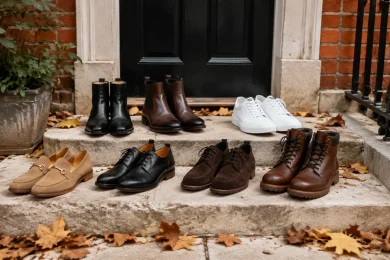
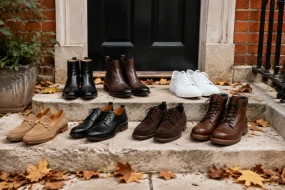
The clothes themselves have held up. The olive trousers are still in rotation. The shoes she steered me towards, a pair of plain-toed derbies with a crepe sole, have become the pair I reach for almost every day. The items she talked me out of: I saw that navy overshirt on someone else recently and thought, yes, she was right, that is not my thing, and felt a small flush of relief at having not bought it.
What the Exercise Cannot Do
A stylist can tell you what suits you. They cannot tell you who you want to be, or resolve the underlying uncertainty that makes dressing feel difficult in the first place. If the wardrobe anxiety goes deeper than a lack of knowledge, an external eye helps but does not cure. Priya was clear about this, unprompted. “I can give you the tools,” she said at one point. “What you do with them is yours.”
There is also the question of maintenance. The wardrobe audit creates a coherent starting point, but wardrobes accumulate. Without the periodic presence of someone asking hard questions, drift is the default. The discipline required to keep it useful is not trivial, and most people, if they are honest, will let it slip.
What the experience changed, most durably, was the relationship with shopping itself. The half-day with Priya made visible how much of clothes-buying is driven by a kind of optimistic fantasy rather than an honest reckoning with how life is actually structured. The linen shirt for garden parties. The blazer for an imagined version of working life. Those purchases did not represent a shopping problem; they represented an unwillingness to look clearly at the life being lived and dress for it. The stylist, for a month, provided the looking.
The grey crewneck, for the record, went to a charity shop on Stoke Newington Church Street. Someone else is wearing it now. I hope it suits them better.