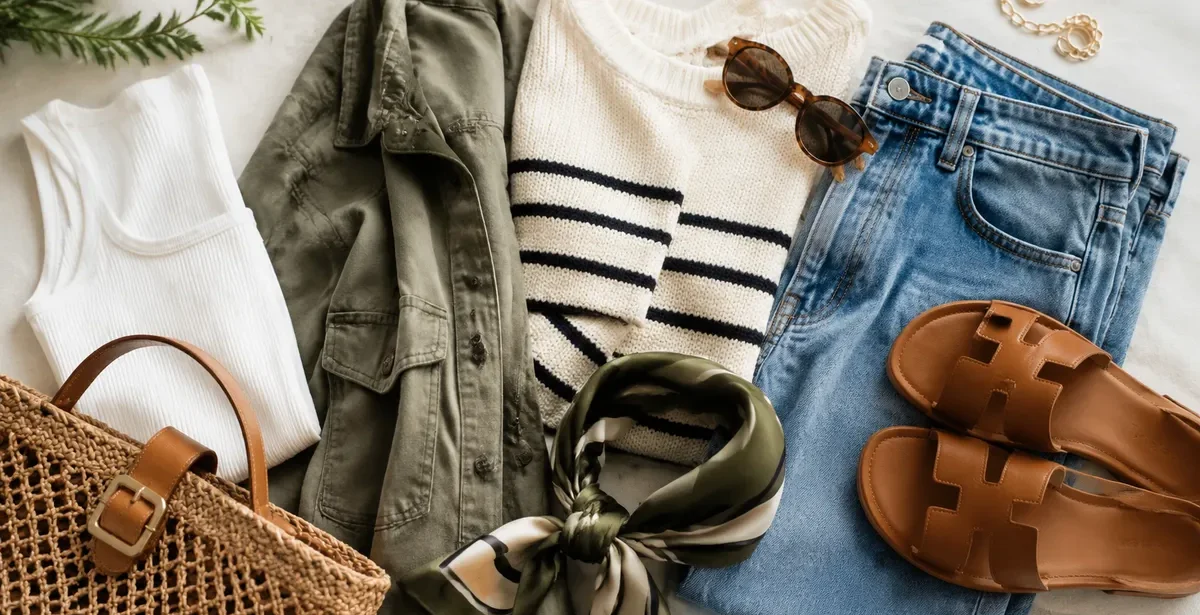
Waist definition is one of those dressing goals that sounds simple and turns painful by lunchtime. Belts dig in. Structured bodices restrict breathing. Tight waistbands create a constant low-grade battle between clothing and body, and by mid-afternoon the whole experiment gets abandoned in favour of something loose and forgiving. The good news is that the discomfort is almost never necessary. It comes from chasing definition through constriction, when the thing that actually reads as a defined waist on a real person, in real movement, is usually contrast and proportion, not compression.


What the Eye Is Actually Reading
The visual impression of a waist comes from difference: the torso appearing narrower between the hips and the bust. That difference does not have to be created by fabric pressing against the skin. It can be created by making the areas above and below the waist look wider, or by drawing a line at the waist that the eye interprets as a boundary, even when the fabric at that point is quite loose.
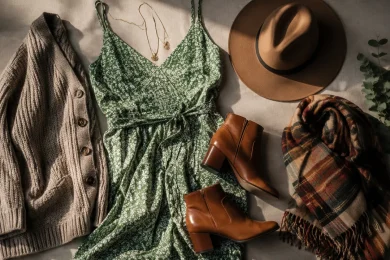
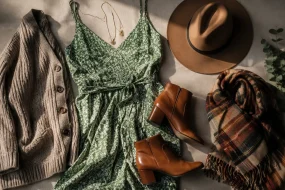
This is why a wrap dress works on such a wide range of body shapes. The diagonal lines converging at the front knot pull the eye inward without squeezing anything. The fabric drapes; it does not clamp. The waist looks defined because the eye follows the line, not because the dress is exerting pressure.
Holding this principle clearly in mind changes the whole approach to dressing. The goal becomes directing the eye, and there are several ways to do that with no discomfort involved at all.
Volume Above and Below, Not at the Middle
One of the most reliable techniques requires no waist-level tailoring at all. Wide-leg trousers or a full skirt paired with a fitted or semi-fitted top creates the silhouette of an hourglass without anything touching the waist tightly. The hip volume reads as width, the top reads as narrower by comparison, and the waist sits in the middle of that contrast looking defined.
The same logic runs in the opposite direction. A slightly voluminous blouse tucked loosely into a fitted skirt or slim trousers creates a bloused effect that lets the waist breathe while the tuck still signals a boundary between top and bottom. The tuck does not need to be tight or precise. A half-tuck at the front, with the back left loose, creates the impression of intention without the restriction of a fully tucked shirt pulling across the torso all day.
Neither of these approaches requires anything to be cinched. The definition comes entirely from the shape of the pieces around the waist, and both feel close to wearing nothing structured at all.
The Belt Problem and How to Solve It
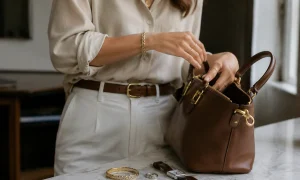
Belts are the obvious tool, and they work. A belt at the natural waist immediately creates a horizontal line that the eye reads as structure. The difficulty is that most people wear them too tight, because a loose belt tends to slide down or look unconvincing, and a stiff leather belt at the right tightness for staying put is often one notch beyond comfortable after a couple of hours.
The material matters enormously here. A wide elastic belt, the kind with a decorative front panel that hides the stretch underneath, holds its position without creating pressure because it gives with movement. The waist reads as defined, and the belt simply expands slightly when sitting down or eating. Fabric sashes, knotted loosely at the front, work on the same principle. They look structured but exert almost no force, and they can be retied or loosened at any point in the day without anyone noticing.
Width plays a role too. Narrow belts, say two centimetres wide, require more tension to stay put and create more of a cutting sensation when they do. A wider belt, five to eight centimetres, distributes any pressure across a larger area, making the same tightness feel considerably less intrusive. A wide belt at 80 percent of the tightness of a narrow one will hold its position better and feel lighter doing it.
Seaming and Colour as Architecture
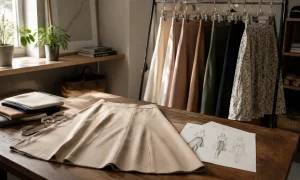
Tailoring uses seam placement to shape a garment to the body, and the visual effect of those seams does not disappear when the fit is looser. A dress or top with seams that curve inward at the waist will suggest a waist even if the fabric is sitting an inch away from the skin at that point. The seam line is doing the visual work; the fabric can afford to be comfortable.
Princess seaming, which runs in vertical panels from shoulder to hem rather than across the body, is the standard version of this. It is built into many structured dresses and fitted tops, but it also appears in softer fabrics and more relaxed cuts. A jersey wrap top with curved seaming at the side panels will define the waist without any actual constriction, because the shaping is drawn onto the surface of the garment, not pulled from the fabric’s tension.
Colour blocking is a related approach that works without any tailoring at all. Wearing a darker colour at the sides of the torso, with a lighter panel down the centre, creates the visual narrowing that is otherwise produced by structural shaping. Some people find this approach fussier to dress around, but when the pieces are simple, a dark side panel on a knit top for instance, the effect is subtle and the comfort is complete.
What to Look for When Shopping
The practical difficulty is that clothes are usually photographed flat or on a body that may not be representative, and the waist definition that looked architectural on screen can feel like a vice in person. A few things are worth checking before committing to a piece.
Sit down in the item, and sit properly, not perched on the edge. Lean forward slightly. If the waistline or belt digs into the stomach at this point, it will do so every time a seat is occupied for more than a few minutes, which is to say, constantly. A dress that feels fine standing up but restricts at the waist when seated is a dress that will only be comfortable for short periods of standing, and that is a narrow use case for most wardrobes.
Check the fabric content alongside the cut. Rigid wovens, poplin, denim, structured cotton canvas, hold their shape but do not give. If a rigid fabric is cut tightly at the waist, there is no relief. The same silhouette in a fabric with a small percentage of elastane, even two or three percent, will move and return, making the fit feel much more generous over the course of a day.
Adjustability is underrated. A drawstring waist, an internal elastic channel with outer topstitching that looks structured, a self-tie that can be loosened after lunch: these are features worth seeking out precisely because they let a single garment serve different moments without discomfort becoming the main memory of wearing it.
The Specific Case of High-Waisted Trousers
High-waisted trousers deserve their own mention because they are one of the more effective waist-defining garments, and also one of the more frequently uncomfortable ones. The rise sits above the natural waist, which means the waistband is working at a point where the torso is at its narrowest, creating strong definition. The discomfort comes when the waistband is too stiff, too narrow, or both, and presses into the lower ribs or the soft tissue at the front of the abdomen, particularly when seated.
The trousers that avoid this have a facing or waistband that is cut on a slight curve to follow the body rather than sitting as a flat band. They also tend to have a slightly longer rise, so the waistband does not end right at the most sensitive point. Trying them on while seated before buying remains the most reliable filter, but the shape of the waistband itself, curved versus flat, is a useful thing to look at when browsing.
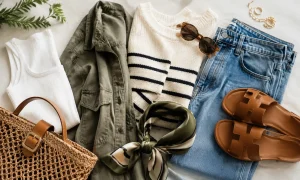
A tucked-in top above high-waisted trousers adds to the definition without adding structure. The hem of the top creates a second horizontal line just above the waistband, reinforcing the waist as a visual point without requiring anything additional to be worn or tightened. The whole arrangement can be entirely loose at the waist itself, the trousers sitting comfortably, the top blousing slightly above them, and still read as a defined, proportioned silhouette from across a room.