Silhouette is one of those words that gets thrown around in styling guides with great confidence and very little instruction. Find your silhouette. Dress for your silhouette. Know your silhouette. What that almost never comes with is an honest account of how to actually do it, because the honest account involves standing in front of a mirror for longer than most people find comfortable, and noticing things with some precision.


The idea behind a personal silhouette is straightforward: the outline your body makes in space, and the way a garment either follows, contrasts, or interrupts that outline. Getting it right is not about flattery in the soft, euphemistic sense. It is about proportion, balance, and what reads as intentional rather than accidental. A silhouette that works makes the whole outfit look considered, even when it is just a pair of trousers and a shirt. One that does not work creates a visual restlessness that people sense without being able to name.

Start with what you actually have, not what you thought you had ten years ago.

The Assessment: What a Mirror Can Actually Tell You

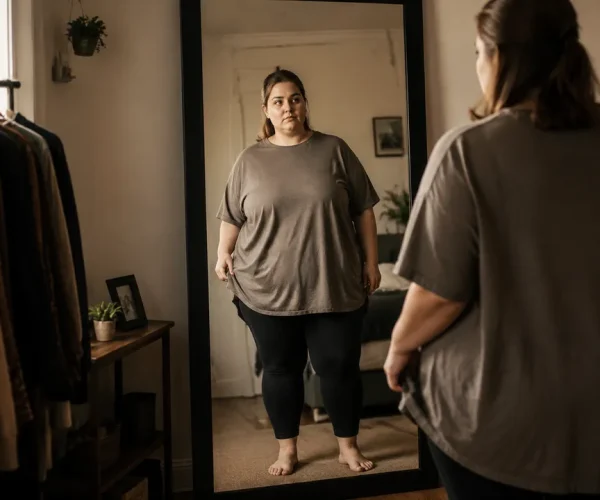
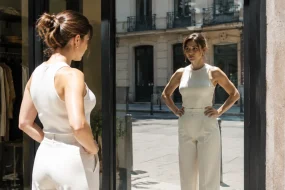
Wear something close-fitting and stand in natural light, ideally near a window in the morning rather than under overhead bathroom bulbs, which lie. Look at the whole outline first, from the top of your shoulders down to where your legs end. Squint slightly. This is not a trick; it genuinely reduces the brain’s tendency to focus on individual parts and forces a reading of the overall shape.

What you are looking for at this stage is the relationship between width at the shoulder, width at the waist, and width at the hip. Those three measurements, relative to each other, are the scaffolding of your silhouette. A person whose shoulders and hips are close in measurement with a narrower waist has what is classically called an hourglass proportion. Broad shoulders relative to the hip is an inverted triangle. Shoulders and hips close in measurement with a waist that does not pull in much is a rectangle. Hips wider than shoulders in a pronounced way is often called a pear, though the shape is so common that calling it unusual is absurd.

None of these is a problem to be solved. They are a starting point for understanding which garment shapes will create visual balance and which will create visual noise.

Also look at your vertical proportions. Where does your waist actually sit on your body, not where a waistband hits, but where the natural narrowing is? Are your legs long relative to your torso, or short? Is your torso long? These things affect which silhouettes elongate and which compress, and they are distinct from the shoulder-waist-hip triangle entirely.

How Garment Shape Intersects with Body Shape

A garment silhouette is its own outline, separate from the body wearing it. The relationship between the two is where style actually lives.

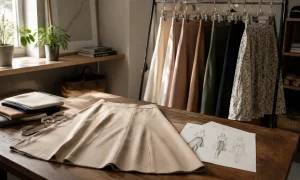
Fitted garments repeat your body’s shape. Oversized garments create a new, larger shape over it. Structured garments impose a shape of their own, regardless of what is underneath. Each approach does something different to proportion. Fitted clothes make your actual outline visible, which works well when the proportions feel balanced and works less well when there is an imbalance you would prefer not to emphasise. Oversized clothes create a block silhouette, which can look purposeful and strong or shapeless, depending almost entirely on whether it is genuinely oversized or just large. Structure, the kind built into a tailored jacket shoulder or a stiff A-line skirt, can redistribute visual weight in ways that neither fitted nor oversized can.

For someone with a pronounced hourglass proportion, the most common mistake is wearing garments so fitted that the outline becomes fussy rather than clean. A single-layer jersey dress that follows every curve is not the same as a dress with a defined waist and some structure below it. The latter creates a silhouette; the former just traces one.

For a rectangular proportion, the instinct is often to add a belt and force a waist definition. This can work, but a more interesting approach is to play with layers and hem lengths to create visual interest through line rather than constriction. A cropped jacket over a longer shirt, for instance, creates a horizontal break that introduces proportion where the body does not naturally provide it.

Inverted triangles carry visual weight at the top. Garments that add volume at the hip, wide-leg trousers, A-line skirts, pleated fronts, restore a visual balance that narrower cuts interrupt. The shoulder does not need to be hidden; it needs a counterweight.

Vertical Line and the Question of Length

Hem length is one of the most powerful tools in silhouette-building and one of the least discussed with any precision. Where a garment ends on the body determines which part of the body becomes visually prominent.

A skirt or dress that ends at the widest part of the calf is famously difficult to wear because it draws a horizontal line at the fullest point and stops there. One that ends just below the knee, above it, or at mid-calf avoids that visual trap by landing at a narrower point. The same principle applies to sleeves: a three-quarter sleeve that ends at the widest part of the forearm creates a different visual cut-off from one ending at the wrist.

Trouser length matters enormously too. A full-length wide-leg trouser that grazes the floor creates an unbroken vertical line from hip to ground, which is elongating for the whole lower body. The same trouser cropped to mid-ankle breaks the line and shows the ankle, which can read as either elegant or stumpy depending on shoe choice and the actual width of the leg opening. This is where a trusted opinion, from a person who will tell you the truth, becomes more useful than any mirror.

On torso length: a long torso with shorter legs benefits from high-waisted bottoms, which move the visual waist higher and give the appearance of more leg. A short torso with long legs often does better with low-rise or mid-rise cuts that do not compress the torso further by eating into it from below.

The Role of Fabric Weight and Structure

Two garments cut to an identical pattern in different fabrics produce entirely different silhouettes on the body. This is not a marginal difference. A bias-cut slip dress in silk charmeuse clings and flows and reveals; the same cut in a matte crepe holds away from the body and creates a quieter, more architectural line. A blazer in a stiff wool canvas holds its shoulder and collar without any effort from the wearer; the same pattern in a soft ponte knit collapses slightly and rounds at the lapel.

Understanding this is the difference between buying a garment and buying a silhouette. Tailored shapes require structured fabrics to maintain their lines. Draped shapes require fluid fabrics to fall correctly. Matching the construction to the fabric weight is something good tailors do automatically and most high-street garments do inconsistently, which is one reason so many pieces look slightly wrong in ways that are hard to identify.

When shopping, pick the garment up before trying it on. Does it hold its shape when you shake it, or does it collapse flat? Does the fabric have enough weight to fall straight, or does it ripple andcling? These questions tell you what the garment will do on a body before it ever touches one.

Testing Against Your Own Wardrobe First

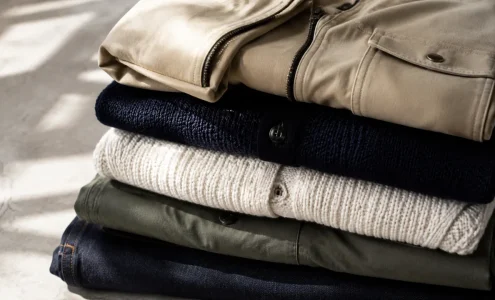
Before buying anything new, the most instructive exercise is to try on every item already owned and look at each combination as a silhouette rather than as an outfit. Stand back. Does the overall outline feel intentional? Is the proportion between the top and bottom half balanced, or does one overpower the other?

Photograph yourself from across the room rather than in a changing-room mirror. The camera compresses depth, which is closer to how other people actually see you than a close mirror is. It is frequently surprising. Combinations that felt good up close look either better or worse at a distance, and silhouette is fundamentally a distance concept.

Pay attention to which combinations produce photographs where you immediately think the outfit looks right, without being sure why. Those are your working silhouettes. The proportion and structure in those combinations are the ones to replicate.

When the Shape Changes

Bodies change, and silhouette work done five years ago may not transfer. Weight shifts, posture shifts, muscle changes and loss of it, all of these alter the shoulder-waist-hip relationship and the way fabric behaves on the body. The assessment is not a one-time task. It is worth revisiting periodically, particularly after any significant physical change, and particularly when a wardrobe that previously felt coherent starts to feel like it belongs to someone else.

Posture deserves specific mention because it is changeable in a way that body shape broadly is not. Rounded shoulders alter the way a jacket collar sits, pull seams forward, and shorten the apparent front of the torso. A person who wears the same garment with and without corrected posture is, visually, wearing two different garments. Work on posture if that is possible; the payoff in how clothes sit is immediate and significant, and it costs nothing.

Making a Silhouette Consistent Across an Outfit

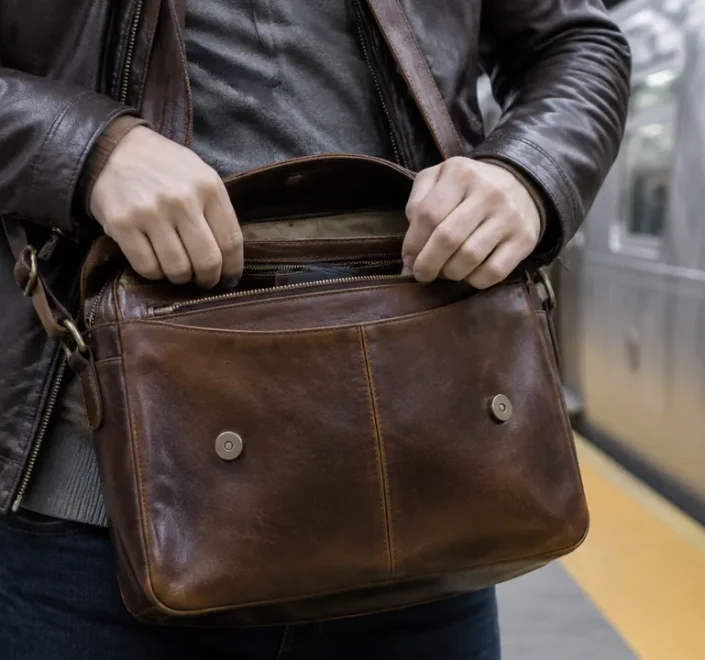
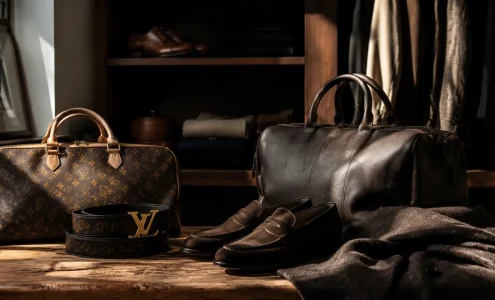
The final piece is coherence. A silhouette is not just a single garment but the total visual shape of a dressed person. Shoes contribute a line. A bag carried at a particular height creates a visual interruption. Layering adds bulk in specific places. All of it reads as part of a single outline.

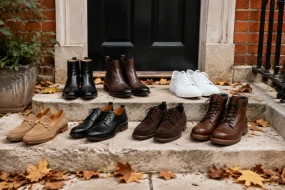
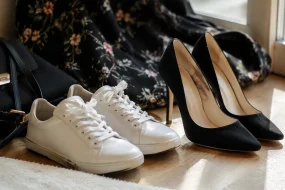
Wide-leg trousers paired with a chunky trainer create a continuous wide line from hip to floor that reads as heavy and grounded. The same trousers with a slim, low-heeled boot that disappears under the hem create an elongated column. Neither is wrong. They are two different silhouettes using largely the same garment.

Once the core proportions are understood, decisions like this become faster and more confident, because they are no longer about whether something is fashionable or flattering in some vague sense, but about whether it serves or disrupts the specific line already established. That is a concrete, answerable question, and it is one that any person can learn to ask and answer for themselves, standing in front of a window on a clear morning, squinting slightly at the whole.

Leave a Reply

Your email address will not be published. Required fields are marked *