Two garments. One occasion. The calculation sounds simple, but the little black dress and the statement top occupy genuinely different psychological territory, and the gap between them matters more on a date than almost anywhere else.

A date is one of the few social situations where the outfit does real work before a single word is spoken. It signals intention, taste, and effort without any of the awkwardness of announcing those things out loud. The choice between a dress and a top is therefore less about aesthetics and more about what kind of signal gets sent, and whether it lands the way it was meant to.

What the Little Black Dress Actually Communicates

The little black dress has been shorthand for romantic dressing for so long that it carries meaning almost independently of the woman wearing it. It reads as considered. It reads as occasion-aware. When someone turns up in one, the implicit message is that they took the evening seriously enough to commit to a single, unified look.

That coherence is its real strength. A dress eliminates the question of proportions, of whether the top is clashing with the trousers, of whether the hem lengths are fighting each other. The outfit simply exists as a complete object, and the wearer exists inside it rather than above it or on top of it.

There is also something in the physicality. A well-cut black dress moves differently from separates. It tends to follow the body in a way that a tucked-in top and a pair of trousers rarely quite manage. On an early date, when self-consciousness is already running at a low hum, not having to think about whether the top has untucked or the waistband is sitting where it should is a quietly significant comfort.

The risk is familiarity. The LBD is so established as date attire that it can tip from confident into predictable. On a first date especially, predictability is a minor disadvantage. It gives away nothing about the wearer as an individual. It is the safe play, and safe plays are readable as safe plays.

The Statement Top’s Different Kind of Confidence

A statement top requires a decision. Something in it had to be chosen: a colour that is not black or white, a texture worth touching, a print that could have been left on the rail. That act of choosing is visible. It says something about the person’s taste that a black dress, by design, does not.

This is the case for it on dates. Specificity is interesting. A rust-coloured satin blouse or a silk top with an abstract print gives a date an opening that a plain black dress simply does not provide. Conversation about what someone is wearing is not trivial; it is often the first small window into how they think and what they are drawn to. A statement top creates that window.

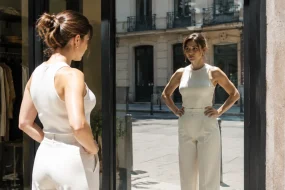
The tradeoff is effort. A statement top needs to be worn, not just put on. The rest of the outfit has to be thought through: which trousers, which shoes, whether the whole thing coheres or looks like pieces that happened to end up on the same person. When it works, the result is more individual than any LBD. When it does not quite work, it is more obviously off.

There is also the question of occasion fit. A very loud top in a quiet restaurant can tip into costume territory. The statement has to be sized to the room. An oversized blazer with interesting lapels reads differently in a candlelit wine bar than a sequinned top does at lunch. Knowing the venue before deciding on the level of statement is not overthinking; it is just basic calibration.

How the Date Type Shifts the Calculation

The first date is where the LBD earns its reputation. The pressure is high, the unknown is high, and the desire to avoid having made a wrong choice is at its peak. Under those conditions, a dress that needs no explanation and looks deliberately put-together handles the outfit question cleanly. Attention can go elsewhere.

A second or third date is a different situation. Some groundwork has been laid. The other person has an impression already forming, and the outfit is now part of a developing picture rather than the first data point. This is where the statement top starts to earn its place. It introduces a new dimension, shows range, or reinforces something about the wearer that they want the other person to understand better.

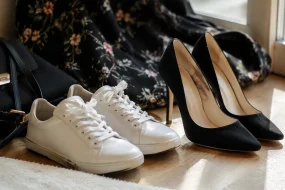
Daytime dates flip the hierarchy. A little black dress on a Sunday afternoon in a cafe or at a market reads as overdressed in a way that undermines rather than enhances confidence. A statement top with straight-cut jeans or wide-leg trousers fits the register of a casual daytime setting without surrendering the sense that effort was made. The LBD belongs to evenings in the way that some garments simply belong to their hour.

Long-established couples on a date night operate under different rules again. The signal-sending function is less urgent. Comfort, mood, and what happens to feel right on the evening itself carry more weight than strategic dressing. Both options are equally valid here, which paradoxically makes the choice easier.

Fit, Fabric, and the Specifics That Actually Decide It

Every generalisation about either garment collapses in the face of a specific example. A badly fitted black dress in a limp synthetic fabric is worse than almost any statement top. A beautifully cut silk blouse in a strong colour with tailored trousers beats a tired, overworked LBD that has been to too many events.

Fabric is where the difference between dressing well and dressing adequately tends to live. Black polyester under restaurant lighting looks like what it is. Black crepe or matte jersey holds its shape and absorbs light in a way that reads as considered. Silk, satin, velvet, and dense cotton all photograph differently from cheap synthetics, and they feel different against the skin during an evening that involves sitting close to someone and paying attention.

Fit matters more on dates than in almost any other context, because dates involve being looked at with genuine attention rather than polite attention. A statement top that skims the body without clinging, or a dress with a neckline and hem that sit exactly where they should, will outperform a theoretically better garment that is pulling in the wrong places. Alterations are worth their cost. A tailor can do more for a date outfit than any amount of styling advice.

Layering the Statement Top into Evening Territory

One common objection to the statement top for evening dates is that it reads as less formal than a dress. This is largely a dressing problem rather than an inherent property of tops. A jewel-coloured blouse under a sharp blazer, worn with wide-leg tailored trousers and a pointed heel, reaches the formality of an evening dress without needing to be one. The jacket can come off at the table, the top does its work, and the outfit has a lightness and adaptability that a single dress does not.

The blazer is, in this specific context, a useful tool rather than a wardrobe cliche. It adds structure to the statement top when structure is needed and removes easily when it is not. The overall silhouette stays intentional throughout the evening without requiring constant management.

A wrap top in a rich fabric, paired with a bias-cut midi skirt, achieves something similar from a different angle. The separates read as dress-adjacent but with the individuality that comes from two deliberate choices. This combination tends to work especially well when the wearer is more comfortable in trousers or skirts than in dresses, because confidence in what you are wearing is ultimately more visible than the garment itself.

Where the Opinion Lands

For a first evening date, the LBD has a practical advantage that is hard to argue with: it is complete, it is unambiguous, and it concentrates all attention on the person wearing it rather than the outfit containing her. That is a legitimate strategic choice.

Beyond the first date, the statement top is the more interesting garment. It carries information. It gives a date something to respond to. And in a context where two people are actively trying to learn whether they find each other interesting, wearing something that reveals a point of view is not a vanity. It is participation.

The longer the relationship, the more that specificity accumulates into something recognisable as personal style. A partner who can describe what their other half would and would not wear has been paying attention in a way that matters. The statement top, chosen with care, worn with confidence, is part of how that picture gets built. A black dress, by its nature, is less memorable. It performs well on the night and leaves less of a trace.

Leave a Reply

Your email address will not be published. Required fields are marked *