Somewhere in the collective imagination, a date night outfit without heels reads as effort not quite made. The idea has been reinforced so thoroughly, across so many decades of fashion magazines and romantic comedies and well-meaning friends, that it has started to feel less like a preference and more like a rule. It is not a rule.


The equation between heels and romantic dressing is not ancient. For most of fashion history, occasion dressing for women was about fabric, colour, and silhouette rather than heel height. The stiletto as a cultural symbol of femininity and desire is largely a post-war invention, and its grip on the idea of a date outfit is even more recent, a product of the 1980s and 1990s when heel-forward dressing became the shorthand for a particular kind of urban glamour. That shorthand has outlasted most of what produced it.
What the rule actually demands is legibility. Heels signal that someone has tried, that they have changed out of their ordinary shoes and put on something less practical. The signal, when you strip it back, has almost nothing to do with heels themselves and everything to do with visible intention. That same signal can be sent by a hundred other choices.
What Flat Shoes Are Actually Doing in 2026
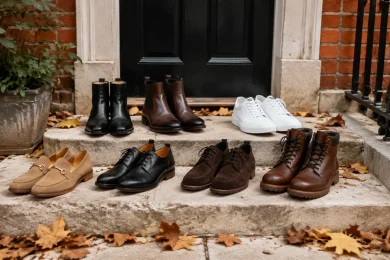
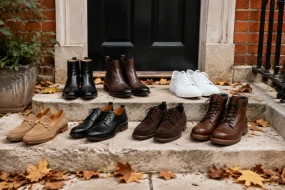
The flat shoe conversation in fashion has moved well past the defensive crouch it occupied for years, when wearing flats out in the evening required either a medical excuse or a studied sort of nonchalance. Pointed-toe ballet flats, in particular, have been through such a thorough reconsideration that they now carry a different freight altogether. They register as a choice rather than a default. A well-cut loafer in a saturated colour, or a satin-finish flat in the same family of tones as the rest of an outfit, reads as dressed rather than underdressed. The styling is doing the work that the heel used to do.
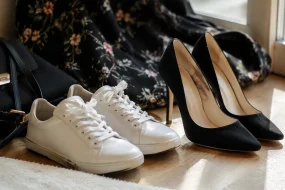
Block-heeled mules and kitten heels occupy a slightly different position. They retain a nominal heel height while offering something closer to a flat in terms of wearability, and for that reason they often get cited as the sensible compromise. But sensible compromise is a fairly thin ambition. The more interesting question is why something with no heel at all should need justifying in the first place.
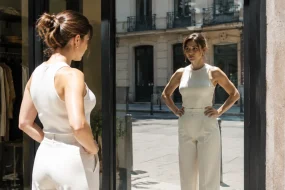
A great deal depends on the rest of the outfit. A wide-leg trouser in a heavy crepe worn with a clean, simple flat creates a line from hip to floor that has its own kind of formality. An embellished top with slim trousers and pointed flats is not making an apology for anything. The absence of height is not the absence of thought.
The Heel-Comfort Trade-off Nobody Talks Honestly About
The case for heels on a date night often rests on a slightly embarrassing premise: that tolerating discomfort is part of the performance of attractiveness. Most people who wear heels regularly know, on some level, that an evening spent in shoes that hurt changes the character of the evening. It affects how much walking gets done, whether a second bar seems worth it, how present someone actually is by the end of a meal. The discomfort is absorbed into the night so gradually that it is easy to misattribute the resulting tiredness to the lateness of the hour.
This is not an argument that heels should be abandoned wholesale. Some people genuinely find them comfortable, and some genuinely enjoy the shift in posture and proportion they produce. Both are legitimate. The point is that enduring physical discomfort to perform effort for a date is, when stated plainly, a rather odd priority. The effort could simply be elsewhere.
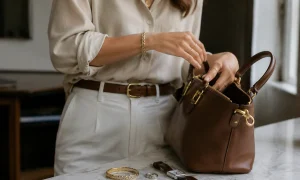
Interesting fabric, better tailoring, a considered accessory, a coat that looks like it cost twice what it did. These are all places where intention shows just as clearly, and none of them make it harder to walk to the Tube.
Where the Heel Genuinely Earns Its Place
To argue against compulsion is not to argue against heels themselves. There are outfits where a heel is the right answer and where a flat would genuinely undercut what the clothes are doing. A column dress cut to skim the floor needs either a heel or a precise hem adjustment; without either, the length drags and the whole silhouette goes slack. A very short fitted skirt has a proportion that heels extend logically. Certain trousers are simply cut for them.
The difference is between choosing a heel because the outfit asks for it and choosing a heel because the occasion is supposed to require it. The first produces dressing that looks coherent. The second produces dressing that looks like compliance, and compliance has a slightly defeated quality that no amount of heel height corrects.
The Venues That Make Heels a Practical Absurdity
A cobbled street, a steep staircase to a basement bar, a standing-only gig, a cinema with sticky flooring and narrow rows, a walk from the car park that turns out to be twenty minutes instead of five. A significant portion of British date-night geography is actively hostile to stilettos and challenging for anything over a modest block heel. The insistence on high heels in these contexts produces a specific kind of evening where one person is partly occupied by managing their own locomotion while the other carries on normally.
This is worth naming because it gets papered over with phrases like “worth it” and “you get used to it.” Some evenings are genuinely worth a degree of impracticality. But the blanket assumption that heels are the default and comfort is the deviation inverts how clothing decisions probably ought to work. Dressing for the actual evening, rather than for a hypothetical evening that takes place on smooth flat surfaces, is just good planning.
What Chelsea and Bermondsey Both Figured Out Years Ago
It is not coincidental that the most stylish dressing often comes out of cities and neighbourhoods where people walk everywhere. The particular elegance of a good flat shoe worn with an evening outfit has been readable in London for a long time, even when fashion press was still insisting heels were the only option. A woman in a silk slip dress and clean white trainers at a restaurant that has a Michelin star does not look like she forgot to change. She looks like she knows what she is doing.
That image has become more broadly legible partly because fashion made room for it, and partly because enough people simply started doing it and it turned out nobody important objected. The gatekeeping around occasion footwear has loosened considerably, and the places where it still feels rigid tend to be in people’s own heads rather than in any actual dress code.
A date is not a job interview and it is not a formal occasion with posted rules. It is, in the best versions, an evening where two people are paying close enough attention to each other that the precise heel height of the shoes involved does not feature in any meaningful way. The outfit’s job is to make the person wearing it feel like themselves, sharpened. A heel that achieves that is the right choice. So is a flat that achieves it. The myth is that only one of them can.