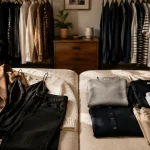
Dinner dates occupy a strange middle distance in the wardrobe. Too casual and it looks like no thought was given to the evening at all; too formal and the whole thing feels like an audition rather than a meal. The formulas that actually work sit in that gap, and they tend to share one quality: they look considered without looking laboured.

Seven formulas follow. Each one is a complete outfit logic, not a mood board suggestion. The point is that any of them can be assembled from pieces a reasonably well-dressed person already owns, with at most one new addition required.

Tailored Trousers, a Simple Knit, and One Good Shoe

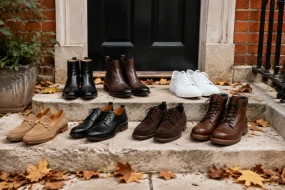
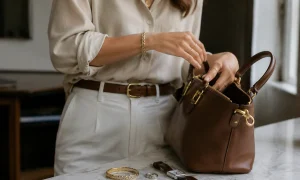
High-waisted wide-leg trousers in a neutral (black, camel, deep navy) paired with a fine-gauge knit tucked in at the front. The knit does the work that a blouse would do, but without any of the fussiness. The shoe is where this formula earns its keep: a pointed kitten heel or a sleek loafer in a contrasting tone pulls the whole thing out of everyday territory. The bag should be small and structured. A clutch or a tiny crossbody. Nothing that suggests a commute.

This is the formula for someone who wants to look deliberately put-together without any visible effort. The knit reads as relaxed; the trouser silhouette and the shoe say something else entirely.

The Midi Dress That Reads as Intentional

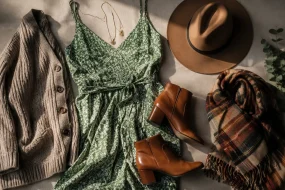
A slip dress or a bias-cut midi in a solid colour or a small, close repeat (a fine stripe, a delicate floral) is perhaps the least complicated formula on this list. One piece, done. The decisions that remain are small: does it get a heel or a flat? A leather jacket thrown over for warmth, or a wrap kept in the bag? Both answers are correct. The dress does the heavy lifting regardless.

The fabric matters more than almost anything here. A midi in cheap polyester that catches the restaurant lighting badly willundo everything. Silk, satin, a good viscose, or even a soft crepe all behave well. The dress should move slightly when its wearer moves.

Straight-Leg Jeans, an Elevated Top, No Apologies

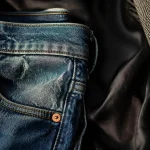
Dark indigo or black straight-leg jeans, no distressing, hemmed so they sit just above the ankle. On top: something that reads as intentional. A silkcamisole worn alone, a structured corset-style top, a fitted blazer with nothing beneath it. The jeans do not demote the outfit to casual because everything above the waist insists otherwise.

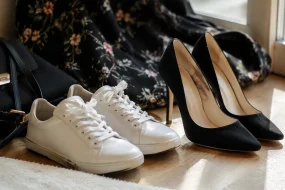
The shoes cannot be trainers. A strappy heel or a pointed mule moves this formula into dinner territory. A block heel works too and is considerably more comfortable over a three-course meal with wine. Comfort matters; a person who has removed her shoes under the table by the starter is not enjoying herself.

A Blazer Worn as the Outfit

An oversized or longline blazer belted at the waist, worn over a pair of fitted trousers or straight-leg jeans. The blazer becomes the statement piece rather than the layer. This formula has been working since at least the early nineties and continues to work because a well-cut blazer carries authority in almost any room.

Colour is worth considering here. A chalk-white or ivory blazer against dark trousers is striking without being theatrical. A caramel or tobacco tone against black does something similar. The formula gets dull in all-grey or all-black because the contrast disappears and with it the whole point of the silhouette.

Keep the jewellery minimal: one good chain or a pair of understated earrings. The blazer is already doing enough.

The Monochrome Formula

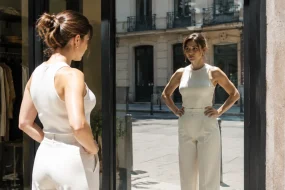
Dressing in a single colour from collar to shoe is one of those moves that looks far more planned than it is. Head-to-toe cream, burgundy, forest green, or even a deep chocolate brown reads as intentional and quietly fashion-literate. It also has a useful elongating effect that most other formulas do not.

The pieces do not need to match precisely; tonal variation within a colour family is actually better. A slightly different shade in the trouser versus the top adds depth and prevents the outfit from looking like a uniform. Texture variation matters too: matte fabric alongside something with a slight sheen, or a knit beside a smooth crepe, gives the eye something to rest on.

A bag and shoe in a contrasting accent colour can sharpen the whole thing, but it is not required. The monochrome formula is strong enough to stand on its own.

Wide-Leg Trousers and a Bandeau or Strapless Top

This combination works because it borrows the logic of a wide-leg jumpsuit without the inconvenience of one. High-waisted wide-leg trousers (again) with a simple bandeau or strapless top tucked in creates a long, clean line. The exposed shoulder and collarbone provide the visual interest that a more covered formula achieves through texture or print.

It is a formula with a clear season: late spring through early autumn, when the restaurant is warm enough and the journey there is not a test of endurance. A well-cut blazer can be carried and thrown over the shoulders if the evening turns cool, but it should be optional, not structural.

The trousers in this combination should have a real waistband and a clean drape. Anything that pulls across the hip or sits low will fight the silhouette rather than support it.

The Printed Skirt as the Anchor

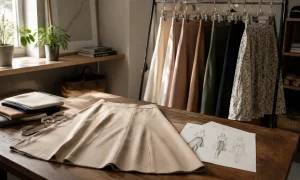
A statement skirt, something with a bold print, an interesting texture, or a dramatic silhouette, paired with the quietest possible top. A plain white or black fitted tee, a simple scoop-neck bodysuit, a fine-gauge knit in a colour pulled from the skirt’s pattern. The skirt takes the lead; everything else follows without competing.

This formula asks for some restraint in the accessories. If the skirt already has visual noise, the jewellery should be simple and the shoe should be elegant rather than attention-seeking. A strappy heel or a simple mule in a neutral. The temptation to add more is worth resisting.

Midi and maxi lengths in this formula tend to photograph well, which matters to some people and does not matter at all to others. At floor-length, a statement skirt with a plain bodysuit is one of the most genuinely striking dinner-date outfits possible, requiring nothing else andcosting far less than the effect suggests.

On Occasion and the Right Amount of Effort

What these seven formulas share is a refusal to over-work the outfit. A dinner date is not a red carpet. It is a meal with someone whose company is the actual point of the evening, and the clothes should serve that context: present, pleasing, a little considered, and then invisible. The moment an outfit demands more attention than the conversation, something has gone wrong.

The formula that works best is usually the one worn with the most ease. A beautifully cut trouser and a silk top worn by someone slightly uncomfortable in them will always lose to a well-fitted midi dress worn by someone who has entirely forgotten about it by the time the first drink arrives.

Leave a Reply

Your email address will not be published. Required fields are marked *