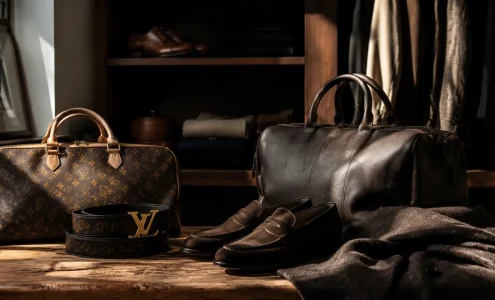
Two bags sit side by side on a table. One is a designer leather tote from a luxury house, retailing for somewhere between $800 and $2,500 depending on the season and the logo’s current cultural heat. The other is a handmade leather tote from a small heritage workshop, built by a craftsperson who cuts, skives, and saddle-stitches each piece by hand, priced somewhere in the same range or modestly below it. From across the room they might look comparable. Up close, the differences are specific and unambiguous, and they point in opposite directions depending on what the buyer is actually trying to own.


What the Designer Price Is Actually Buying

A significant portion of a luxury-brand tote’s price is a licensing fee on cultural belonging. That is a real thing with real value to plenty of people, and there is no shame in acknowledging it. Carrying a bag from a house like Celine, Loewe, or Polene signals membership in a specific aesthetic community, opens certain doors in certain rooms, and delivers a consistent visual shorthand that a heritage workshop bag almost never provides. That shorthand is worth paying for if the social and symbolic utility matters to the buyer’s life.

But the object itself is not always commensurate with the price. Many bags in this category use full-grain leather on the exterior panels and acoated canvas or lower-grade leather for the base, gussets, and interior. The hardware is often zinc alloy finished to look like brass. The stitching is machine-run at the production lines of contracted factories in Europe or Asia, quality-controlled to a high standard but not individually inspected at every seam. The result is a well-made bag. Calling it a masterwork of craftsmanship is marketing language, not a description of the process.

Durability follows from this. A designer leather tote from a major house, maintained reasonably well, should last a decade. Some last longer. But the failure points are predictable: the base corners wear through, the hardware tarnishes or loosens, the lining degrades. These bags are not generally built to be resoled and re-lined and returned to service the way a quality shoe is. When they go, they go entirely.

Saddle Stitching, Vegetable Tanning, and Why the Process Shows

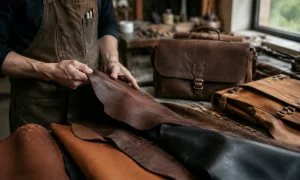
Heritage craft shops, the serious ones, work with vegetable-tanned leather, which is tanned using plant-based tannins over a process that can take weeks to months rather than the days chromium tanning requires. The resulting leather is denser, firmer, and ages in a way that is categorically different from chrome-tanned hides. It develops a patina. Scratches buff out or absorb into the surface character. The color deepens and becomes specific to the owner’s habits, the oils in their hands, the objects they carry.

Saddle stitching is the other marker. A machine stitch runs a single thread in a loop; if the thread breaks at one point, the whole seam can unravel from that point outward. A hand saddle stitch runs two threads in opposite directions through each hole, so any single break locks and goes no further. Under magnification, the difference is visible in the tension and angle of each stitch. Over years of use, the difference is visible in the seam’s survival.

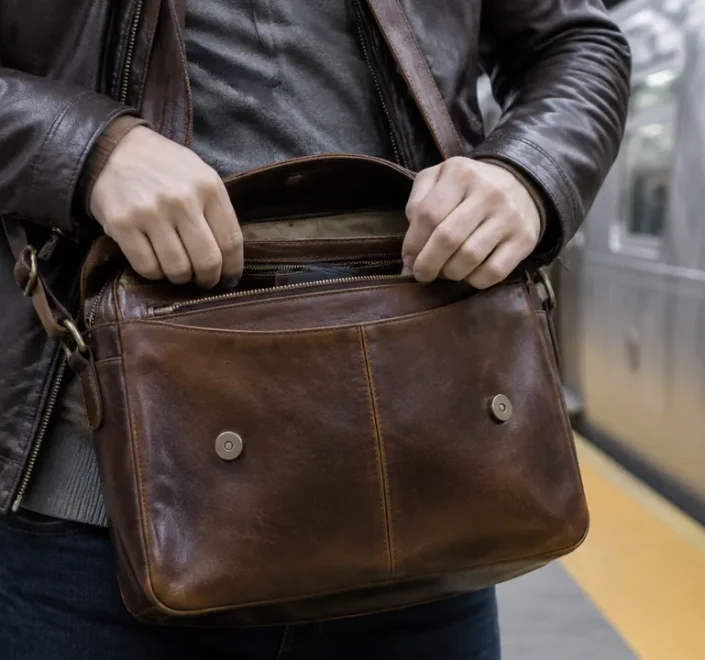
A craftsperson working alone or in a small atelier might spend eight to fifteen hours on a single tote, depending on the complexity of the construction. Edge finishing alone, the beveling, burnishing, and sealing of every raw leather edge, can take an hour or more on a bag with multiple pockets and a structured base. These are not details that photograph well in a product shot. They are details that a person’s hand finds every time they reach into the bag.

Where the Pricing Overlaps and Where It Diverges

The overlap zone is real and worth sitting with. A heritage workshop tote priced at $600 to $900 is genuinely competing with a designer house tote at the same number. Both are expensive. Both require a decision. The question is what proportion of the price is going toward physical construction versus brand infrastructure, retail overhead, advertising, and margin.

For the heritage workshop, nearly the entire cost is material and labor. A square foot of premium vegetable-tanned leather from a respected tannery runs high; the hardware, if sourced in solid brass rather than plated zinc, costs more again. When a small maker prices a bag at $750, the margin is often slim to moderate. There is no flagship store on a major avenue absorbing rent into the product’s cost structure.

For the designer house at $1,200, a substantial percentage of that number is covering the distribution chain, the seasonal campaign, the store leases, and the brand equity maintenance that makes the logo carry its cultural weight. The leather may be excellent. The construction is professional. The price is partially a subscription to an institution.

Neither of those is inherently wrong. But they are different purchases, and conflating them produces buyer regret in both directions.

The Patina Argument and Its Honest Limits

Heritage leather advocates love to invoke patina, and they are right to. A well-aged vegetable-tanned bag at fifteen years has developed a surface that no new bag can replicate, a record of use that is specific and unrepeatable. That is genuinely beautiful and it is part of what the buyer is purchasing at year one: the potential of the thing, not just the object on the day of purchase.

The honest limit is this: patina requires care. It requires conditioning the leather two or three times a year, keeping it away from sustained moisture, and accepting that the bag will look worn because it is worn. A buyer who wants the bag to look pristine at year five will find that expectation misaligned with how these leathers age. They darken. They pick up texture. They look used. To many owners that is the whole point. To others it is a liability.

Designer bags with treated or glazed leathers are explicitly engineered to resist this kind of aging. They stay more uniform, more consistent, more visually close to their original state. That is a deliberate design choice for a specific preference, and it is a reasonable one.

Repairability as a Long Consideration

A heritage workshop bag, if it comes from a maker who still exists in ten years, is likely repairable by that maker or by any competent leather worker. The construction is transparent: the saddle stitching can be unpicked and redone, a damaged panel can be replaced with matching leather, a worn base can be reinforced. The hardware, if solid brass, can be polished or replaced with period-matching pieces. The bag’s second decade is negotiable through repair rather than replacement.

Designer houses offer some repair services, and a few do it well. But the experience is variable. Turnaround times can run months. Costs for a significant repair can approach the resale value of the bag. And the deeper structural repairs, replacing a gusset, rebuilding a base panel, relining the interior, often require sending the bag to a central facility with uncertain communication about outcomes. The bag’s repairability is real but mediated through an institution that has its own priorities.

Independent leather repair shops can work on either bag, but they may struggle to source replacement hardware or lining materials that match a designer bag’s proprietary specs. The heritage workshop bag, built with standard materials available from leather suppliers, is easier for a generalist to service.

When the Designer Bag Is the Correct Answer

There are situations where the designer tote is the right purchase and the heritage bag is not. If the bag is going to function in environments where brand recognition is part of the practical utility, certain professional settings, certain social contexts, certain cultures where the visual signal carries genuine weight, then the designer bag is delivering real value that the heritage bag cannot replicate. A beautifully made tote from a small Vermont or English workshop will often read as simply nice to people who do not know what they are looking at. The logo communicates instantly.

Resale value also tilts toward the designer house for the most recognizable models. A heritage workshop bag depreciates like most handmade goods, unless the maker becomes famous enough to carry secondary-market premiums. A classic bag from a recognized luxury house can retain a meaningful fraction of its value, and in some cases appreciates. For a buyer treating the purchase partly as a store of value, that matters.

The Craftsperson Who Does Not Have a Store on Fifth Avenue

Small heritage workshops are genuinely fragile enterprises. The craftsperson who makes a particular bag that a buyer loves may retire, scale down, or close within the bag’s expected lifespan. That is a real risk that does not exist when buying from a house that has operated for seventy years. The institution’s permanence is part of what the designer buyer is paying for, and it is worth something when thinking about repairs, authenticity, and resale.

A heritage bag purchased from a workshop that closes five years later is not a failed investment, but its support network is reduced to whatever the general leather repair market can provide. A buyer should look at the workshop’s history and current activity before treating it as a long-term relationship. A maker who has operated for fifteen or twenty years, who documents their process publicly, who has a waiting list, is structurally different from someone three years in with a good Instagram presence.

The two-year waitlist at certain English or Japaneseateliers is itself a kind of proof. It means the craftsperson cannot make bags faster than people want them, which is as close to permanence as a small operation gets.

The Purchase as a Statement About What Craft Means to the Buyer

At the end of the comparison, the decision is less about which bag is objectively superior and more about what kind of ownership the buyer wants to participate in. A heritage workshop tote is a bet on the thing itself: the hours, the material, the construction, the slow development of the object over time. The bag is the point.

A designer tote from a recognized house is a bet on a larger system: the aesthetic community, the cultural shorthand, the institutional history, the resale market, the repair infrastructure. The bag is the entry point into something bigger than itself.

Both bets are legitimate. Where buyers go wrong is paying designer prices and expecting heritage construction, or seeking the craftsperson’s care and being surprised when it does not come with a recognizable logo or a return desk at a flagship store. The bags are built to different specifications for different needs, and the money follows from that, not the other way around. A buyer who handles both carefully before deciding will find that the answer is already in their hands.

Leave a Reply

Your email address will not be published. Required fields are marked *