Saturday morning has a particular kind of pressure. Not the weekday pressure of a commute deadline or a meeting that starts at 8:15, but a soft, domestic pressure: the day belongs to you, people are waiting, and standing in front of the closet in a bath towel at 9:47 is not how anyone pictured it going. The question is not how to look like a fashion editor. The question is how to leave the house in five minutes and feel like a person who made a choice.


That is a different skill than building an outfit from scratch, and most style advice skips it entirely. The pieces below are not about trends. They are about combination logic: specific pairings that work fast, require almost no thought in the moment, and carry enough visual coherence that nobody, including the person wearing them, has to wonder whether it worked.

The Dark Wash Jean and One Good Layer

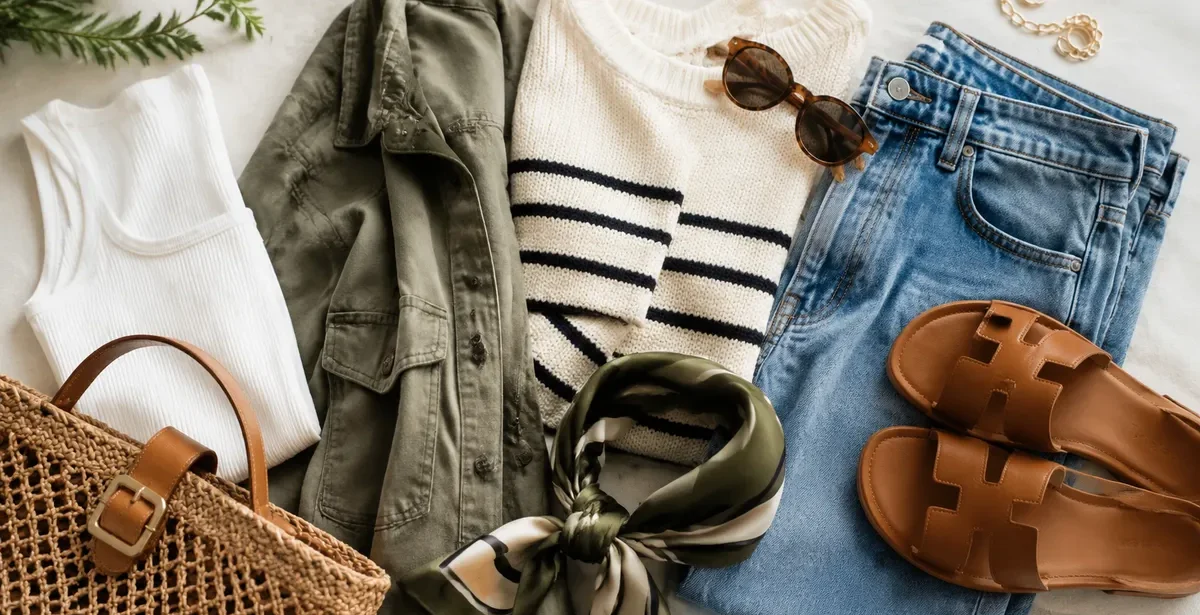
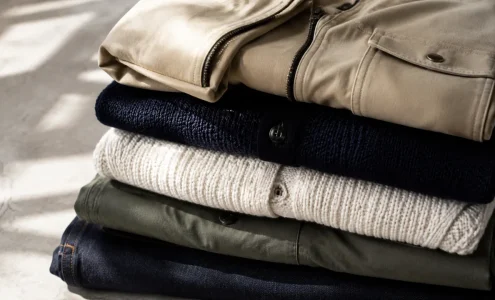
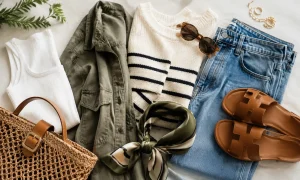
Dark wash jeans are the single hardest-working item in a fast Saturday rotation. They read as intentional in a way that light wash or distressed denim does not, which means they can absorb almost any top and bring it up a level. A white or cream crewneck sweatshirt, a chambray button-down left untucked, a thin merino v-neck in navy or charcoal: any of these, pulled on over a plain dark jean and a white sock with a clean sneaker or a low-profile leather shoe, produces something that reads as considered without requiring any actual consideration.

The one rule: the top has to be one solid color, no graphic, no logo. A graphic tee over dark jeans pulls the whole thing back toward “whatever was on the floor.” A solid top keeps it clean.

This combination takes less than three minutes from drawer to door once the jean is already hanging somewhere accessible. That detail, where the jean lives when it is not being worn, turns out to matter more than the jean itself. A dark wash folded into a drawer under four other pairs is a four-minute dig. Hanging on the back of the door or on a hook in the closet, it is a ten-second grab.

Jogger or Track Pant With a Structured Top

The jogger has been rehabilitated. A slim-cut track pant or jogger in a solid neutral, charcoal, olive, black, or navy, is a legitimate Saturday option that feels comfortable and reads as deliberate when the top carries some structure. A structured top in this context means almost anything with a collar or a clean hem: a white Oxford, a quarter-zip pullover, a fitted bomber. The formality of the top absorbs the casualness of the pant and the result is balanced rather than sloppy.

The shoe choice decides the whole thing. A low canvas sneaker keeps it casual. A clean leather trainer or a minimalist running shoe in white or gray elevates it enough for anywhere a Saturday actually takes someone: the farmers market, a coffee shop, a kid’s soccer game, a hardware store, a lunch that is almost but not quite a real restaurant.

What kills this combination is a baggy or oversized top. The jogger already brings a relaxed line. An oversized top on top of it doubles the looseness and the whole outfit starts to look like sleepwear with shoes on.

The Chino and a Tucked or Half-Tucked Shirt

Chinos in khaki, stone, or olive take about forty seconds to put on and require almost no styling thought when paired with a chambray or linen shirt in a complementary neutral. The half-tuck, front hem tucked in, back hanging out, has been around long enough that it no longer reads as a deliberate styling trick. It just reads as someone who got dressed without overthinking. Which is, for a Saturday morning, exactly the goal.

This combination works because the color relationship does the heavy lifting. Khaki chino with a pale blue chambray is one of the most visually effortless combinations in casual menswear, the tones are close enough in temperature to feel harmonious without looking matchy. Olive chino with a white or off-white linen shirt does the same thing in warmer weather. Neither requires a belt to look finished, which removes another decision from the morning.

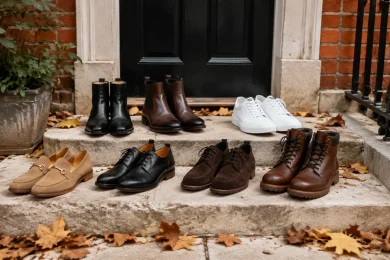
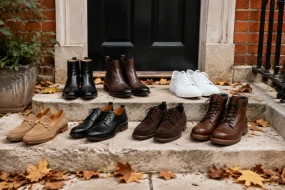
Loafers or leather slip-ons over a no-show sock are the fastest shoe choice here. No laces, no decision, the shoe goes on in four seconds and the outfit is done.

All One Color Family, Head to Toe

Monochromatic dressing sounds like it requires more effort than it does. The actual experience of putting it together is the opposite: when everything is the same color family, tonal matching takes the place of color-matching, and tonal matching is nearly impossible to get wrong. A light gray t-shirt with medium gray pants and gray or white sneakers. A camel knit with tan or brown trousers and a cognac loafer. Navy on navy, if the shades are different enough to read as intentional rather than a failed attempt at a matching set.

The reason this works on a fast morning is that the decision tree collapses. Ordinarily an outfit requires checking whether the top and bottom work together, whether the shoe color connects, whether the jacket or layer adds something or fights everything else. In a monochromatic combination, if it is roughly the same color, it goes. That speeds the whole process up significantly.

One texture variation keeps it from reading flat. A smooth chino with a slightly ribbed knit top. A matte sneaker with a slightly shiny jacket. The difference does not need to be dramatic. Just enough that the eye has something to land on.

The Weekend Uniform and Why Having One Is Not Boring

There is a version of personal style advice that treats a repeated outfit as a failure of imagination. This is a mistake. A weekend uniform, a standing combination that gets worn most Saturdays in some variation, is one of the more practical things a person can build for themselves. It eliminates the morning decision entirely, which frees up attention for the actual Saturday: the errand, the kid, the friend, the coffee, the problem that came up at 8 a.m. and needs handling before noon.

A useful uniform is usually built around one pair of pants and two or three interchangeable tops, all in a narrow color range. The specific combination changes week to week, but the logic stays constant. Dark jean, solid neutral top, clean sneaker. That is a uniform. It takes five minutes the first Saturday, four the second, and eventually it takes almost no time because the body has learned the sequence. Jacket or no jacket. Which sneaker. Done.

The other advantage of a uniform that rarely gets mentioned: it is much easier to shop for. Once the logic is clear, a new top either fits into the rotation or it does not. That binary makes purchasing decisions fast and returns rare. The closet gets smaller and more useful at the same time, which is its own kind of efficiency that extends well beyond Saturday mornings.

When the Day Escalates After Nine

Some Saturdays stay casual the whole way through. Some start at the hardware store and end at a birthday dinner that got confirmed on Thursday. The combinations that hold up across that range share one characteristic: they are built around a single elevated piece that can carry the outfit into a slightly more formal register when something is added.

Dark jean, clean Oxford shirt, white sneaker in the morning. Add a slim blazer in navy or stone from a bag or the back seat, swap the sneaker for a leather boot if there was time to pack one, and the same outfit clears the birthday dinner. The base combination does not change. The add-on does the work of the transition.

This only functions if the morning outfit is built from pieces that can absorb the elevation. A graphic tee will not clear the blazer. A pair of very distressed jeans will fight the Oxford. The five-minute combinations described earlier all pass this test because they start from clean, unfussy pieces with no strong visual noise. That quietness is what makes them adaptable. An outfit with a statement detail in the morning is a costume in the evening. An outfit built from solids and neutrals at 9 a.m. is still just an outfit at 8 p.m., which is, most Saturdays, exactly what is needed.

Leave a Reply

Your email address will not be published. Required fields are marked *