Polyester blends and treated weaves have quietly colonized the travel clothing market, showing up in chinos that pack into a fist-sized bundle, blazers that come out of an overhead bin looking pressed, T-shirts that dry in a hotel bathroom in under two hours. The shift has been gradual enough that many people did not notice it happening and sudden enough that, looking at a rack of modern travel-focused clothing, the old cotton-dominant world feels further away than it actually is.


The reasons are not mysterious, but they are worth pulling apart, because the full story is more interesting than the simple pitch that fabric technology has improved.
The Problem That Travel Clothes Were Always Trying to Solve
Cotton wrinkles because its fibers absorb moisture and then dry in whatever shape they happen to be in. Stuff a cotton dress shirt into a backpack for a four-hour flight and the fibers will have memorized every fold by the time the plane lands. Anyone who has arrived somewhere important and tried to steam out a shirt with the shower running in a bathroom the size of a closet knows how imperfect that fix is. The shirt emerges damp and marginally less creased, and then has to be worn while still slightly wet.
Travel dressing has always been a negotiation with this problem. The traditional answer was to pack less, fold carefully, choose dark colors that disguise creasing, or accept that looking polished at the destination required unpacking the moment you arrived and hanging things up to relax. All of those strategies work, and many experienced travelers still use them. But they ask something of the traveler: attention, advance planning, time.
Wrinkle-resistant fabric asks almost nothing. That asymmetry is the core of its appeal.
How the Fabrics Actually Behave
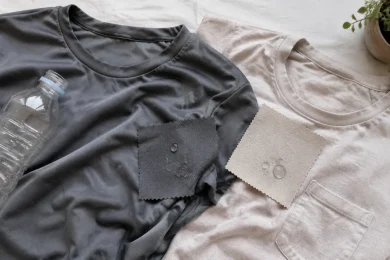
The fabrics in this category mostly fall into two groups. Synthetics, primarily polyester and nylon, resist wrinkling because their fibers do not absorb water and snap back toward their original shape rather than holding a crease. The second group is natural or blended fabrics that have been chemically treated, usually with a resin finish, to make the fibers resist bending. Wrinkle-resistant cotton and cotton-polyester blends fall into this category.
The performance difference between the two approaches is real. A well-made polyester or nylon garment will genuinely emerge from a compression packing cube looking close to unworn. A treated cotton will do better than untreated cotton but will still hold some wrinkle memory if compressed for hours. The tradeoff is feel: synthetics tend toward a slicker, less breathable hand that many people find less pleasant against skin. Treated cottons preserve some of the softness and breathability of the original fiber, though the chemical finish can wash out over time.
Performance fabrics from brands that have spent years developing proprietary weaves, Merino blends, and four-way stretch constructions sit in a separate conversation. Those are different products with different price points and a different intended use. The mass-market travel clothing that is actually taking over airport retail and mainstream outdoor-adjacent brands is mostly on the treated synthetic or blended side of things.
Why Streetwear Became the Venue for This Shift
The interesting thing about wrinkle-resistant fabrics is that they were not new when travel streetwear started incorporating them heavily. Wrinkle-resistant dress shirts existed for decades. What changed was which clothing categories adopted the feature, and who was buying.
For a long time, wrinkle resistance was associated with formal or business-casual wear: the office shirt you could hang in the closet without ironing, the dress pant that came out of the dryer acceptably pressed. The aesthetic was utilitarian and not particularly desirable on its own terms. Nobody was excited about a wrinkle-resistant shirt the way they were excited about a cashmere one.
What broke that association was the rise of travel as an identity category. Over the past fifteen years or so, the idea of being a person who moves constantly, a digital nomad, a frequent-flyer professional, a weekend-adventurer who drives three hours to hike and comes back the same day, became aspirational in a way it had not been before. Clothing brands followed that identity, and the functional requirements of that lifestyle (pack light, look presentable anywhere, wash and rewear) are exactly what wrinkle-resistant fabrics solve.
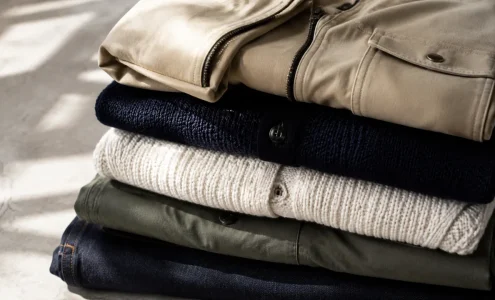
Streetwear, in the broad contemporary sense, meaning the clothes people actually wear in public rather than to the office or to a formal event, absorbed those requirements. The aesthetic result is a certain kind of garment that is hard to place precisely: jogger-cut pants in a fabric that could pass in a meeting, technical polo shirts that could be worn at dinner, overshirts in a material that looks like linen but behaves like polyester. The whole category is defined by the ambition to blur the line between athletic and dressed, and wrinkle resistance is one of the functional properties that makes that blur possible.
The Packing Cube as Cultural Artifact
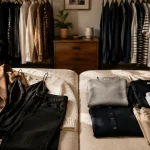
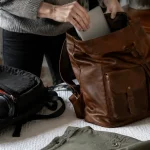
Consider what a packing cube represents as a piece of equipment. It exists entirely to compress clothing into a smaller, denser form so it can fit into a smaller bag. The whole logic of packing cubes is that you willcram your clothes in and they will emerge at the destination presentable. That only works reliably with fabrics that resist compression wrinkling.
Packing cubes are now sold in mainstream luggage departments alongside rolling suitcases, not just in outdoor gear shops. Their normalization tracks almost exactly with the rise of carry-on-only travel as a preference among frequent flyers. The two things reinforced each other: as more people committed to carry-on-only, demand for wrinkle-resistant clothing rose, which made more such clothing available at better price points, which made carry-on-only travel more feasible for more occasions, which pushed more people to adopt packing cubes and compressible bags.
The functional ecosystem that wrinkle-resistant fabric enabled is now self-reinforcing.
What Gets Lost in the Transaction
Wrinkle-resistant fabrics tend to look and feel a certain way, and that way is not always better. Synthetic travel trousers often have a slight sheen under direct light that reads as cheap in some contexts. The hand of heavily treated cotton can feel stiff or papery compared to a worn-in natural fabric. A linen shirt that has been worn all day and has picked up the creases of an active afternoon looks alive in a way that a crease-free synthetic shirt does not; the wrinkling is evidence of use, and some people find that evidence pleasant rather than embarrassing.
There is also the environmental dimension. Synthetic fabrics shed microplastics when washed, which end up in waterways. Chemical wrinkle treatments add another layer of processing to the garment’s production. These are real costs that the travel clothing market has been slow to fully reckon with, though some brands have moved toward recycled synthetic fibers and lower-impact finishing processes.
None of that means wrinkle-resistant fabrics are wrong, but it does mean the convenience is not without a ledger.
The Aesthetic Convergence Nobody Planned
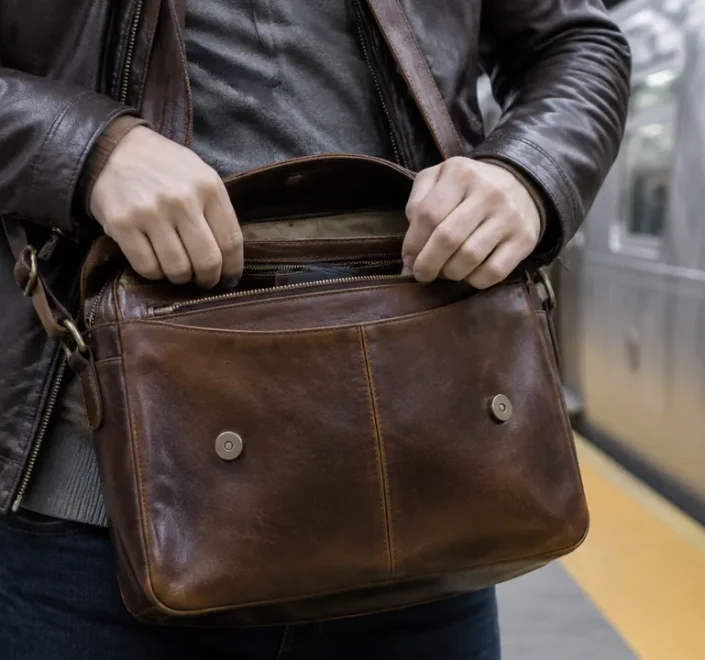
Walk through a major international airport terminal and pay attention to what the people moving through it are wearing. The clothes look increasingly similar: neutral colors, clean cuts, stretchy or semi-technical fabrics, minimal branding, trousers that fall between slim and relaxed. The look is neither athletic nor formal. It is functional, slightly anonymous, and optimized for a day that moves through multiple environments: the taxi, the flight, the lobby, the meeting, the dinner.
That convergence is the market expression of wrinkle-resistant fabric becoming a baseline expectation rather than a premium feature. When enough people want the same functional properties from their clothing, and when manufacturing catches up to make those properties widely available, styles begin to cluster around what the fabric enables. The clothes look similar because the problem they are solving is identical.
Whether that convergence produces better clothes or just more consistent ones depends on what a person values. The traveler who wants to move fast and arrive presentable is well served by it. The traveler who wants to wear something that has character, that drapes a particular way or ages visibly over years of use, is shopping against the current. Not impossible. Just harder, and increasingly deliberate, because the default has shifted.