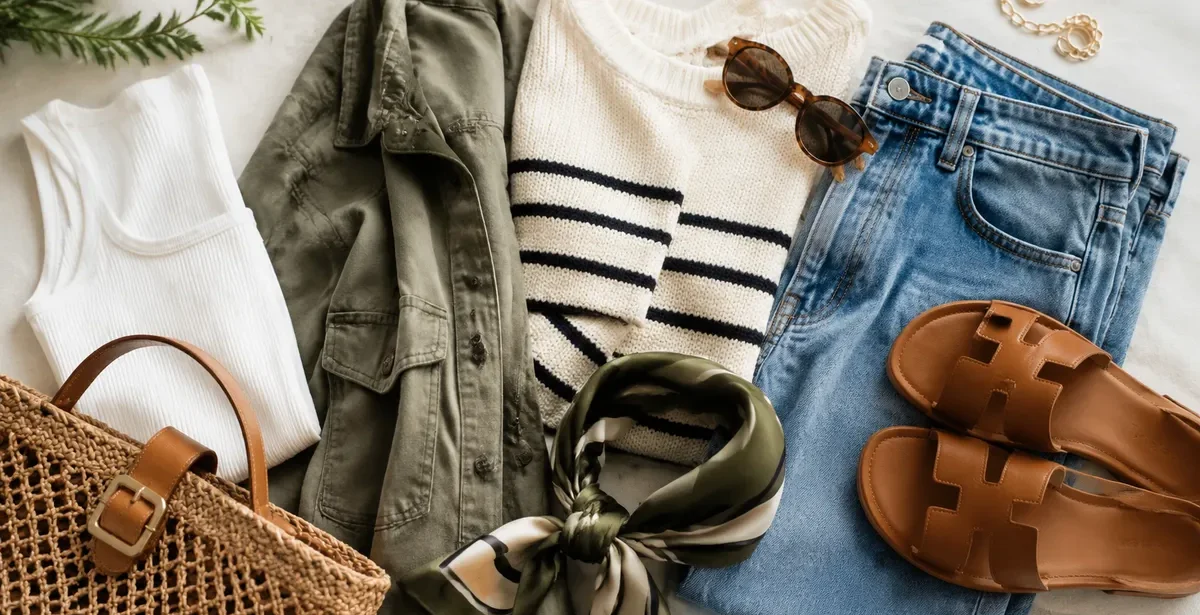
Fashion editors spend a strange portion of their professional lives in motion: market weeks, resort presentations, factory visits, couture shows that spill across three countries in ten days. Many of them also walk, seriously, as part of that itinerary. The cobblestones of Florence’s Oltrarno, the steep alleys climbing Montmartre, the long flat miles of a trade show floor that somehow add up to twelve by the time the day ends. They have developed packing strategies around this, and those strategies are less glamorous, and far more useful, than the editorial shoots suggest.

The Core Problem: Beauty and Distance Don’t Share a Bag Well
Shoes are the beginning and end of every serious packing calculation. A fashion editor going to Paris for a week of shows plus a planned walking day in the Marais is juggling a demand that most packing guides sidestep entirely: she needs something that photographs. The shoes that look right in a showroom or beside a rack ofcoats often require a change of footwear within four blocks of serious walking. Carrying two pairs of shoes through a week of checked-bag-free travel is a weight and volume problem that shapes every other decision in the bag.
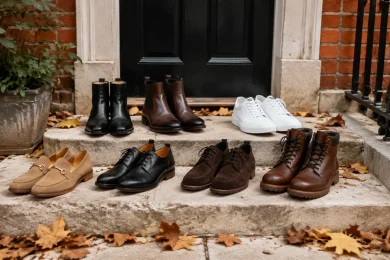
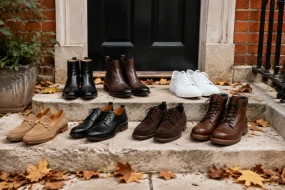
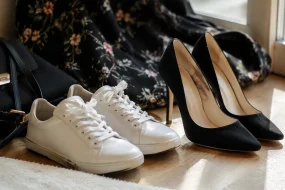
The answer that has emerged in the industry, quietly over the past several years, is to build the footwear selection around one shoe that can do both jobs. This does not mean a compromise sneaker dressed up with a blazer. It means understanding which silhouettes have enough structure and enough sole to cover real distance while still reading as intentional in a professional context. A chunky-soled loafer in a neutral leather, a low block-heeled boot in black suede, a white leather sneaker from a brand with enough cultural cachet that it does not read as athletic, these are the categories editors return to. The logic is ruthless: if it cannot carry the weight of a ten-mile day AND be photographable from the ankle down, it stays home.
What Actually Goes Into the Bag
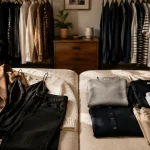
A bag that works for a walking-heavy trip is typically smaller than the trip would seem to require. The impulse to over-pack is strongest before a fashion-adjacent trip, because the occasions feel unpredictable and the stakes feel high. Editors who have done this long enough have learned to fight that impulse hard. The bag gets lighter every year they do it.
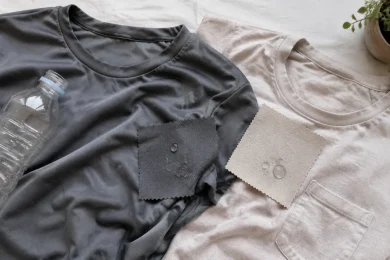
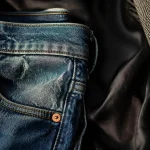
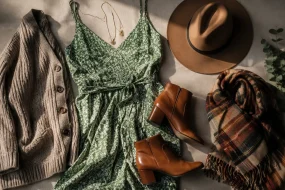
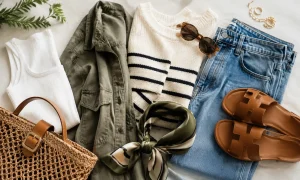
The actual contents tend to organize around a few principles. First: fabrics that recover from compression. A crinkled linen blazer that looks fine after being rolled is doing triple the work of a structured silk jacket that needs to be steamed before every wearing. Wool jersey, matte crepe, and densely woven cotton are the workhorses of a serious travel wardrobe. They can be folded tight, pulled out slightly wrinkled, and shaken back into shape in a matter of minutes. Heavy wovens with a lot of interior structure, brocades, heavy denim, canvassed suit jackets, take up space and recover badly. They are left behind unless the specific event demands them, in which case they are often worn onto the plane rather than packed.
Second: color discipline. Three to four days of walking across a city is far easier to dress for when everything in the bag can be worn together. Editors often travel in what amounts to a small capsule: one or two neutral base pieces, one or two pieces in a single accent color, and a jacket or coat that works over all of them. This feels constraining in theory and liberating in practice, because no outfit decision starts from zero. The morning question on a heavy walking day is simply which layer to add or subtract, not which among seventeen possible combinations makes sense.
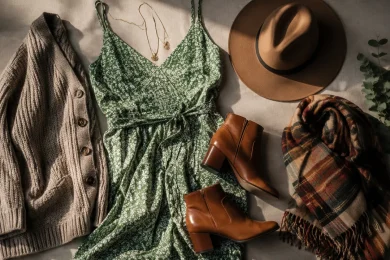
Third: the accessories do the variation. A scarf, a bag worn at a different height, a belt that cinches a dress that also works unbelted, these shift the visual read of an outfit without adding bulk to the luggage. Editors are often more deliberate about their accessories than about their clothing for this reason. A well-chosen silk square does more work per gram packed than almost any garment.
How Bags and Carriers Get Chosen
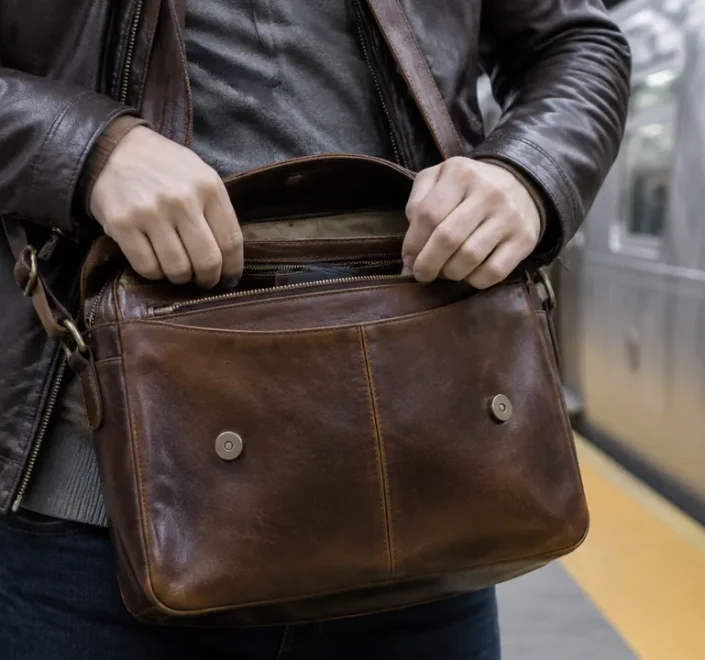
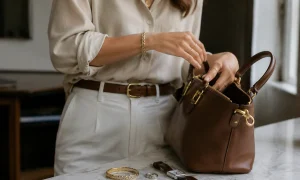
The single-shoulder bag that looks perfect in an editorial becomes a liability around hour five of walking. Weight distribution matters acutely over long distances, and most fashion bags are not designed with that in mind. Editors who walk seriously have worked out their own solutions. Some carry a structured tote that can be shifted from hand to crook of arm to shoulder. Others travel with a small crossbody for the walking days specifically and a different bag for evenings or studio visits, accepting the two-bag reality as a reasonable trade.
The backpack question is interesting. Five years ago a fashion backpack read as either athletic or extremely deliberate, a statement piece. The category has since expanded enough that a slim leather backpack, or a structured fabric one from a brand that lives in the fashion conversation, no longer signals a break from the aesthetic. Several editors have adopted them for high-walking days precisely because the weight is distributed across both shoulders, and the hands stay free for photography, for navigating tight market spaces, for carrying coffee. The shift was incremental and is now unremarkable.
The Feet: Specific Choices, Real Consequences
Blister prevention is not a glamorous subject, but it is one that experienced editors treat with the same seriousness they treat packing a good lens cloth or a portable charger. The basic mechanics are unglamorous: feet that are not cared for on day two will make day three miserable, and a miserable day three affects everything, the quality of the market notes, the mood in the showroom, the capacity to walk the extra mile to a neighborhood restaurant that is actually worth finding.
The specific products vary, but the category is consistent. A small roll-on anti-friction stick, the kind athletes use, travels in every serious editor’s toiletry kit. Merino wool or moisture-wicking liner socks worn under thicker socks on longer days. Thin gel insoles that can be transferred between shoes and add cushioning without changing the fit significantly. These are the unglamorous infrastructure of a walking trip, and the editors who carry them are the ones still moving at pace on the last afternoon when everyone else has taken a cab.
Breaking in shoes before a trip is treated as non-negotiable. The beautiful new boots that arrived two days before departure stay home, or they go into the bag unworn while an older pair does the actual work. This is obvious advice that a surprising number of people ignore because the new shoe is more compelling than the sensible one. Editors learn this the first time. Almost no one learns it the second time.
Layering for Climate and Movement
Cities that are beautiful to walk are often unpredictable in temperature. Coastal cities especially: a morning that starts cool in the shade of a narrow street can become genuinely warm by midday on an open square, then cool again in an air-conditioned showroom. The packing solution is not to bring more clothing but to bring clothing that layers efficiently.
A thin merino turtleneck worn under a blazer that comes off mid-morning, then back on in a cold meeting, is doing the work of what might otherwise be three separate garments. A coat that can be carried rather than worn (lightweight enough, packable enough that it fits in the tote without taking over) extends the range of conditions a single outfit can handle. The weight of a garment matters more on a walking trip than on any other kind, because at some point today, someone is going to have to carry it in their hands.
What Gets Worn on the Plane
The travel outfit is a practical decision that most editors have simplified to a formula: the heaviest shoes, the bulkiest layer, and whatever they are most afraid to check. A pair of Chelsea boots that would crowd a carry-on goes on the feet. The coat goes on the body. This is partly luggage management and partly a hedge against the airline losing the bag, which happens often enough to plan around. The things that cannot be replaced or borrowed go on the person.
There is also a vanity consideration that is worth naming directly. Arriving somewhere looking put-together matters to people whose professional identity is partly visual, and the plane outfit often doubles as the first outfit of the trip. This is why the travel formula tends to converge on simple, unfussy pieces in dark neutrals that photograph well but also compress into a seat for six hours without arriving visibly destroyed. A good cashmere sweater, worn instead of packed, arrives in better condition than almost anything that went into the bag. That is not an accident.
The Toiletry and Recovery Calculation
A heavy walking day taxes the body in ways that affect the next morning’s presentation. Sore calves, swollen feet from hours of standing at showrooms, the low-level dehydration that accumulates from being in motion in warm weather without drinking quite enough water. Editors who travel this way regularly tend to pack a few things specifically for recovery: a small jar of something cooling for the legs (arnica-based products are common), a compression sock or two for the overnight flight home when the feet are already tired, a basic pain reliever taken before bed after the longest days.
This is the part of the packing list that never makes the editorial. It sits at the bottom of the toiletry bag next to the expensive perfume and the SPF, and it does not look like a fashion decision at all. But it is what allows the walking to continue, day after day, in shoes that are worth photographing, through cities that reward the person who stays on their feet long enough to find the good parts.