Nike released the Dunk Low in 1985 as a college basketball shoe. Functional, wide-soled, built for hardwood. Within a decade it had migrated from gyms to skate parks, picked up scuffs and a different identity, and then mostly vanished from mainstream retail for years. The version that came back around 2020 was not a niche reissue. It moved at a scale that surprised even Nike’s own projections and caused a secondary market frenzy that lasted well into the years that followed. The question worth sitting with is why that specific silhouette, and why it keeps pulling people back.


The Silhouette Does Something Specific to Clothing
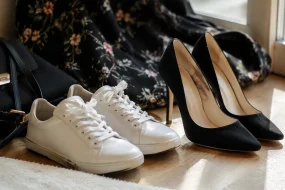
Part of the answer lives at the ankle. The Dunk sits low and wide, with a toe box that reads as substantial without being cartoonish. When worn with a cropped pant or a baggy jean that breaks just above the collar, it creates a visual weight at the base that a sleeker shoe cannot replicate. Streetwear in the mid-2020s drifts toward oversized, boxy, and layered. The Dunk anchors all of that. A slim runner underneath the same outfit floats awkwardly, like a nail through a piece of plywood that did not go all the way through.
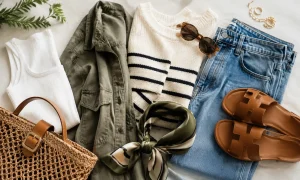
Sneaker stylists, whether they call themselves that or not, have been working this out on grids and flat lays for years. The Dunk’s proportions were accidental athletic engineering that turned out to solve a specific aesthetic problem. Nobody planned it. It just fits the current silhouette in a way that is difficult to replace.
Color Blocking as a Design Philosophy
The original Dunk came in team colorways. Michigan. Syracuse. Iowa. The brief was to match school colors, which meant two-tone uppers with high contrast, a toe in one color and a swoosh in another. That constraint produced a visual language that reads as intentional even when the original intention was purely institutional.
What that means in practice is that almost any Dunk colorway feels like a coordinated outfit choice waiting to happen. The Panda, black toe with white base, became the most commercially dominant variant of the 2020s not because it is the most interesting colorway but because it is the most useful. It anchors neutrals. It picks up contrast. It lets the clothes do the talking without disappearing entirely. The two-tone logic scales down beautifully to every other release: the Dunks that cycle through seasonal drops offer a starter kit of outfit building blocks rather than a collector’s puzzle.
Other Nike silhouettes do not operate this way. The Air Max line tends toward monochromatic or gradient. The Air Force 1 in its most popular form is white on white. The Dunk’s DNA is inherently split, and that split is what keeps stylists and regular buyers returning to it as a building block.
How the Skate Years Left a Mark on the Object
The shoe’s decade in skating did something to its cultural valence that never fully washed off. Skate shoes absorb a different kind of credibility than basketball shoes or running shoes. They signify proximity to something unglamorous, physical, and slightly outside the mainstream economy. Skaters were not supposed to be brand ambassadors; they were supposed to be riding something until it fell apart. The Dunk Pro B versions from the late 1990s and early 2000s carried that roughed-up legitimacy, and enough people in streetwear either lived through it or absorbed it secondhand that the association persists.
This matters because streetwear has always operated on a logic of borrowed credibility. The most coveted pieces connect their wearer, however loosely, to a subculture that existed outside commercial channels. A shoe that spent time on the feet of skaters in Providence and Seattle and San Jose, long before any hype cycle attached itself to the silhouette, carries that history in a way a shoe that was always expensive does not. The Dunk never had to be manufactured as underground. It was, for a stretch, genuinely inconvenient to care about.
The Collector Economy and the Entry Point Problem
At its 2021 peak, certain Dunk Low colorways were reselling at two, three, sometimes four times retail on the major platforms. Travis Scott, Off-White, and a cluster of regional limited drops pushed prices into ranges that functioned more like art market flips than shoe purchases. That secondary frenzy drew in a wave of buyers who had never cared about sneakers before and would not have been reached by any other product category.
The interesting aftereffect is what happened when supply caught up and secondary prices cooled. Nike flooded the market with Dunk SKUs through 2022 and 2023, and the resale premiums collapsed on most colorways. A segment of speculators walked away. A different segment stayed, precisely because the shoe became accessible again. The Panda Dunk going back to or near retail meant that someone who just wanted a clean, versatile sneaker for daily wear could actually have one without entering a raffle. That transition from exclusive to accessible without losing desirability is genuinely difficult to engineer. Most silhouettes do not survive it. The Dunk, largely, did.
The collector infrastructure built around it during the hype years left behind a residue of cultural seriousness that cheaper availability did not erase. The shoe still shows up in end-of-year roundups and editorial shoots. The history of notable releases still circulates. The community built around tracking and acquiring Dunks did not dissolve when prices normalized; it just redistributed toward the genuinely scarce end of the catalog.
What the SB Line Proved About Brand Loyalty
Nike SB, the skateboarding division that relaunched in 2002 and used the Dunk as its primary canvas, spent years building collaborative releases with actual skate shops rather than major retailers. Dover Street Market, Supreme, and a catalog of regional skate boutiques got exclusive runs. The logic was to keep the product close to the community it was supposed to serve and to keep it out of the channels that would dilute its meaning.
That approach built something more durable than standard brand loyalty. It built a sense of insider continuity, the feeling that following SB releases meant being part of a longer conversation rather than just buying a product. People who got in during the Sean Cliver holiday Dunks or the early Freddy Krueger releases felt connected to a catalog with texture and history, not just a marketing calendar. When the general Dunk line exploded in popularity, that SB legacy read as the authentic core of the silhouette, giving even buyers who came in during the hype a mythology to orient around.
Collaborations That Reset the Conversation
Periodic collaborative releases function as a reset mechanism for the Dunk’s cultural relevance. When a credible collaborator, whether a designer, a skate shop, an artist, or a brand with a distinct aesthetic vocabulary, puts out a co-designed pair, it redirects attention toward the silhouette and refreshes the conversation without requiring Nike to make formal announcements about why anyone should care.
The Ben and Jerry’s Chunky Dunky from 2020 is the clearest example. The colorway was absurd. Cow-print. Teal. Foam green. Sky blue. It should not have worked, and in pure taste terms many people would argue it does not work. But it reframed what the Dunk could be used to say, and it did so at a moment when the shoe’s mass-market revival was just beginning. The Chunky Dunky said: this silhouette is loose enough to carry a joke, specific enough to carry a collaboration with a Vermont ice cream company, and serious enough that the resulting object is worth coveting. That combination of looseness and seriousness is rare, and it is what makes the Dunk such a reliable base for collaborative projects.
When a Shoe Becomes a Default
The Dunk’s deepest hold on streetwear crowds is less about hype mechanics or brand history and more about the way it has become a default object in a specific visual language. When a photographer in Tokyo or a stylist in London builds a look for editorial or social content, the Dunk shows up as the shoe that does not need to be explained or justified within the outfit. Its presence is legible. Its proportions are familiar. Its color logic is understood.
That status as default is actually harder to achieve than status as coveted. Coveted things get replaced by the next coveted thing. Default things become part of the background vocabulary that people reach for when they want the outfit to work without the shoe being the point. The Air Force 1 held that position for years. The Dunk earned it more recently, and holds it now with a grip that does not look likely to loosen any time soon, not because of what Nike does next, but because of what the silhouette already is in the visual archive that streetwear draws from every day.