Street style runs on two competing instincts: the urge to take up space and the urge to disappear into precision. Baggy and slim fit have been trading the lead for thirty years, and right now, in mid-decade, both are technically present. But presence is not the same as momentum.

The slim silhouette had its long run. Through most of the 2010s, skinny jeans and tapered trousers were the default male uniform from Seoul to Stockholm, and anyone still holding onto a relaxed waist felt like they were arguing with the calendar. Then, somewhere around 2019, the counter-movement gathered enough mass to become undeniable. Wider legs, droppedcrotches, oversized shoulders. The pendulum swung, and it swung hard.
Here is where a lot of trend pieces stop: they declare the winner and call it a day. That move is too easy, and it also gets the current moment wrong.
What Baggy Actually Looks Like Right Now
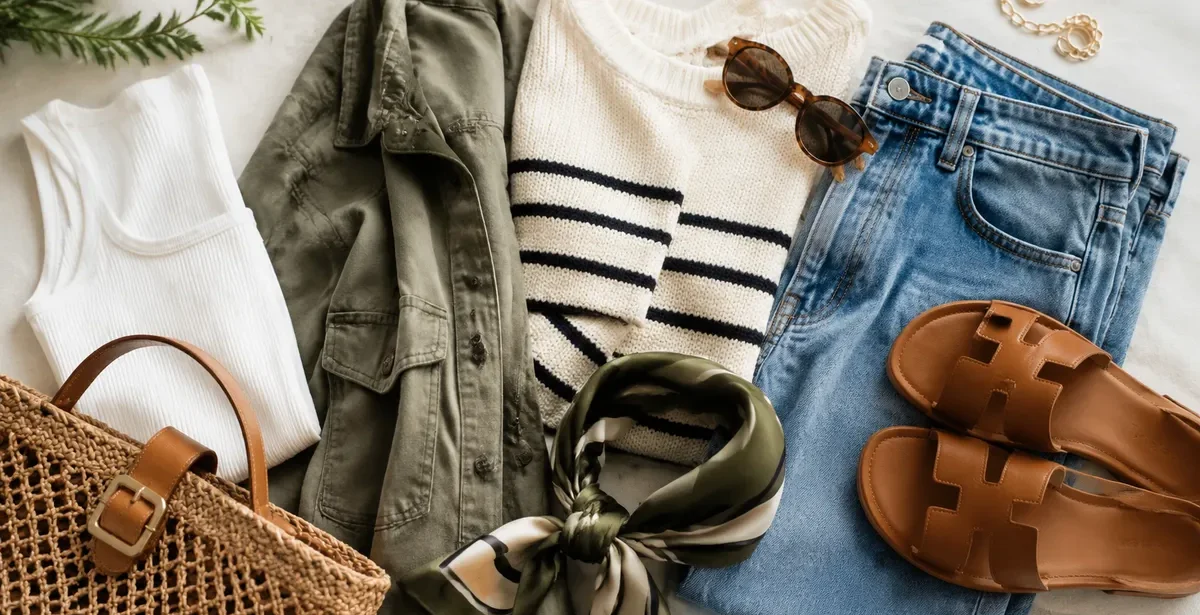
The version of baggy that feels genuinely fresh today is more considered than its early-cycle version. The widest, most costume-level silhouettes, the ones that looked borrowed from a mid-90s Tupac photoshoot or a Japanese workwear lookbook pushed to its logical extreme, have already been absorbed and digested. What remains is a quieter, more functional width. Trousers with a relaxed seat and a gentle taper through the ankle. Heavyweight denim that sits low but does not pool on the ground. Overshirts worn open and unbuttoned over a clean tee, adding volume without ceremony.

The brands that have held the most credibility in this space, the kind of labels you see carried by people who actually dress well rather than people who dress for Instagram, have consistently moved toward a middle weight. Not the exaggerated wide-leg silhouette that peaked on runways two or three seasons back. A bag that still reads as intentional.
Proportion is everything here. A truly wide trouser works when the top is kept tight or cropped. The moment both halves of the outfit go big, the look stops reading as a choice and starts reading as an accident. The guys who wear baggy well right now are managing contrast, even if they could not articulate it that way.
Where Slim Fit Actually Stands
Slim fit did not die. It retreated, which is a different thing.
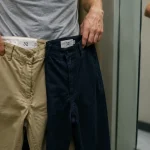
Tapered trousers and slim-cut chinos never left the wardrobes of men who dress for office environments or who simply never bought into the oversized wave. And in streetwear specifically, there is a visible counter-current: a smaller group of people wearing straight-leg or slightly tapered denim in a way that looks deliberate and even a little confrontational, because it is swimming against the current. Wearing slim fit right now requires a different kind of confidence than it did in 2013. Back then it was consensus. Now it reads as a statement, which gives it some actual energy.
The silhouettes getting the most traction in this lane are not the spray-on skinny of the lateaughts. They are more like the straight-leg cut: not narrow, not wide, with enough room to move and enough structure to look sharp. It is the fit that photographs quietly and ages well. Anyone who has gone back through old pictures andcringed at how extreme their proportions were, in either direction, has probably arrived at this shape by default.
The City Makes the Difference
Fashion trends do not arrive everywhere at the same speed or in the same form, and that is especially true in street style, which is more geographically fragmented than editorial or luxury fashion. In Tokyo’s Harajuku or Shimokitazawa neighborhoods, oversized proportions have been native for long enough that they do not carry the same trend-chasing charge they do somewhere like Atlanta or Chicago, where the cultural reference points for baggy clothes go back decades into hip-hop and Black American style. Los Angeles skate culture, which has always moved on its own schedule, favors a slightly wider leg that reads more functional than fashion-forward. New York dresses across the entire spectrum depending on which block you are standing on.
This geographic fragmentation is one reason declaring a single winner feels intellectually dishonest. The answer to which fit is fresh depends enormously on the specific community it is being worn in. A relaxed denim look that would land perfectly in Williamsburg might feel performative in a Dallas suburb, and vice versa. Street style is not a single thing. It is a hundred local dialects that occasionally sync up on a word or two.
The Skateboarding Wildcard
Skateboarding has been shaping streetwear for so long that the influence is almost invisible at this point, like pointing out that rock music uses guitars. But it is worth watching right now because skate aesthetics have quietly shifted back toward a medium-wide silhouette that is practical first and stylish second. Pants need room to move. Shoes need to grip a board. That functional logic produces a look that is accidentally on-trend with broader streetwear without trying to be.
Some of the most credible fits circulating right now trace directly to skate culture: a slightly boxy tee, a pair of mid-weight denim that breaks at the ankle, a chunky low-top. None of it is extreme. All of it reads as put-together without looking like the person spent thirty minutes in the mirror. That effortlessness is the thing that actually drives cultural adoption. People copy what looks easy, even when it is not.
What Goes Stale and Why
The version of any silhouette that dates fastest is always the one pushed to its limit. The extremely wide-leg cargos with four hundred pockets, the ultra-slim trousers cut so narrow they restrict the stride, the maximalist versions that only exist to signal awareness of a trend: those are the pieces that look embarrassing in five years. The moderate versions of the same idea, done in better fabric and with cleaner construction, tend to hold their ground.
This is a consistent pattern across decades of menswear. The extreme expressions of any trend are adopted first, peak fast, and become the very thing people eventually flee. The quieter, better-made middle of the same movement is what gets absorbed into the general vocabulary of how people dress. Think about how the slim fit of the early 2010s has survived: not as skinny jeans, but as a slightly tapered, straight-leg cut that most men now wear without thinking of it as a trend at all. The extreme version is a relic. The moderate version is just pants.
The Fit That Carries the Moment Forward
If pressed to identify what genuinely feels fresh heading into the second half of the decade, the answer is a controlled relaxed fit: wider than the slim silhouette that dominated the 2010s, more restrained than the maximalist oversized wave that crested around 2022 and 2023. Trousers with a mid-rise and a gradual taper. A shirt with a little extra room through the chest but a clean shoulder seam. Denim that fits through the thigh without strangling it.
This is not a compromise. Compromises usually satisfy nobody. This is something closer to a synthesis: a silhouette that borrows the ease of baggy without committing to its performance-art extremes, and keeps the structural clarity of slim without the discomfort or the datedness. It has room for a real person living an actual day. That might sound unremarkable on paper, but look at a street corner in any city with a real fashion culture and it is what the best-dressed people are actually wearing.
The loudest fits, the ones that demand to be noticed from fifty feet away, are already starting to feel like costumes. The quieter ones, the ones where the details do the talking up close, a subtle taper, a nice selvedge edge, a collar that sits right, are the ones that tend to outlast the cycle they arrived in. And right now, those fits live in the middle of the baggy-to-slim spectrum, closer to relaxed than to fitted, but nowhere near the outer edge of either.