Baggy street style has a volume problem, and it is not the one most people assume. The problem is not that the clothes are too big. The problem is that most people wearing them have never thought about where the volume should actually live.
A pair of wide-leg pants sitting heavy on a narrow shoulder reads as sloppy. The same pants under a cropped jacket, with the break landing exactly at the ankle, reads as intentional. The clothes are identical. The difference is shaping, and shaping is a learnable skill.
Volume Is a Tool, Not an Accident
The first thing to understand about baggy street style is that the silhouette works by contrast, not by uniformity. When every garment on the body is simultaneously oversized, the look collapses into a single shapeless mass. The eye has nothing to read. Contrast is what gives the silhouette structure: wide at the bottom, tighter on top. Wide at the top, tapered underneath. A loose shirt tucked partially into fitted trousers. One point of volume anchored by at least one point of definition.
That contrast does not have to be dramatic. A relaxed bomber jacket over slim-cut cargo pants is already working this principle quietly. The jacket carries the volume; the pants give the leg a clean line. Nothing is skintight, nothing is particularly fashion-forward in isolation, but together the proportions make sense.
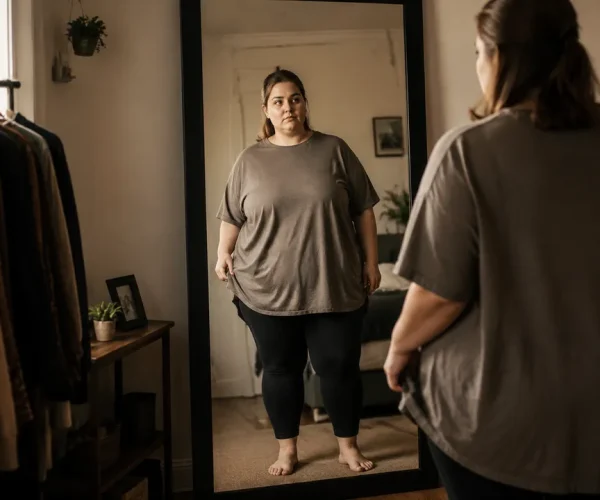
Beginners usually make the mistake of buying every piece one or two sizes up. The fit is oversized on all dimensions simultaneously, which means there is no reference point, no anchor. Learning to shape the look means deciding, before getting dressed, where the body’s outline should be legible and where it should disappear into fabric.

How Hemlines and Breaks Change Everything
Trouser length is probably the single most powerful lever in baggy street style, and it is almost entirely ignored by beginners. Wide-leg pants that pool at the shoe look unfinished on most bodies. The same pants hemmed to sit at the top of the shoe, with one clean break across the lace, carry weight and intention. The silhouette becomes architectural rather than accidental.
The ideal break point varies by the width of the leg opening. A very wide, almost palazzo-style leg usually looks best when hemmed so the fabric just grazes the shoe, with minimal stacking. A slightly less extreme wide leg can handle a little more length, maybe a half-inch of fabric resting on the shoe, which gives the look a relaxed slouch without collapsing entirely. Anything beyond that tends to read as a sizing error rather than a style choice.
Cuffing is a shortcut and a legitimate one. Rolling a baggy pant up two inches, once or twice, sharpens the silhouette at the ankle and exposes enough of the shoe to give the lower half some visual air. It also makes hemming optional for people still figuring out their preferred length. The cuff is not a permanent solution but it is a fast way to test proportions before committing to scissors.
Tops: Where Fit Gets Counterintuitive
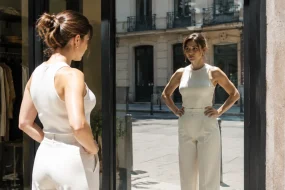
With bottoms providing most of the volume, a tighter or more fitted top is almost always the move. This does not mean a bodycon shirt or anything structured. A ribbed tank, a fitted long-sleeve, even a regular tee that fits close at the shoulder, all of these give the upper body a silhouette that makes the wide lower half look deliberate.
Oversized tops pair with baggy bottoms, too, but the pairing requires more precision. When both pieces are very relaxed, the top needs to either be cropped so the waistband is visible, or tucked in the front, or worn open like a layer over something tighter underneath. The goal is the same: somewhere on the torso, the body needs a point of reference. A full-length oversized hoodie over wide-leg sweats, with no tuck and no crop, is a uniform, not a silhouette.
Shoulder seams deserve more attention than they usually get. On an oversized shirt or jacket, the shoulder seam should drop off the natural shoulder, but only a little. Two inches is generally the sweet spot for a relaxed-fit silhouette; four or five inches and the sleeve starts dragging, which makes the whole upper body look uncontrolled. When shopping secondhand or in the men’s section for oversize pieces, check that seam placement before anything else.
Layering Without Adding Bulk in the Wrong Places
Layering is central to street style but it creates a specific problem for baggy fits: each layer adds circumference, and circumference without structure makes the body look wider, not more interesting. The solution is to layer in planes rather than in concentric circles.
Layering in planes means stacking pieces that lie flat rather than puffing out. An unbuttoned flannel shirt worn open over a tighter base layer adds visual texture and dimension but does not wrap the body in another full circumference of fabric. A vest over a long-sleeve is the same principle. A puffer jacket, by contrast, adds actual volume in all directions, which is fine as an outer layer but requires that everything underneath be as slim as possible.
One common layering mistake is wearing a hoodie under a large jacket without adjusting the jacket size to account for the extra layer. The jacket rides up, the hood bunches at the collar, and the shoulders sit wrong. Either size the jacket up to accommodate the hoodie, or choose a thinner inner layer. The outer piece should always sit cleanly on the shoulder, whatever is underneath it.
Shoes as a Structural Element
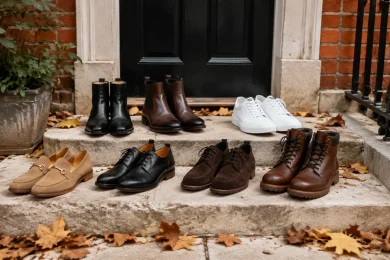
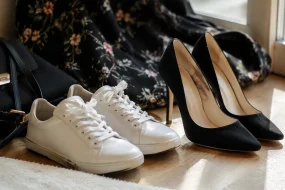
Footwear in a baggy outfit does more structural work than in a fitted one, because the shoe is often the narrowest visible point of the whole silhouette. It grounds the look. A chunky sneaker, a thick-soled boot, or even a wide skate shoe adds a visual base that makes the clothes above it look proportional rather than floating. Slim low-profile shoes under very wide pants often disappear, which makes the leg look like it has no end point.
Color contrast between the shoe and the pant leg also matters here. Wearing pants the same color as the shoe blurs where the trouser ends and the shoe begins, which can work intentionally as a leg-lengthening effect, especially with wide-leg silhouettes. Wearing a contrasting shoe, say, a white sneaker under dark trousers, creates a hard stop at the ankle that defines the silhouette sharply. Both are valid; knowing which effect is happening is the point.
Fabric Weight and How It Affects the Shape
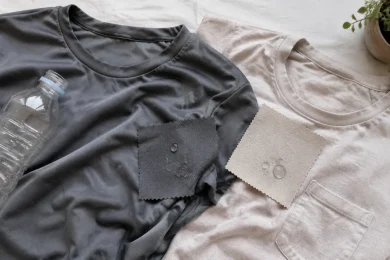
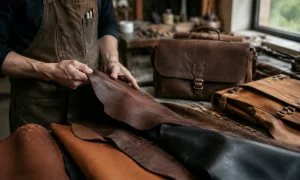
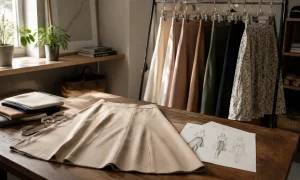
The same pattern cut in two different fabrics can produce completely different silhouettes. A wide-leg trouser in a heavy wool or twill holds its shape, drapes with authority, and stays put at the hem. The same cut in a lightweight polyester blend billows, collapses at odd angles, and loses the clean line at the break. Fabric weight is not glamorous to think about, but it is the difference between a baggy outfit that looks designed and one that looks like a person got dressed in the dark.
For pants, denser fabrics almost always behave better in wide silhouettes. Denim, canvas, twill, thick cotton tweed. For tops and outerwear, a little structure in the shoulder helps, whether that comes from the fabric itself or from the construction. Unstructured blazers in thick linen or heavy cotton can carry a wide-leg pant beautifully. The same jacket cut from a thin, drapey rayon will look like it is fighting the pants rather than completing them.
Thrift stores and vintage markets are full of pieces with ideal weight at a fraction of the retail price, particularly in menswear. A deadstock pair of military-issue wide-leg trousers in heavy cotton twill from the 1980s will outperform many contemporary fashion pieces for this exact reason. The fabric was made to hold shape under real-world use, and that utility translates directly into a better drape when worn as streetwear.
The One Proportion Rule Worth Memorizing
If there is a single principle that resolves most beginner confusion in baggy style, it is this: the widest part of the outfit should be one zone only. Not two, not three. One. Wide pants, fitted top. Oversized jacket, slim or cropped bottom. Big shirt, straight or tapered leg. When two zones compete for widest-point status, the silhouette has no center of gravity.
This is the reason certain looks in street style photography read as razor-sharp even though every piece is technically oversized. The photographer is usually not revealing some proprietary trick. The subject just picked one zone to maximize and kept everything else relatively controlled. A massive parka worn over slim-fit track pants and low sneakers is technically all relaxed-fit clothing, but it reads as a clear silhouette because the volume lives in one place: from the waist up, the coat dominates, and below it, the leg is a clean narrow line that gives the eye somewhere to go.
Start there. One zone of real volume, one zone of relative control, and hemlines that actually end where they are supposed to end. That is already most of what separates baggy style from just wearing clothes that are too big.