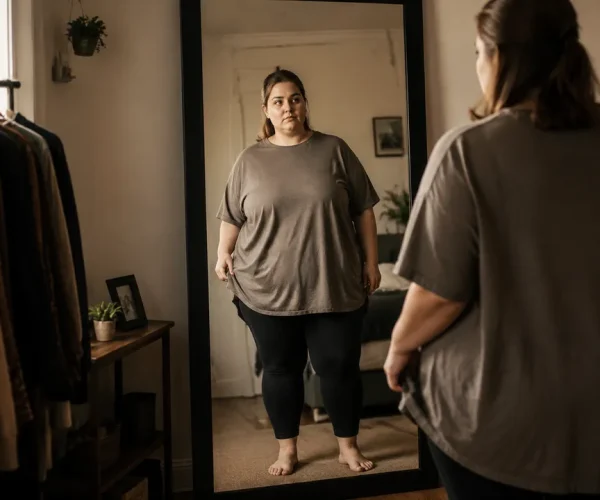
Oversized hoodies are supposed to look relaxed and easy. What they actually look like, on most people, most of the time, is a sleeping bag with sleeves.

That gap between intention and reality is not about bad taste or wrong sizing. It comes down to fabric weight, cut geometry, and a handful of small but compounding construction details that most people never think to check before buying.

The Fabric Thickness Problem

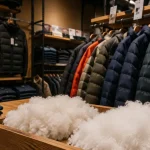
Most mass-market oversized hoodies are made from a thick fleece-backed cotton blend, typically somewhere around 400 to 500 grams per square meter. That weight is fine for a fitted hoodie, where the body holds the fabric in place. In an oversized cut, there is nothing pulling the garment taut. The fabric just sits there, piled on itself wherever gravity takes it, and at that weight it does not drape. It stacks.


Drape is the word that matters. A fabric drapes when its own weight pulls it into smooth vertical folds rather than holding a boxy shape. Thick fleece resists that pull. So the shoulder seam stays wide, the sleeves bunch at the forearm, and the body of the hoodie creates a horizontal shelf across the midsection instead of falling past it cleanly.

The fix is not to go thinner across the board. A very lightweight hoodie in an oversized cut goes limp and loses structure entirely, which is its own kind of unflattering. The sweet spot is a fabric that has some drape, which usually means a blend with a higher synthetic content, or a French terry construction rather than a heavy fleece back. French terry has loops on the inside but a smoother, lighter face, and it hangs rather than stacks.

Where the Shoulder Seam Actually Falls

Shoulder seam placement is one of the most visible things on any top, and also one of the least discussed in casual buying decisions. On a fitted garment, the seam sits at the edge of the shoulder, at the bony tip where the arm begins. On an intentionally oversized garment, it drops off that edge by a few inches toward the upper arm.

That drop is actually supposed to happen. It is part of how the oversized silhouette reads as intentional rather than just too big. The problem is the degree. When the seam drops two or three inches, the visual effect is a casual, relaxed shoulder. When it drops five or six inches, the sleeve cap extends nearly to the elbow and the whole upper body reads as structural collapse rather than deliberate looseness.

Cheap oversized hoodies achieve their size by scaling up a fitted pattern rather than re-drafting one for an oversized silhouette. Scaling up adds length everywhere proportionally, including at the shoulder. The result is a garment that is not oversized by design but simply large, and those are very different things to wear.

The Sleeve Problem Is a Volume Problem

Sleeves on an oversized hoodie should still taper. Not to a fittedcuff necessarily, but they need to narrow from upper arm to wrist or the arm looks stuffed into a tube. Most budget oversized hoodies use a straight sleeve: the same width from armhole to hem. When you push the sleeves up, fabric bunches in thick rings. When you leave them down, they pool over the hands and make the arm look formless.

A slight taper, even an inch of narrowing over the full sleeve length, changes the visual completely. The sleeve still looks voluminous but it has a direction. It reads as a choice.

The ribbedcuff also plays a bigger role than it seems. A wide, loose ribbed cuff adds bulk at the narrowest point of the arm, which makes everything above it look wider by comparison. A tighter cuff with a bit of elasticity gathers the sleeve fabric and creates a contrast that breaks up the monotony of the silhouette. Most fast-fashion oversized hoodies use a cuff that is wide enough to slide on easily but not tight enough to actually gather anything.

Kangaroo Pockets and the Box Effect

The kangaroo pocket sits right at the visual center of the hoodie, across the belly. On a fitted sweatshirt, it creates a gentle horizontal break. On a heavy oversized hoodie, it adds a horizontal shelf of fabric across the widest part of the garment and the result is that the front face of the hoodie becomes a single unbroken rectangle: wide at the shoulder, wide at the pocket, wide at the hip.

A thinner fabric pocket mitigates this. A pocket sewn flat rather than sewn with extra seam allowance mitigates this further. Some better-constructed oversized hoodies use a split pocket rather than a continuous one, which breaks the horizontal line without removing the pocket entirely. It is a small construction detail that costs almost nothing to implement and makes a visible difference on the body.

Hood Volume and Neck Bulk

An oversized hoodie with an oversized hood is two bulk problems stacked on top of each other. The hood sits above the shoulder line, and if it is cut generously, it creates a thick collar of fabric that raises the apparent height of the shoulders and shortens the neck. On someone tall, this reads as cozy. On someone shorter, it can make the head look like it is emerging from a pile of laundry.

Hood construction follows the same scaling logic as the rest of the garment. A larger hoodie gets a larger hood by default, because the hood is cut as a proportion of the neck opening, which is itself larger. But the head is always the same size. So the hood ends up with excess fabric that has nowhere to go except bunching along the sides of the neck and at the back collar.

A two-panel hood (cut from two pieces with a seam down the center) gives the hood shape and follows the curve of the head more closely. A single-panel hood, which is cheaper to cut and sew, lies flatter against the back and creates a wider opening at the face. On a heavy fabric, that wide opening stays wide even when the drawstring is tightened, because the fabric has too much stiffness to gather fully.

What the Hem Does to Proportion

A banded hem at the hip behaves like a cuff at the wrist: it gathers the fabric and creates a horizontal line. On a fitted hoodie, this sits close to the body and reads as a natural finish. On an oversized hoodie, the ribbed band at the hip pulls the excess fabric inward and creates a bloused shape above it, rounding out the midsection into something close to a sphere.

Some oversized hoodies use a raw or straight-cut hem with no ribbing, which lets the garment fall straight from the shoulder to the hip without gathering. This reads as longer and leaner. Others use a split hem with a slight curve. The banded hem is the most common choice because it is the easiest to finish and because it matches the cuff construction, giving the hoodie a consistent look, but on an oversized silhouette it is often the least flattering option.

The length matters too. A hoodie that ends at the hip produces the sphere effect when banded. A hoodie that falls below the hip, past the widest part of the body, escapes that geometry. This is one reason why the very long oversized hoodies, the ones that hit mid-thigh, tend to look more intentional than the ones that end right at the waist: they reach a length where the silhouette becomes something closer to a short dress than a boxy top, and that shape has its own logic.

The Seam at the Shoulder Versus the Drop-Shoulder Cut

There is a meaningful difference between a hoodie with a conventional set-in sleeve that is simply cut large, and a hoodie drafted as a true drop-shoulder garment. In a set-in sleeve construction, the armhole is shaped to follow the curve of the shoulder and the sleeve head is eased in to match. When this is scaled up for an oversized fit, the eased sleeve head creates extra volume at the top of the arm, which sits like a puff on the shoulder.

A true drop-shoulder cut has a straight-across shoulder seam and no sleeve head shaping. The sleeve attaches flat. This construction produces less volume at the shoulder point and more of a T-shape to the silhouette, which sits flatter on the body. Most garments described as oversized in mass retail use a scaled-up set-in sleeve, because the same pattern block is used across all sizes. True drop-shoulder construction requires a separate pattern, and therefore costs more to produce.

The practical result is that two hoodies with identical measurements can look completely different when worn. The one drafted for the shape reads as oversized by design. The one that arrived at that size through scaling reads as a sweatshirt that belongs to someone else, and no amount of adjusting the sleeves or the hood changes that underlying geometry.

Leave a Reply

Your email address will not be published. Required fields are marked *