Classic dressing has an image problem. Not a quality problem, not a relevance problem. An image problem. Somewhere in the popular imagination, “classic” became a synonym for stiff, for old, for the way your grandfather dressed before he stopped caring what he looked like. The blazer became the uniform of men who have given up. The oxford shirt became what you wear to a job you resent. The trench coat became a prop from a 1950s insurance ad.


None of that is inherent to the clothes. It’s a failure of execution, and usually a failure of fit.

What “Classic” Actually Refers To

Classic clothing means garments whose basic forms have remained legible and desirable across decades without requiring a trend to justify them. A white spread-collar shirt. A single-breasted navy blazer. A pair of flat-front trousers in grey wool or khaki cotton. A dark leather oxford. These things were worn well in 1965 and they are worn well now, and they will be worn well in 2040, because their proportions and their materials solve real problems: they look clean, they read as intentional, and they age better than most things around them.

That is not the same as dressing like someone from another era. The person who pulls it off is wearing contemporary versions of those forms, cut to modern proportions, mixed with pieces that carry their own weight. The person who looks like a caricature is wearing relics, usually in a size that made sense thirty years ago or ten sizes ago, and wearing them head to toe with nothing to break the monotony.

Fit Is Where Classic Gets Either Saved or Buried

A blazer from a fast-fashion retailer cut to a modern slim line will read younger and sharper than a bespoke blazer from 1992 that was made for shoulders two inches wider. The fabric quality of the older one might genuinely be superior. It doesn’t matter. What a person sees first is the silhouette, and the silhouette has to be contemporary.

This applies in the other direction too. The recent backlash toward relaxed and wide silhouettes means that a trouser with more room through the thigh and a higher rise now reads as deliberate and current rather than inherited. The point is that “classic” is not a fixed size or a fixed width. It’s a fixed vocabulary. The proportions within that vocabulary move with the times.

Sleeves on a sport coat should end where the shirtcuff appears, roughly a quarter to half an inch of white or color showing below. Trouser hems should break clean or not at all. A collar should lie flat. These details are small and they are everything, because when they’re right no one notices them, and when they’re wrong, that’s all anyone sees.

The Mixing Principle That Changes Everything

Classic pieces that read as old almost always share one characteristic: they are surrounded entirely by other classic pieces at the same register of formality, with no variation in texture, weight, or decade. A blazer, a dress shirt, grey flannel trousers, and a polished cap-toe oxford, assembled with total consistency and total solemnity, produces a man who looks like he is attending a funeral or a job interview circa 2003.

Break one of those elements and the whole picture changes. Wear the blazer over a washed cotton crewneck instead of a dress shirt. Replace the flannel with a clean dark denim. Put on a white leather sneaker instead of the cap-toe. Any one of these moves reframes the rest. The blazer now looks chosen rather than defaulted to. The quality in it becomes a counterpoint rather than a costume.

This is not a trick. It’s the way people who actually dress well have always worked. They learned the rules thoroughly enough to understand which one to bend on a given day. The rules in question are about contrast, about weight, about the difference between dressed-up and dressed-down. Mixing a fine-gauge merino sweater under a structured blazer reads as European nonchalance because the textures are harmonious but the formality levels are offset. That offset is where the interest lives.

Color Without Drama

Classic dressing gets accused of being grey and beige and navy, which is accurate but misread as a limitation. Those neutrals are a foundation, not a ceiling. The reason experienced dressers return to them is that they work with almost everything, which means a single interesting piece lands harder against them. A burnt orange pocket square in a navy blazer chest pocket. An olive field jacket thrown over the whole outfit. A burgundy loafer instead of a brown one. These are small choices with outsized effect precisely because the background is quiet.

The trap is treating classic as a commitment to invisibility. A person wearing all grey with a grey tie and grey socks has not mastered classic dressing. They have misunderstood it as a kind of camouflage. The restraint in classic dressing is about not chasing trends, not about refusing to have a point of view.

The Specific Pieces That Age a Person Fast

Some classic items have been so thoroughly colonized by a particular generation or era that they require more work to wear young. The double-breasted suit in most iterations. The tasseled loafer in burgundy or brown. The tie bar at the exact width it was popular in the 1980s. The pleated trouser in a relaxed cut with too much break. These are recoverable but they need something in the outfit to signal awareness. Wear the double-breasted with a simple t-shirt underneath and rolled sleeves on a warm afternoon and it reads like an editorial choice. Wear it buttoned to the top with a Windsor knot and it reads like 1988.

The white dress shirt deserves its own mention because it is one of the most powerful single items in classic dressing and also one of the most commonly ruined. A poplin shirt in a contemporary slim or relaxed fit, tucked cleanly into tailored trousers or half-tucked loosely into wider ones, is timeless in the best sense. A boxy white shirt with a straight hem and a collar that floats away from the neck reads as something you put on because nothing was ironed. The shirt is the same shirt. The cut is the whole story.

How Women’s Classic Dressing Gets the Same Thing Wrong

The identical dynamic plays out in women’s dressing. A camel coat, a silk blouse, a cigarette trouser, a well-constructed leather bag: these pieces are genuinely timeless and genuinely flattering in the right hands. They look dated when they’re assembled with rigid correctness into what amounts to a power suit from a decade that has passed, usually with the wrong shoe completing the picture. A kitten heel in a traditional nude tone does more work aging an outfit than almost any other single choice.

The same mixing logic applies. A camel coat over a simple white tee and straight leg jeans with a clean white sneaker is not a compromise or a casual-down. It’s a demonstration of how much the coat actually does when it isn’t competing with everything else around it. The trench coat over a slip dress. The structured blazer over a ribbed tank. The tailored trouser with a washed linen shirt left slightly open at the neck. Classic pieces respond extremely well to being grounded in something soft or simple beneath them.

The Place Where the Outfit Gets Decided

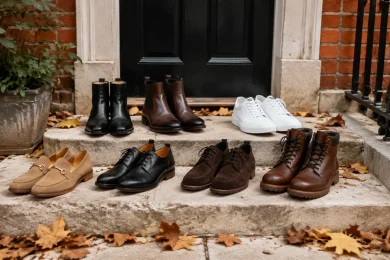
Shoes. Almost without exception, shoes decide whether a classic outfit reads as confident or as inherited. A dark brown suede Chelsea boot in a clean modern silhouette sits beneath a wide range of classic pieces and pulls them into the present. A traditional black cap-toe oxford in a rounded toe last from fifteen years ago does the opposite, even though the oxford is technically a more formal and more “correct” shoe. Correctness and currentness are separate qualities and they don’t always overlap.

A clean minimal white sneaker has become the single most effective tool for modernizing classic separates, because it signals that the person wearing the blazer and the grey flannel trouser made a choice. They put those clothes on because they wanted to, next to something modern, not because they defaulted to a uniform. That signal matters more than most people realize. It’s the difference between looking dressed and looking like you’re in costume.

Leave a Reply

Your email address will not be published. Required fields are marked *