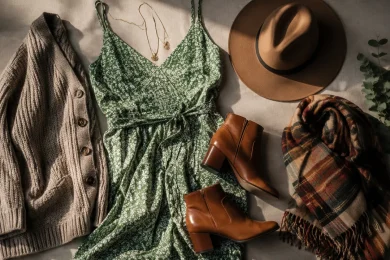
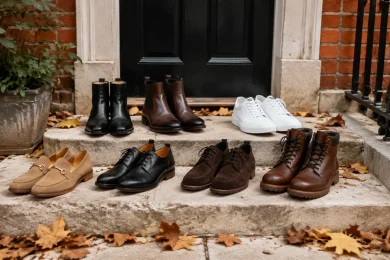
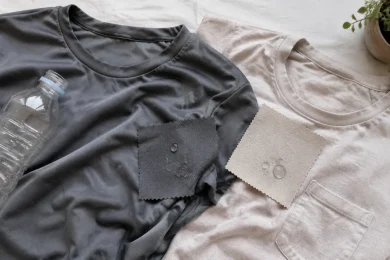
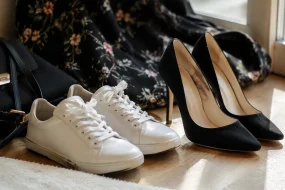
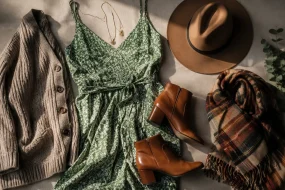
Somewhere in the back of a closet, behind the things that actually get worn, there are probably a dozen items that share a common quality: they are not quite right anymore. Not wrong enough to throw out, just perpetually skipped over. A blazer that fit a different decade of a person’s life. Three nearly identical gray shirts that somehow add up to nothing. A pair of trousers that would work, if only the hem were fixed, the waist let out, the color were anything else. The outdated wardrobe is almost never a shortage of clothes. It is a surplus of the wrong ones.


The standard fix has always been a shopping trip, and the shopping trip has always produced more of the same problem. A few new items arrive, the old ones stay, and the closet grows more crowded without becoming more useful. What has changed in the past year or two is the willingness to do the harder thing first: audit aggressively, identify gaps with precision, and fill them with pieces that have been thought through rather than grabbed in a moment of mild enthusiasm near a sale rack.

The Audit Is the Work

A real wardrobe audit is not a folding project. It is a reckoning. Every item comes out of the closet and gets held up against one question: does this actually get worn, and if not, why not? The “why not” is the useful part. Something goes unworn because it does not fit, because it requires dry cleaning and nobody ever takes it, because the color is slightly off from everything else, because it was bought for a life that does not exist. Each reason is information. Together, they reveal the actual shape of the problem.

Most people find, when they do this honestly, that their wardrobe clusters around two or three moments in their week and leaves everything else uncovered. A person with a desk job and a lively weekend life will often discover they own twice as many formal shirts as they can realistically use, and almost nothing that bridges the gap between work-from-home casual and going somewhere that requires some effort. The audit names that gap. Once it is named, buying into it becomes straightforward.

The ruthlessness of the edit matters as much as the honesty of the assessment. Keeping a shirt because it still technically fits is not a reason. Keeping something because it was expensive is sunk-cost logic in a fabric form. The pieces that stay should stay because they are worn, liked, and compatible with other things already in the rotation.

Cost Per Wear as a Buying Framework

Once the audit creates a clear list of actual gaps, the question becomes how to fill them without recreating the same problem. The framework that has gained traction, and deserves it, is cost per wear: the price of a garment divided by the realistic number of times it will be worn in a year. A 40-dollar shirt worn once is expensive. A 140-dollar shirt worn 70 times in a year costs two dollars per wearing.

This reframe changes what looks like a good deal. A cheap seasonal trend piece that will feel dated in 18 months and gets worn four times has a terrible cost per wear. A well-made pair of dark trousers in a neutral cut that works for the office, a dinner, a funeral, and a job interview has among the lowest cost per wear in the closet. The math consistently favors versatility and quality over novelty and price.

The calculation works best when it stays honest about the denominator. How many times will this actually be worn? For a piece that depends on a specific occasion that happens three times a year, the answer is three, not thirty. Trend-forward pieces require a realistic shelf life estimate. Classics get the fullcount. The framework is only as good as the self-knowledge behind it.

The Role of Alterations in 2025

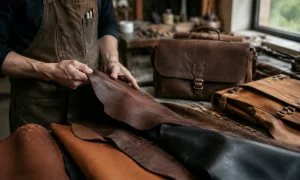
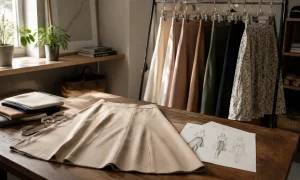
Alterations have always existed as a tool, but they have been underused by people who think of them as something tailors do to expensive suits. A good tailor can rescue a perfectly fine blazer that has been abandoned because the sleeves are a half-inch too long. A hemmed trouser sits differently on the body than an unhemmed one, and the difference in how a person carries themselves in it is immediate and not subtle.

The smartest use of alterations right now is targeted: bring in items from the audit pile that are structurally sound but dimensionally wrong, and have them corrected before buying anything new. A pair of trousers in a good fabric with the wrong fit costs thirty dollars to fix. A replacement pair of trousers in comparable fabric costs considerably more, and the new pair will also need to be hemmed. The math favors the tailor almost every time, as long as the garment itself is worth keeping.

The garments worth sending to a tailor: anything with quality fabric and construction that has been avoided purely over fit. The garments not worth it: anything where the problem is the design or the color or the fact that the person simply does not like it. Alterations fix fit. They cannot fix the fundamental wrong choice.

Buying Fewer Pieces With More Intention

The buying list that comes out of a real audit is usually shorter than expected. Three or four specific items rather than a vague sense that “more clothes” are needed. That specificity changes the shopping experience because it becomes possible to wait for the right version of a thing rather than buying the adequate version that happens to be available.

Waiting is underrated as a purchasing strategy. A person who knows they need a midweight navy overshirt in a slightly structured cut can hold that picture in their head and walk past seventeen things that are almost it. They can check a few different sources over the course of a few weeks without urgency. When the right piece shows up, the decision is easy because the criteria already exist. Impulse buying is partly a failure of preparation: when there are no clear criteria, everything is a maybe.

Brand loyalty, in this context, is a reasonable shortcut. Someone who has found that a particular retailer consistently fits their body well and uses materials that hold up is not being lazy by going back to that retailer. They are using accumulated data. The person who buys from a different place every time because the new place is trendy is starting from zero each time, with no information about how the garment will behave after a year of washing.

Color Discipline and the Compatibility Problem

The underexamined reason wardrobes feel chaotic even when they are nominally full: the colors do not talk to each other. A burgundy sweater that does not work with the olive trousers does not work with the navy jacket either. An individual piece that has no natural partner in the existing wardrobe is not really an asset, it is an isolated item that requires its own supporting cast, which tends not to arrive.

Color discipline does not require a monochromatic wardrobe or a rigid capsule formula. It requires some awareness of what tones are already present and whether a new item speaks the same language. Warm neutrals (camel, rust, olive, cream) mix easily with each other. Cool neutrals (navy, gray, white, slate blue) do the same. The trouble usually comes from a wardrobe that is half warm and half cool with no logic to it, so that getting dressed every morning involves navigating a silent incompatibility problem.

This is also where the audit becomes useful in a second way. Laying everything out physically reveals the color distribution in a way that the closet, with its depth and shadow, never does. A person might discover they own eight items in shades of olive and almost nothing that pairs with the four blue pieces they also own. That is actionable. Buy toward the underrepresented family, or decide which family to commit to.

Secondhand as a First Option for Specific Gaps

For certain categories, secondhand is not the budget option or the ethical option; it is genuinely the best option in terms of what the money gets. Tailored blazers and structuredcoats are prime examples. The construction quality in the mid-tier of the secondhand market is frequently better than what the same dollar amount buys new, because the market for secondhand formal wear has not fully caught up to its actual value. A wool blazer from a decade ago at a well-edited consignment shop, in good condition, at 60 dollars, represents something that would cost 200 to 350 dollars new at comparable quality.

The categories where secondhand is trickier: anything where fit is unusually specific to a person’s body, anything where wear shows quickly (shoes, knitwear), and anything where the purchase depends on current sizing or design standards. For basic trousers and shirts, secondhand works. For a carefully fitted overcoat, it works with alterations. For sneakers in heavy rotation, probably not.

The practical note is that secondhand shopping rewards patience and regularity. Someone who checks a couple of reliable platforms or shops every week or two will find things that someone who visits once hoping for a complete wardrobe overhaul will not. The inventory cycles constantly. The gap-filling approach suits it: know what you need, check back, recognize it when it appears.

What Happens to the Discarded Pile

The audit produces a culling pile, and the culling pile deserves a better fate than a garbage bag left on the curb. Consignment and resale recover actual money from pieces in good condition, which can be channeled directly toward the gap-filling purchases. A few items sold for 15 to 30 dollars each add up to a meaningful contribution to the new-purchase budget, especially when the new-purchase list is deliberately short.

Donation is appropriate for things below resale quality but still wearable. Textile recycling handles the rest. The point is not virtuousness; the point is that treating the discarded items as waste is less useful in every direction than treating them as a transfer of resources. The closet shrinks, the budget for new pieces grows slightly, and the replacement purchases are more deliberate than whatever filled the space before.

A wardrobe that goes through this cycle once and stays on autopilot tends to drift back toward the original problem within a few years. One that gets a lighter version of the audit annually, say 20 minutes of honest evaluation rather than a full-day project, stays calibrated. The pieces that no longer earn their place leave before they accumulate into a wall of almost-right things. The gaps stay identifiable. The buying stays intentional. That is the actual sustainable version of a wardrobe, not a fixed object but a slow, deliberate edit that never fully stops.

Leave a Reply

Your email address will not be published. Required fields are marked *