Jeans have a fixed personality. That is their whole appeal and their whole problem. The fabric ages differently from everything else in a wardrobe, the wash communicates a specific era, and the cut carries a silhouette that fashion has an opinion about whether you do or not. Wear them with the wrong pieces and the jeans do not just look off, they pull the entire outfit back toward the year they came from.


This happens constantly and quietly. A woman might own a well-fitted blazer, a good leather shoe, a silk blouse that cost real money, and still walk out the door looking like something is slightly wrong. The culprit is usually the jeans. Not because they are ugly. Because they are old in a way that is specific and legible.

What a Jean’s Age Actually Looks Like

Denim holds onto its moment more stubbornly than almost any other garment. A plain white T-shirt from 2014 is still a plain white T-shirt. A pair of mid-rise bootcut jeans from 2014 is a document from 2014. The silhouette, the rise, the leg opening, the particular shade of the wash, the placement of the fade, the exact proportion of the back pocket: all of it dates. And denim ages slowly enough that people keep wearing the same pair for a decade, which means the gap between the jeans and the rest of the outfit keeps widening every year.

The fade is the most honest part. Factory distressing from certaineras has a signature look: a high-contrast whisker at the thigh, a heavy horizontal crease behind the knee, pale circles on the seat. Those details were engineered to look worn-in, and they succeeded, but they also look extremely 2008 in a way that is hard to unsee once you know it. Natural fading over years of wear is different, softer and more random, but it still communicates time passing.

The rise matters just as much. Low-rise denim had its moment, a long one, and it has passed. Ultra-high waists have come and mostly settled into something more moderate. The specific distance between waistband and seat tells a viewer roughly when a pair was purchased without them consciously thinking about it. The brain reads it as off somehow, which is exactly the sensation that makes an outfit feel dated rather than deliberate.

The Leg Opening Is Doing More Work Than You Think

Of all the measurements on a pair of jeans, the leg opening is the one people track least carefully and the one that interacts most visibly with everything else being worn. A very narrow ankle opening, say something tapering to around 13 or 14 centimeters, makes a shoe look differently than an opening of 17 or 18. A wider straight leg changes the proportional story entirely. These differences are not huge in isolation. On the body, against a current shoe, they are noticeable.

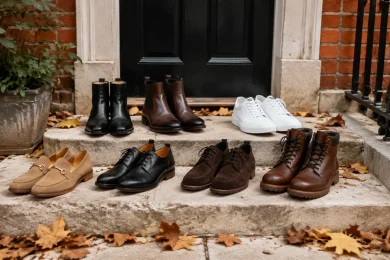
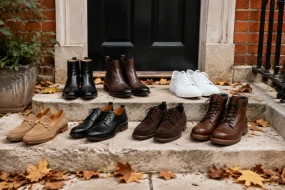
The ankle boot situation is a good case study. That shoe’s popularity tracked with a very specific silhouette: a slim cropped jean, a moderate rise, the boot just visible below the hem. For a few years that pairing was everywhere. The ankle boot has evolved, the hem length has shifted, and a pair of jeans cut for that exact 2017 proportion now sits slightly wrong against a chunkier boot or a straighter-leg silhouette. Neither piece is broken. They are just from different conversations.

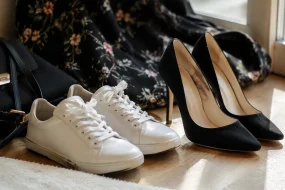
Sneakers expose this too. The current interest in vintage-shaped athletic shoes, with a higher sole and a rounder toe, reads differently against a narrow skinny jean than it does against a slightly relaxed straight cut. The skinny jean was designed with a different shoe era in mind. Put it with the newer footwear and something feels unresolved, like two jokes told in different accents.

When the Wash Tells on You

A medium-blue jean with strong contrast fading and a little stone-washing was a wardrobe staple for so long that it became invisible. Then it became visible again, in the wrong way. That particular look peaked somewhere in the early 2000s and carried through for years, and pairs purchased then are still in heavy rotation in a lot of closets. Against a clean, modern top with little ornamentation and a quieter color story, those jeans drag everything toward a decade-old catalog page.

Dark indigo washes have stayed more durable over time, partly because they read as closer to a trouser and carry less of the casual-era signature. A very dark rinse can go with a blazer in a way that a faded pair generally cannot. This is not a rule about quality. It is a rule about signal. The dark jean sends a quieter message and lets the rest of the outfit speak.

Raw denim is a different case. A pair that has been worn in by the person wearing it, creased and faded in the specific patterns that body creates, carries a different kind of age. It reads as personal history rather than factory shorthand. The distinction is real, though it takes a second to register.

The Problem of MixingEras

Every element in an outfit is dated. This is fine. The trouble comes when items are dated to different eras with conflicting silhouettes, and the jeans are usually the loudest voice in that argument. A structured coat from a recent season tends to be cut for a specific hip and thigh volume below it. Put that coat over a skinny jean from eight years ago and the coat looks wrong, or the jeans look wrong, and neither is serving the other.

Vintage mixing done well usually involves pieces that belong to the same visual grammar, whether that is a specific decade’s proportions or a shared color logic, rather than random survivors from different eras stacked together. The person who wears a carefully selected 1970s flare with a 1970s-referencing top and a platform shoe is working within a coherent vocabulary. The person wearing a 2010 skinny jean with a 2024 oversized jacket and a shoe from 2018 is not mixing vintage: they are just wearing whatever survived the last drawer clean-out.

Intent is the difference. Vintage can be intentional. Accumulation is usually not.

Why the Jeans Are Usually the Last Thing to Get Updated

Jeans are expensive relative to their category. A decent pair sits anywhere from 80 dollars to well above 200, and the good ones last physically for years, which creates a psychological argument for keeping them. They are also the category where people feel most certain they already know what works for them, which makes them resistant to revisiting. Someone who has worn the same rise for fifteen years has built an entire self-image around it. The idea that the jeans might be wrong feels more personal than the idea that a jacket is wrong.

There is also the durability trap. The jeans still fit. The fabric still holds. Nothing is broken. So they stay in the rotation while everything around them updates, and the gap grows. A garment that lasts twenty years is not automatically a garment that should be worn for twenty years.

What the Waistband Does to a Tucked-In Top

The front tuck, whether a full tuck or the half-tuck with the back left loose, became genuinely popular as silhouettes moved toward higher waists and more volume up top. The mechanics of that tuck depend heavily on where the waistband sits and how much structure it has. A low-rise jean accepts a tucked top differently than a high-rise does, and not in a small way. The visual logic of the look breaks when the waistband sits in the wrong place.

A wide, flat waistband on a high-rise jean gives the tuck something clean to resolve against. A narrow waistband on a mid or low rise creates a different proportion and generally does not cooperate with the same tops in the same way. The top is not wrong. The relationship is wrong.

This is the kind of thing most people diagnose as “I just don’t know how to dress myself” when it is actually an interaction problem between two garments that evolved in different directions. The culprit is specific and correctable.

A Different Pair Does Not Fix the Whole Problem

Buying a new pair of jeans to update an outfit is often the right move, but it does not automatically resolve the problem. A pair of current-silhouette jeans dropped into a wardrobe built around the proportions of a different era will just invert the conflict. Now the jeans are current and the shoes are the wrong shape and the tops are cut for a different volume at the hip.

The useful audit is proportional, not categorical. It means looking at the leg opening against the shoes being worn most often. It means checking whether the rise is compatible with the tops that get tucked in. It means looking at the wash in the context of the rest of the wardrobe’s color temperature rather than in isolation. One pair of jeans can anchor an outfit or it can quietly undercut everything else. The difference usually comes down to three or four centimeters at the ankle and about ten years on the calendar.

Leave a Reply

Your email address will not be published. Required fields are marked *