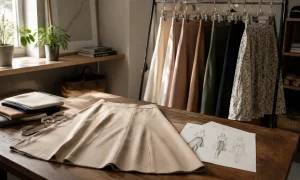
Forty-three items left the closet in a single afternoon. Not donated over months, not quietly retired to a bag in the corner of the bedroom. Gone, in one session, to a cardboard box on the porch. What remained was roughly half of what had been there the morning before, and for the first time in years, every hanger had a little breathing room.


The result was not a magazine-ready wardrobe. The result was something more useful: getting dressed in the morning stopped feeling like a small, low-stakes defeat.
The Closet That Looked Full but Felt Empty
A jammed closet is a particular kind of trap. Everything is technically available, which means the brain registers abundance, but most of what is available requires a negotiation: this shirt needs to be ironed, this pair of jeans fits wrong in the waist now, these shoes are too formal for today but might be right for something coming up. Every morning becomes a small audit of a dozen compromises, and the person standing in front of that closet loses a little energy before the day has even started.
What makes it worse is that the good pieces, the ones that actually get worn, tend to be buried. The olive crewneck is at the back. The one pair of dark jeans that fits well is crammed between two pairs that do not. Finding them requires moving things aside, which means the experience of using a closet that holds plenty of decent clothes still involves friction at every turn.
The problem is volume, not variety.
What Actually Got Pulled Out
The afternoon of clearing happened with a specific rule in place: anything that required a condition to stay got removed. The condition could be weight (“I might fit into these again”), an event (“I’ll need something formal eventually”), or optimism about a habit that had not materialized (“I’d wear this if I actually went hiking”). No item got to stay on the basis of a future self who might want it. Only things that were genuinely getting worn, or would obviously be worn in the next few weeks, earned a spot back on the rod.
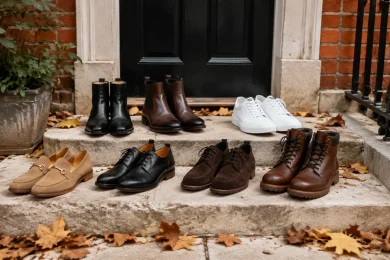
What came out was revealing. Seven shirts bought impulsively that had never really worked with anything else in the closet. A blazer that had been worn twice in four years, kept because it was expensive. Three pairs of shoes so uncomfortable that they were always the last resort. Workout clothes from a gym membership that had lapsed. A dress bought for a specific event two years ago, still there, still waiting for another occasion that was never going to match.
None of those items were bad objects. They were just wrong for this person’s actual life. Keeping them was a courtesy to some other version of a daily routine that did not exist.
Why Getting Dressed Changed
The shift after clearing was not subtle. The morning routine shrank, noticeably, within the first week. Pulling something out of a closet where every item fits well and gets worn regularly involves essentially no deliberation. The hand reaches in. The choice is made. The day begins.
There is also something that happens to a person’s relationship with the clothes that remain. When there are sixty things in a closet, wearing the same shirt twice in a week feels like a failure of imagination. When there are thirty, it just feels normal. The closet becomes less of a display case and more of a toolkit, and tools get used. The blue linen shirt might come out three times in a fortnight without it feeling like a rut. The good jeans stop being a special occasion. They are just the jeans.
Getting dressed starts to feel like inhabiting your own life rather than sorting through the evidence of several lives you considered living.
The Part That Requires Some Honesty
Clearing a closet by half is harder than any minimalism article makes it sound, because most of the clothes that need to go do not feel like garbage. They feel like potential. The blazer was expensive. The dress was beautiful at the time of purchase. The hiking pants represent some intention about the kind of person it would be good to be. Donating them feels like admitting something, which is why so many people move them to the back of the rod instead of out the door.
The reframe that actually works is simpler than most: the question is not whether something is worth keeping in the abstract. The question is whether keeping it is making the closet easier or harder to use. A blazer worn twice in four years is not a resource. It is friction. It is one more thing the eye has to skip over every single morning, one more item the brain has to process and reject. Removing it does not mean the blazer was worthless. It means the closet is now better at its actual job.
The clothes that leave should leave. Donating them, selling them, giving them to someone who will wear them: these are all better outcomes than letting them sit in the dark, doing nothing except making the closet more crowded.
What Refilling the Space Looks Like
After the clear-out, the temptation is to fill the space back in. A newly thinned closet can feel like a gap, and the impulse to shop can arrive wearing the language of intention: “Now I know what I actually need.” That impulse is worth slowing down, because the things that made the old closet dysfunctional, the impulse buys, the aspirational pieces, the things bought because they were on sale, were all acquired the same way.
What works is waiting a few weeks and seeing what actually gets missed. Almost always, the answer is: very little. The things that turn out to be genuinely absent are easy to identify because the gap shows up in the actual daily routine, a color that is missing, a weight of fabric that nothing else provides, a specific use case that is not covered. Those are the gaps worth filling, and they tend to be narrow and specific, not broad and abundant.
One good version of a thing, worn regularly, is more valuable than four versions of the same thing worn occasionally. This sounds obvious, but closets all over the world are full of evidence that most people never really act on it.
The Specific Pleasure of a Closet That Works
Six months after the clearing, the closet holds fewer pieces than it did in years. The hangers are not packed tight. Pulling something out does not require angling it past three other things. The shelf above the rod has actual space on it. These are small physical facts, but they change the texture of the morning in a way that is hard to overstate.
The deeper change is harder to describe cleanly. Wearing clothes that all fit, that all belong together in a loose way, that were all chosen rather than kept by default, produces a low-level but genuine sense of coherence. Nothing in the closet is fighting for space with things that should not be there. The morning does not start with a small negotiation about who you are today and who you might become. The closet just works, and so does the day.
The olive crewneck is in the front now. It gets worn on a Tuesday, with the dark jeans that fit, and nothing about that requires any thought at all.