Six names keep surfacing whenever serious people talk about where fashion is actually going: Bottega Veneta, Loewe, The Row, Jacquemus, Phoebe Philo, and Celine under Hedi Slimane. Each one has staked out a position distinct enough that wearing one signals something meaningfully different from wearing another. That range is the point. Modern style is not a single aesthetic but a set of competing arguments about what clothes should do, and these six houses are the ones making those arguments loudest.

Bottega Veneta: Craft as the Whole Statement

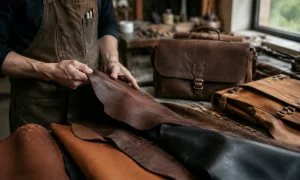
Bottega Veneta spent decades being the label for people who did not want a logo. The intrecciato weave, that tight diagonal lattice of woven leather, was the signature, and it worked because it required genuine skill to execute. Under Daniel Lee and now Matthieu Blazy, the house has kept that logic but pushed the craft to stranger places. Blazy sent out a jacket that looked like a plain white T-shirt. It was leather, woven to mimic cotton jersey, down to the rib at the collar. The object was absurd and extraordinary at the same time.

That is the Bottega position: that the most interesting thing a garment can do is reward the person who gets close enough to understand it. It asks nothing from across the room. It gives everything to the person already in the conversation.

Loewe: Intellectual Playfulness With a Spanish Foundation

Jonathan Anderson at Loewe makes clothes for people who find ideas genuinely interesting. His collections have featured balloon sleeves that turned full silhouettes into abstract sculpture, pixelated prints lifted from tapestries, and bags shaped like everyday objects rendered in unimpeachable leather. The house is Spanish, founded in Madrid in 1846, and Anderson has leaned into a certain irreverence that feels native to that history without being literal about it.

What keeps Loewe coherent through all the formal experimentation is quality. The leather goods are among the best-constructed in the industry, full stop. The puzzle bag, the Hammock, the Flamenco, each one is made to be used and to last. Anderson seems to understand that the conceptual flights only work if the object underneath them is sound. Loewe is where rigor and wit share the same seam.

The Row: Silence as a Design Philosophy

Mary-Kate and Ashley Olsen started The Row in 2006 with a single perfect T-shirt, the kind of object that takes longer to get right than most people expect. Twenty years in, the brand has become the definitive American luxury house, which is a strange thing to say about a label that has almost no advertising, almost no social media presence, and charges prices that are genuinely difficult to defend on rational grounds.

The defense is in the clothes themselves. The cashmere is thick in the way cashmere was before the industry started blending it thinner. The tailoring does not shout. The silhouettes are broad, quiet, and not particularly easy to wear, which means the people who wear them well tend to look extraordinary. The Row is a study in restraint held so long it becomes its own kind of intensity. There are no prints, no logos, no obvious seasonal hooks. What is left is proportion, texture, and the particular confidence of something made without compromise.

Jacquemus: The Sun and the Algorithm

SimonPorte Jacquemus has built one of the most recognizable fashion brands in the world by doing almost the opposite of what The Row does. His shows happen in wheat fields, on salt flats, and in swimming pools. His bags started appearing as miniatures so small they held almost nothing, which made them viral immediately and famous permanently. The Chiquito, released in 2018, is probably the most photographed bag of the decade.

The argument that Jacquemus is just a social media operation is easy to make and largely wrong. The actual clothes, the bias-cut dresses, the straw hats, the oversized blazers worn with nothing underneath, come from a real sensibility rooted in Provencal light and a very specific kind of French ease. Jacquemus grew up in the south of France, lost his mother when he was young, and has said openly that his work is partly a way of holding onto that world. That biographical fact gives the sun-drenched imagery somewhere to come from. The platform amplified a vision that was already there.

Phoebe Philo: The Return of a Specific Ideal

Phoebe Philo’s years at Celine between 2008 and 2018 produced what a lot of women still describe as the best clothes they have ever owned. The Céline trapeze bag. The wide-leg trousers. The austere coats with their clean geometry. Philo was designing for a woman who had authority and did not feel the need to explain it, and the clothes felt like a form of self-possession you could put on.

When she launched her own label in 2023, the anticipation was unlike anything in recent fashion memory. The first collection drew on the same instincts: powerful shoulders, unexpected proportions, materials that felt serious. The prices were high, the drops limited, the whole project run on her own terms and timeline. Whether the label will build into something as fully realized as her Celine years is an open question. The interest in the answer is enormous, because Philo represents a particular kind of intelligence in fashion, one that refuses to mistake visibility for relevance.

Celine Under Hedi Slimane: Youth, Rock, and Deliberate Friction

Hedi Slimane dropped the accent from Céline when he took over in 2018 and rerouted the entire brand toward something younger, louder, and more directly connected to subcultural energy. The wide-leg trousers and minimalcoats disappeared. The skinny suits and leather jackets arrived. The Triomphe bag and its chain became the most visible accessories of the early 2020s, worn by people who had no particular memory of the Philo era and no interest in mourning it.

The commercial results have been significant, though LVMH does not publish brand-level figures that allow for precise comparison. What Slimane did was stake out a different demographic entirely, the kind of 22-year-old who knows exactly what Saint Laurent looked like under his direction and wants a version of that energy with a different name on the label. His Celine is a study in how completely a house can be redirected when the creative direction changes, and in how large the market is for a specific kind of French cool that has more to do with nightlife than with minimalism. The two Celines, Philo’s and Slimane’s, are now almost a philosophical debate wearing the same name.

Leave a Reply

Your email address will not be published. Required fields are marked *