


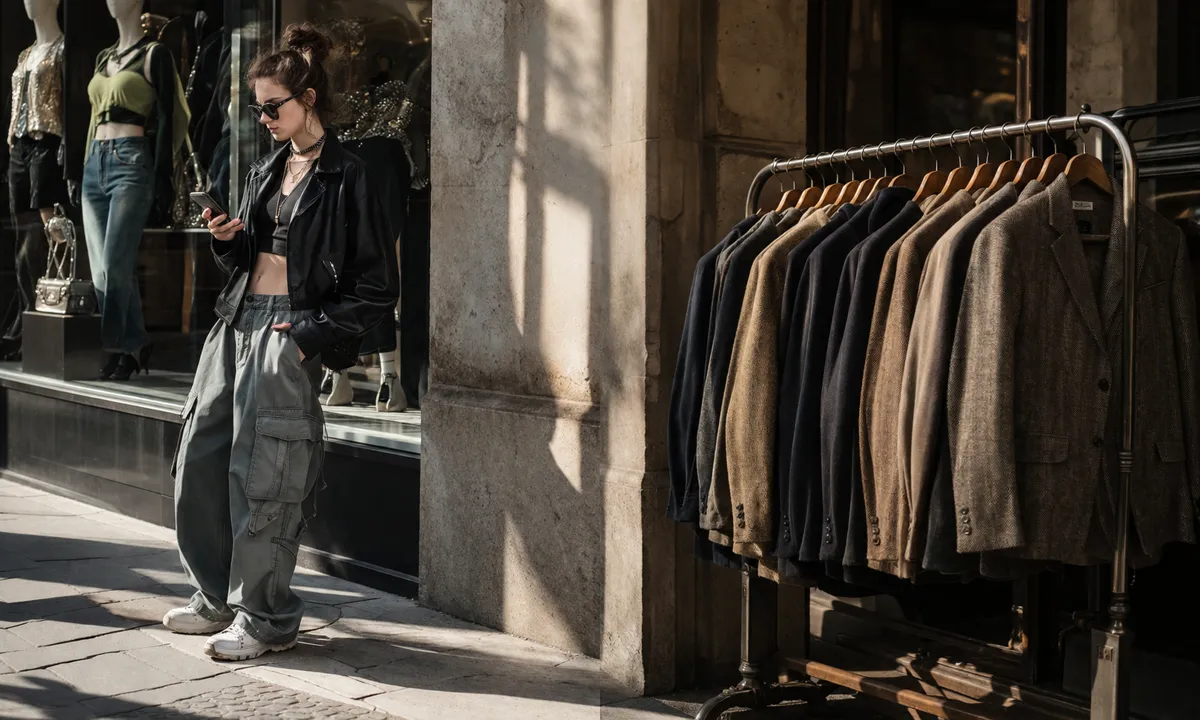
Fashion operates on two very different clocks. One ticks fast, reset every season by runway shows, algorithm-fed shopping apps, and the particular shade of green that suddenly appears on every display table in every store in October. The other barely moves at all, anchored to cuts and proportions that have proven, through decades of actual use, to hold up under almost any circumstance. Deciding which clock to set your wardrobe by is less a matter of taste than it is a matter of being honest about how you actually live.
What “Trendy” Actually Costs Over 12 Months
A trend cycle used to run roughly two years. Retailers moved from runway to shop floor in about six months, which meant that even a moderately fashion-conscious person had time to absorb a look, decide if it fit, and get real use from it before it turned. Fast fashion shortened that window dramatically. Now a micro-trend can rise to saturation and begin to feel dated inside a single season, sometimes faster.
That compression has a real financial consequence. A wide-leg trouser that costs $65 is a reasonable buy if it serves a wardrobe for four years. Worn once or twice before the cut shifts and the piece reads visibly dated, the effective cost-per-wear is absurd. The purchase price was modest; the value was nearly zero.
People who lean heavily into trends tend to underestimate this because each individual item seems cheap. The total spend across twelve months rarely does.
The Specific Person Trends Actually Serve Well
That said, trends are not simply a trap. They serve particular people and particular lives quite well.
Someone who works in fashion, visual media, or a field where appearing current is effectively part of the job description has a legitimate professional reason to stay close to what is happening each season. So does someone in their twenties who is still figuring out what they actually like, for whom trying on different aesthetics is a reasonable and even productive activity. Trends function as a sampling menu in that context: low-stakes experiments that occasionally reveal something lasting.
High social volume helps too. A person attending events constantly, someone for whom being photographed is frequent and unavoidable, has a different calculus than someone whose daily environment is a home office followed by a grocery run. When visibility is high and the social stakes are real, looking current carries a concrete return. When it is not, the return on trend investment shrinks to near nothing.
Enjoyment is also a legitimate reason. Fashion can be play, and play has value. Dismissing someone for loving the churn of new things is a kind of snobbery dressed up as financial wisdom.
What “Classic” Actually Means (and What It Does Not)
Classic dressing is not conservative dressing, and collapsing the two is one of the most persistent misreadings of the whole conversation. Classic means a cut or silhouette that has demonstrated longevity: the trench coat, the straight-leg jean in dark indigo, the white Oxford shirt, the navy blazer, a well-made leather loafer or a clean white sneaker. These items are not exciting because they have been optimized for duration. They absorb the moment around them rather than competing with it.
What classic dressing demands, and where people frequently underinvest, is quality at the point of purchase. A classic piece at low quality is just a dull piece. The whole premise depends on the item surviving long enough that its longevity becomes the point. A poorly constructed white shirt that pills after eight washes, a blazer whose structure collapses by the second season, a leather shoe with a sole that separates: these are not classics. They are trend-cycle goods wearing classic shapes. The shape stays the same; the value proposition disappears.
This is where the upfront cost lands differently. Spending $300 on a navy wool blazer that will be worn 200 times over eight years produces a lower cost-per-wear than spending $80 on one that has to be replaced after two seasons. The math is not complicated, but it requires a lump sum most people find uncomfortable to part with at once.
The Wardrobe That Works for a Demanding Schedule
Consider the person with a schedule that is genuinely varied: two or three days a week in an office or client-facing environment, evenings that include dinners and occasional events, weekends that involve both active outdoor time and social settings. This is a common life and it places specific demands on a wardrobe that a purely trend-driven approach handles badly.
The problem with trend-heavy dressing for this kind of schedule is combinability. Trend pieces tend to be statements. They signal their own moment. Combining a statement micro-trend top with a statement wide-leg silhouette in a trending color creates an outfit that is loud and legible as belonging to a specific season. That is fine occasionally. As a daily operating system for a full week, it requires constant replacement and generates a kind of visual exhaustion.
Classic anchors solve this practically. A dark straight-leg trouser, a fitted crewneck in a neutral, a clean leather shoe: these items pair with almost anything, survive the transition between contexts, and do not ask to be noticed. They let the occasion do the work instead of asking the clothes to carry it.
Where Trends and Classics Actually Coexist
Almost no wardrobe functions at either extreme, and the most functional ones tend to use a clear hierarchy. The structure is classic; the surface is where trends can enter if desired.
In practice this means building a base of pieces in reliable cuts and neutral or near-neutral colors, then using accessories, outerwear, or one deliberate statement item per season to absorb whatever is happening in fashion at that moment. A simple ankle-length trouser in charcoal, worn with a shirt and shoe that have been in rotation for two years, can take a single trending bag or a currently fashionable jacket and look fully current. The classic pieces provide the frame; the trend piece provides the update.
This approach also reduces the psychological weight of trend purchases. When a trendy bag goes stale after a year, it has not taken a whole wardrobe down with it. It gets set aside, the frame remains, and the next interesting thing slides in.
The Honest Question About Maintenance
Classic dressing places real demands on maintenance that trend-driven dressing largely sidesteps. Fast fashion pieces are often treated as semi-disposable because, functionally, they are. No one spends much effort caring for a $30 shirt they will retire in a year.
A quality wool coat, a leather shoe, a well-constructed linen blazer: these require actual attention. Cedar shoe trees. Dry cleaning done at the right interval rather than waiting until something is visibly ruined. Proper hanging, decent hangers with some width, enough closet space to avoid compression. Small repairs addressed early rather than deferred until they are major ones. This is not onerous if it becomes routine, but it is genuinely more work than throwing something in a fast wash and replacing it when it fails.
Someone without the time or inclination for that level of care should factor it honestly into the decision. A beautifully cut wool trouser that gets washed carelessly twice and is ruined is worse value than a trend piece that was never expected to last.
The Age and Context Variable That Changes Everything
Life stage shapes this decision more than most style advice acknowledges. A person at 23, in a social environment that is highly image-conscious, changing cities or jobs, still calibrating their own aesthetic: the cost of trend experimentation is low and the informational return is high. Trying things and discarding them is not waste. It is research.
A person at 38 with a stable professional context, a clear sense of what they like, a budget that has grown but a schedule that has gotten more demanding: the calculus shifts considerably. The research phase is over. The payoff from a well-constructed wardrobe with a long lifespan is now higher than the payoff from novelty. And critically, the time required to shop constantly, to stay current, to evaluate each new wave of influence: that time has a real cost that it did not have at 23.
A navy blazer worn to a client meeting on a Tuesday and to a dinner on a Friday, still sharp after six years, still requiring no thought, is not a small thing. The decision was made once. The clothes handle the rest.