


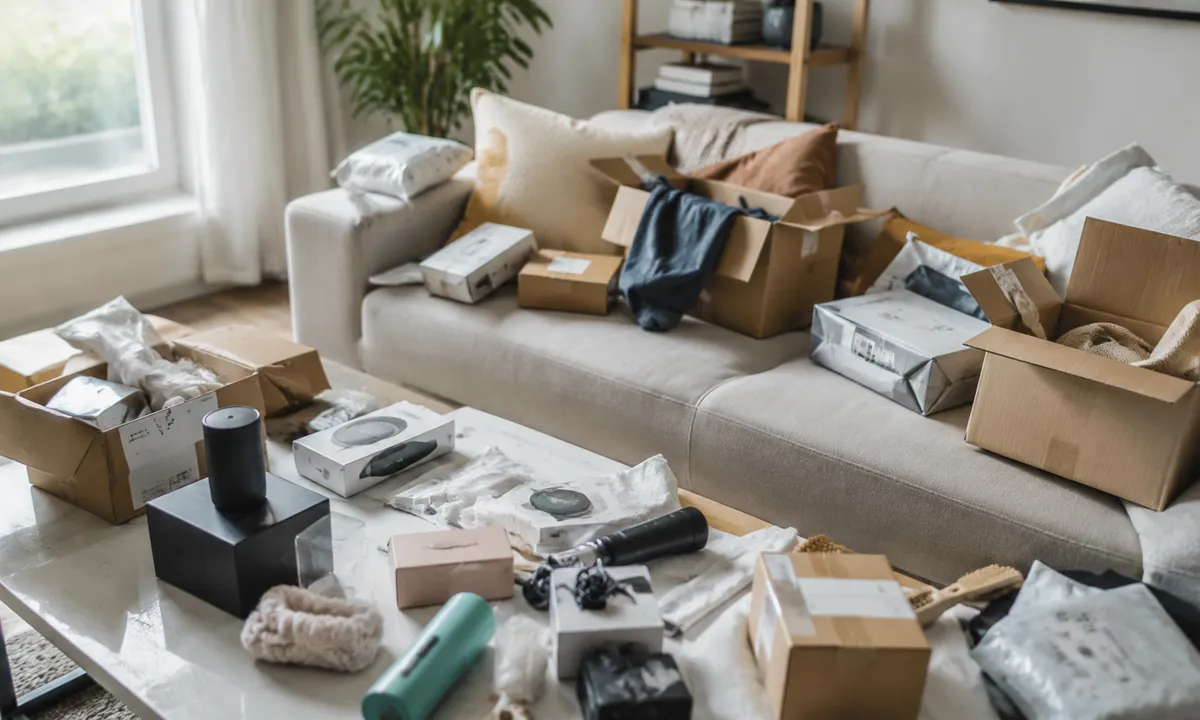
Somewhere between the third unboxing video and the fourteenth “life-changing find” reel, a familiar ritual begins. The cart fills. The checkout clears. A package arrives. And then it sits, partially used or completely untouched, on a shelf next to three other packages that arrived the same way.
Online trend-buying has a specific psychology, and it rewards understanding that psychology bluntly: the platforms that deliver those trends are not curated magazines with editors making deliberate choices. They are engagement machines. What surfaces is what stops the scroll, and what stops the scroll is almost never the quietly useful thing a person actually needs.
How the Feed Manufactures Urgency
A product goes viral for reasons almost entirely disconnected from its quality. It films well. The presenter has the right cadence. The hook lands in the first two seconds. Sometimes the product is genuinely good and the video just happened to catch. More often, the video is doing work that the product cannot do on its own.
The structure of these platforms amplifies that gap. An algorithm that optimizes for replays and shares will systematically favor the dramatic transformation, the audible satisfying click, the before-and-after that reads in a single glance. Slow, durable usefulness does not photograph well. A skillet that lasts fifteen years looks exactly like a skillet that will warp in six months.
Urgency is layered on top. Limited stock. Everyone is talking about this. The comment section is seeded, whether deliberately or just by social momentum, with people who already own it saying they bought two. The whole environment is designed so that hesitation feels like missing out rather than like prudence.
None of that is a conspiracy. It is just what engagement optimization produces when applied to commerce. The effect on the buyer, though, is real: a consistent pressure to decide faster than any good purchasing decision should be made.
The Object Arrives in Actual Life
The gap between what a trend promises and what a person’s actual life can accommodate is where most of the money gets lost.
A trending kitchen gadget requires counter space that does not exist. A trending fitness tool assumes a morning routine that never gets established. A trending organizational system works beautifully for the specific drawer dimensions and item counts of the person demonstrating it, and sits unused in a home with different drawer dimensions and different item counts. The product is not lying, exactly. It just was never designed around the buyer’s circumstances, because it was not designed around any buyer’s circumstances. It was designed around a short video.
This is the version of the problem that people recognize in retrospect, almost universally, but somehow rarely anticipate in the moment. A person who owns four dusty blenders can still watch a blender reel and feel the pull. The feeling that the next one will finally be the right one is part of the mechanism, not evidence against it.
What Trends Actually Select For
A product that earns sustained word-of-mouth over years has passed a test that a trending video cannot replicate. It has been used, broken in, run through the situations actual owners encounter rather than the controlled conditions of a demonstration. The people recommending it have had time to discover the flaw, the workaround, the thing that eventually annoyed them enough to stop using it. If they are still recommending it after all that, the recommendation means something.
Trend-buying skips that process entirely. A product can rack up millions of views in a week and accumulate almost no real usage data. The reviews that appear are early reviews, written by people who just received it and are still in the novelty window. The few dissenting voices get buried under the volume.
The products that tend to go viral on shopping-focused platforms also skew toward a specific category: things that solve problems people did not know they had, or that perform one narrow task with visible flair. These are not the categories where people’s actual purchasing gaps tend to live. Most people need better versions of things they already use, not clever solutions to problems that were never causing them real trouble.
The Accumulation Cost Nobody Counts
Individual purchases look small. Eight dollars here, twenty-two there, a forty-dollar item once a month because it seemed worth the risk at that price. Over a year, a moderate trend-buying habit can quietly consume several hundred dollars in objects that added no lasting value to the household.
That figure understates the actual cost. Space is not free. The mental load of owning things, organizing things, deciding what to do with things when they stop being used, adds up in ways that are harder to quantify but very real to live with. A drawer full of impulse-bought kitchen tools that do not get used is a minor but persistent friction point in the kitchen. Multiply that across several categories and several years and the home starts to carry a texture of low-grade clutter that most people correctly identify as stressful but rarely trace back to its source.
The return process, where it exists, is its own tax. Packaging the item, printing the label, remembering the window, actually going through with it instead of letting the deadline pass. Many trending products arrive from platforms with complicated or effectively nonexistent return logistics. The twelve dollars spent on something that failed is often just gone.
The Specific Lie of “I’ll Use It Eventually”
The internal justification that lets the purchase clear its own internal review tends to run something like: this is not for right now, it is for the version of my life I am building toward. The person who buys the bread-proofing basket is not necessarily lying to themselves about wanting to bake bread. They may genuinely want that. The problem is that buying the basket does nothing to make the baking more likely. It just adds a physical reminder that the baking has not happened yet.
Aspirational purchasing, which social commerce is almost entirely built on, converts desire into transaction without converting desire into behavior. The platform gets the sale either way. The buyer gets the brief satisfaction of having moved toward the desired self, at the cost of the purchase price and eventually the quiet guilt of the unused object.
The better diagnostic is blunt: is the thing missing from a life the person is already actively living, or is it an accessory for a life they are still intending to start? Trending products are almost always sold to the latter. They work by making the intended life feel one product closer.
Slowing Down Is a Purchasing Skill
The friction that platforms are designed to eliminate, the pause, the search for a longer review, the wait to see if the desire persists, is precisely the friction that makes purchasing decisions better. Reintroducing it deliberately is about as unsexy as advice gets, but it is also one of the few things that actually works.
A waiting period of two weeks kills most trend purchases on its own. Not because the product was necessarily bad, but because the urgency that made it feel necessary was manufactured and fades quickly when not fed. A desire that survives two weeks, accompanied by a search for reviews written three or more months after purchase, is a meaningfully different signal than a desire that arrived via autoplay at 11 p.m.
The other check is environmental. A product demonstrated in a pristine minimal kitchen or a perfectly lit spare bedroom is being shown in conditions that are not the buyer’s conditions. The question is always whether the thing fits the actual kitchen, the actual drawer, the actual morning, the actual version of the buyer’s habits as they exist right now rather than as they are hoped to become.
The cart icon in the corner of the video, the link in the bio, the swipe-up, the single tap to checkout: all of it exists to close the distance between want and buy before doubt has a chance to show up. Doubt, in this context, is not the enemy. It is the part of the process doing the actual work.