


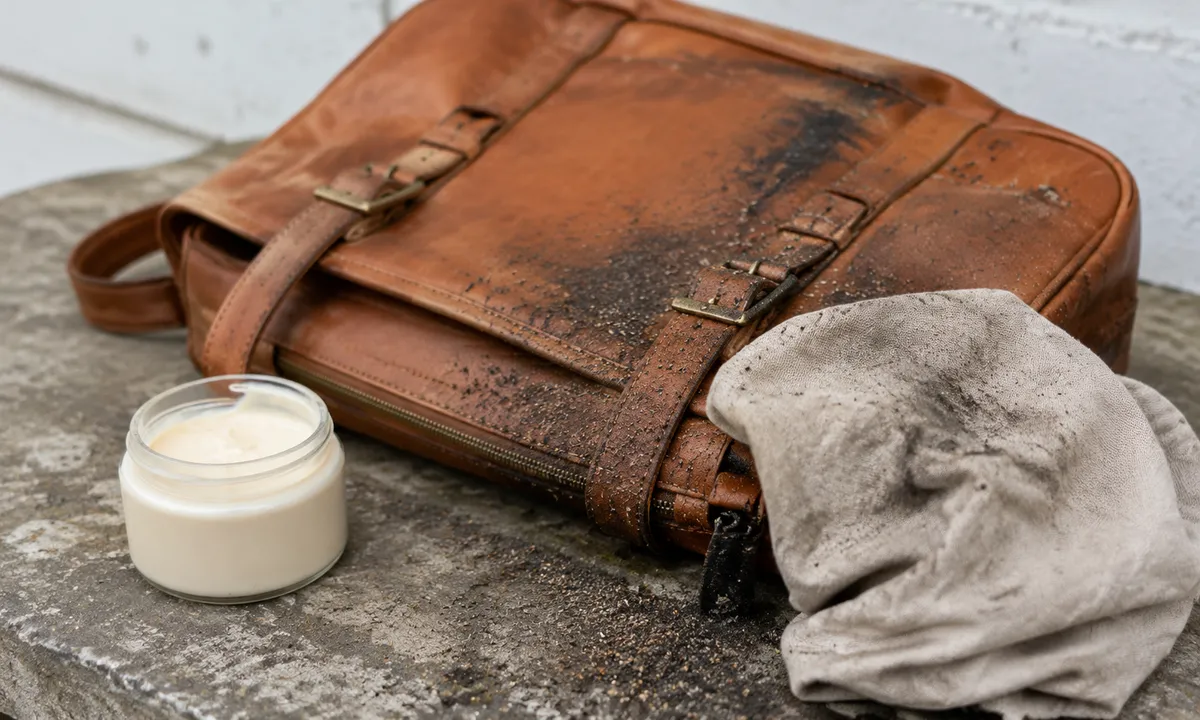
Conditioning a leather bag is not complicated. Apply product, work it in, let it dry. The steps take twenty minutes. And yet bags get ruined this way every season, not from neglect, but from good intentions applied at exactly the wrong time.
The biggest mistake is conditioning leather that still has dirt, dust, and surface oils embedded in the grain. People reach for the conditioner first because conditioning feels like the main event, the reward, the thing that will bring the bag back. Cleaning feels like a chore. So they skip it, or they give the bag a quick wipe with a dry cloth and call it done. Then they work the conditioner straight into leather that is already compromised at the surface level, and they seal the problem in.
What Actually Happens When You Condition Over Grime
Leather is porous. Full-grain vegetable-tanned leather especially so. The surface has a texture you can feel, millions of small openings that are meant to absorb conditioning agents so the fibers stay supple and do not dry out and crack. When those openings are partially blocked by a season’s worth of body oils, city grime, and whatever the bag picked up on the floor of a taxi or a restaurant, the conditioner cannot penetrate evenly. Parts of the leather absorb well. Other parts absorb almost nothing. The result is uneven coloration, a patchy or blotchy surface, sometimes a slightly greasy look that never quite resolves.
Worse, conditioner applied over grime can trap particulates against the grain. In dry conditions this just looks dull. In humid conditions, trapped organic material can eventually contribute to mildew. The bag starts to smell like something is off, faintly, around the seams and the interior edges where cleaning never reaches.
This is the mechanism, and it is straightforward once you see it. The conditioner is not a solvent. It does not lift what is already sitting in the pores. It fills in around it.
How to Clean Before You Condition
A proper leather cleaner, something pH-balanced and made specifically for finished leather, is the right tool. Saddle soap works for some leathers but can dry out certain finishes and leave a white residue if not fully buffed out. A dedicated leather cleaner is more predictable across different bag leathers, which range from highly finished chrome-tanned hides to naked,aniline-dyed ones.
Apply the cleaner with a soft cloth, not a sponge. A sponge puts too much product on at once and drives moisture into the leather faster than a controlled wipe. Work in sections, using light circular strokes, and keep a second clean cloth nearby to lift what the first one brings up. On a tan leather bag that has been carried through a year, the second cloth will show a faint gray residue. That is the grime that would have gone under the conditioner.
Pay specific attention to the handles and the bottom four corners of the bag. Handles carry body oils that go rancid over time and soften the leather in a way that conditioning will not fix and may accelerate. The corners absorb impact and collect abrasive particles from hard surfaces. Both spots need time and a light hand.
Let the bag dry fully after cleaning, at room temperature, away from direct sun or a heat source. Depending on how thoroughly the leather absorbed moisture, this takes anywhere from thirty minutes to a couple of hours. Applying conditioner to leather that is still slightly damp from cleaning is its own small mistake, since it traps that moisture and can raise the grain texture in a way that dulls the surface finish permanently in small spots.
The Conditioner Choice Matters More for Certain Leathers
For most smooth, finished leather bags, a neutral cream conditioner is correct. Beeswax-based balms are richer and better suited to vegetable-tanned leathers that are meant to develop a patina, like many bridle leather bags and heritage work pieces. For delicate nappa or nubuck, cream conditioners designed for those specific textures are necessary. The wrong conditioner on nubuck, even a good quality one intended for smooth leather, will destroy the texture and flatten the nap into a shiny, blotchy surface that cannot be reversed at home.
Mink oil, which many people still reach for out of habit, is worth a word of caution. It penetrates well and does condition effectively, but it can darken some leathers permanently and can soften structural fibers over time with repeated heavy use. On a bag where the shape matters, the gussets and base panels that hold structure, mink oil applied too generously and too often works against the leather rather than with it.
Amount and Application
A pea-sized amount of conditioner for a section roughly the size of a paperback book is the right ratio for most leather bags. It sounds like very little. It is correct. Over-conditioning is real, and it is nearly as damaging as no conditioning at all. Leather that has been heavily conditioned repeatedly feels soft and tacky, picks up debris easily, and loses its ability to hold a shape. The fibers are essentially waterlogged, supple past the point of functionality.
Apply with a soft cloth in circular motions, working the conditioner fully into one section before moving to the next. Watch the surface as it goes in. The leather should look slightly deeper in color while wet, then return close to its original shade as it absorbs and dries. If it stays dark and greasy-looking after ten minutes, too much product was used. Buff gently with a dry cloth and let the bag rest in open air for at least an hour before using it.
The Interior Is Usually Skipped Entirely
Most bags have a fabric or suede lining, so conditioning the interior does not apply. But bags with fully leather-lined interiors, a category that includes a number of structured totes and some briefcases, have the same needs on the inside as outside. The base panel especially, the flat piece that takes abrasion from whatever is set inside the bag, will dry out and crack from the inside if it is never addressed. By the time that cracking is visible from outside, the inner grain layer is already gone.
Unlined leather bags, common in minimalist accessories and some flat clutches, are obvious cases where the interior needs the same treatment as the exterior. Less obvious is a bag with a partial leather interior, where the top edge and the interior pockets are leather but the main body is lined. The exposed leather at the top edge ages faster than people expect and often shows cracking there first because it receives no conditioning attention.
Frequency and Timing
Once or twice a year is the right interval for most bags in regular use. Climate matters. Bags carried in dry winter air or in arid environments dry out faster and may benefit from conditioning three times a year. Bags stored in humid environments need conditioning less often but need good air circulation in storage to prevent mildew.
The transition out of summer is a natural conditioning moment. Heat, sunscreen residue, and high humidity are collectively hard on leather, and cleaning before conditioning at that point removes a specific type of surface buildup that builds through the warm months. A bag that gets one thorough clean-and-condition cycle at the end of summer and another in late winter is a bag that will last a long time without any particular drama.
The bags that crack at the handles after three years, the ones that develop those white stress lines across the base corners, those are almost never bags that were used too hard. They are bags that were conditioned without cleaning first, or conditioned once then left alone for years, or conditioned with whatever product was on the shelf without checking whether the chemistry matched the leather. The care is simple. The order is what matters.