


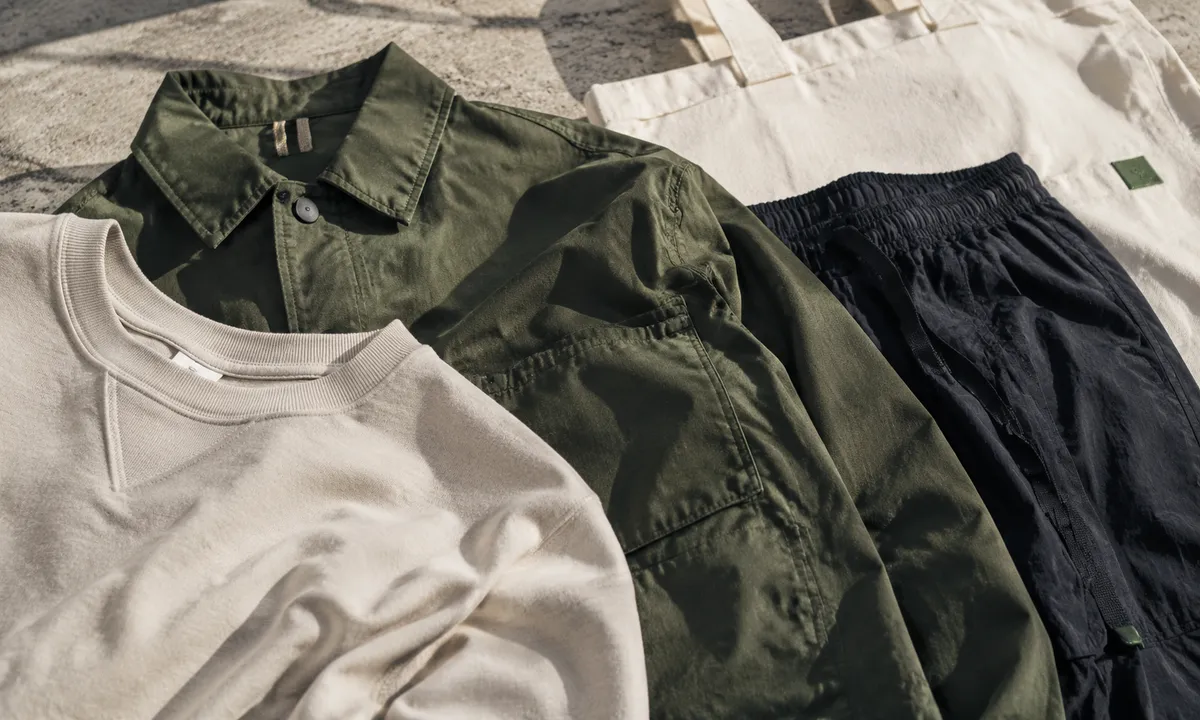
Street style and sustainability used to sit at opposite ends of fashion’s personality spectrum. One was fast, reactive, driven by drops and hype. The other was slow, principled, occasionally preachy. That tension has mostly collapsed. The brands doing the most interesting work in casualwear right now are not treating environmental responsibility as a footnote or a marketing column. They are building it into the seams.
What changed is partly consumer pressure and partly something harder to pin down: a genuine shift in what designers find compelling. Working within material constraints, sourcing from smaller mills, cutting patterns to minimize fabric waste. These are design problems, and good designers like design problems. The result, across a handful of brands, is casualwear that has more texture and personality than the category has had in years.
Pangaia and the Science of the Hoodie
Pangaia has spent the better part of six years treating the basics, hoodies, joggers, T-shirts, as a materials science project. Their signature FLWRDWN insulation, built from wildflowers and biopolymers rather than duck down, became a genuine talking point in an industry where innovations usually stay invisible. The pieces themselves are not loud. A Pangaia hoodie in dried sage or warm white does not announce itself across a room. The interest is tactile and technical: fabrics that are slightly heavier than expected, a drape that feels considered.
Where Pangaia earns its place in a street style conversation is longevity of silhouette. Their cuts have stayed consistent enough that a piece from three seasons ago sits next to a current one without looking like an archive pull. That consistency is rarer than it sounds. Most basics brands chase micro-trend adjustments in sleeve length or hem drop that quietly obsolete their own catalog.
Patagonia’s Streetward Drift
Patagonia has been making technical outdoor gear from recycled materials since before most current sustainable fashion brands existed. The interesting story right now is not the fleece vests, which have become a kind of ambient background noise in certain zip codes. It is the brand’s quieter, simpler pieces: the organic cotton work shirts, the canvas trucker jackets, the baggies that have accumulated a following among people who would never call themselves outdoorspeople.
On city sidewalks these pieces work because they carry visible construction quality without visible logo worship. A Patagonia canvas chore coat reads as workwear heritage before it reads as brand affiliation. That ambiguity is useful. And the repair program, Worn Wear, is not just feel-good messaging. It has produced a secondary market of visibly mended pieces that look better for the wear, which is about as good a definition of durable style as any.
Girlfriend Collective’s Specific Contribution
The sustainable activewear space is crowded enough that novelty is hard to come by. Girlfriend Collective carved out something distinct by leaning into the specific material story of post-consumer recycled plastic bottles spun into their Lite fabric, a performance knit that is noticeably softer than typical recycled polyester. The color range helps. A muted earth-tone palette of clay, moss, and dusk blue sits closer to streetwear than to the aggressive neon that still dominates athletic wear shelves.
Their wide-leg track pants and boxy crop hoodies have crossed over into everyday dressing in a way that purely athletic silhouettes rarely manage. The sizing range, one of the most inclusive in the category, means the clothes actually exist for the full range of bodies that want them. That is worth stating plainly because inclusive sizing is frequently announced and then quietly compromised in the actual construction. Girlfriend Collective’s extended sizes are cut to the same proportions as the smaller ones, not scaled up as afterthoughts.
Colorful Standard: The Basics Argument
Danish brand Colorful Standard builds its entire identity on organic cotton basics in a color library that now runs to more than 40 shades. The premise is simple enough to sound boring: make the best possible T-shirt, sweatshirt, and sock, use certified organic cotton, and offer enough colors that the pieces feel expressive rather than merely utilitarian. The execution is where the brand earns its reputation.
The weight of the cotton matters here. Colorful Standard pieces run heavier than fast fashion equivalents, and heavier fabric holds its shape through repeated washing in a way that lighter knits cannot. A slate blue crew neck worn twice a week will look largely the same at two years as it did at two months. That specific durability is the entire sustainability argument made physical rather than rhetorical.
On the street, the brand functions as a quiet flex for people who know. The color names, Warm Taupe, Dusty Coral, Limestone, are oddly evocative for what are essentially sweatshirts. That slight excess of naming care is charming in context.
Veja’s Street Credibility Problem (and How It Solved It)
Footwear is technically adjacent to apparel, but any honest survey of sustainable streetwear has to address shoes, and Veja has become the dominant answer to that question in a way that few brands achieve in any category. The French label’s transparency reports, published publicly, detail factory wages, material sourcing, and carbon calculations with an unusual level of specificity. The V-10 and Campo silhouettes, clean low-top runners with a recognizable logo that somehow reads as understated, have moved from niche sustainability pick to genuine street style staple.
The tension Veja navigated is one every ethical brand faces: how to be desirable without manufacturing artificial scarcity or hype-drop mechanics that reward speed over intention. They mostly solved it through product consistency. The silhouettes do not change dramatically season to season. If a pair wears out, the replacement looks nearly identical. That is either boring or brilliant depending on your perspective, and it turns out a large number of people find it brilliant.
Nudie Jeans and the Repair Economy
Swedish denim brand Nudie Jeans has been making organic cotton denim since 2001, which in sustainable fashion terms is close to foundational. The repair program is the most visible expression of their philosophy: free repairs for life, at any of their repair shops scattered across Europe and North America, or by mail. The jeans are designed with this in mind. The denim is woven to fade and age visibly, to develop a patina that marks time rather than hiding it.
A pair of Nudie Thin Finn jeans worn for three years develops a distinct fade pattern shaped by exactly how the wearer moves: crease lines at the knee, a honeycomb pattern behind the knee, faded thighs. These marks are specific to one person’s body and one person’s life. The jeans become, in a modest but real sense, irreplaceable. That attachment is the enemy of disposability, which makes it one of the more interesting business models in the category. Nudie profits from people loving their jeans enough to keep them, not from people needing new ones constantly.
Sporty and Rich: Aesthetic as Argument
Sporty and Rich occupies a different register from the other brands on this list. Founded by Emily Oberg, the brand started as a mood board aesthetic project before becoming a full apparel label, and that origin is visible in every piece. The vintage sportswear references, thick collegiate fonts, muted palettes borrowed from 1980s country club catalogs, are executed with a specificity that feels like point-of-view rather than nostalgia tourism.
The sustainability angle is less aggressive here than at Pangaia or Nudie. Sporty and Rich emphasizes quality of construction and slowness of production rather than leading with material certifications. The pieces are made in limited quantities, which creates genuine scarcity rather than manufactured urgency. A hoodie that sells out and does not come back, made well enough to last a decade, has a smaller footprint than an endlessly restocked alternative built for two seasons of use. The argument is structural rather than loudly proclaimed.
What the brand has done most usefully for the broader conversation is prove that sustainable casualwear can be genuinely covetable. The aesthetic density of a Sporty and Rich piece, the way the graphics and cuts reference specific eras without feeling costumey, gives sustainability credentials something to attach to beyond virtue. People buy these clothes because they want to wear them and keep wearing them. The ethics follow from the desire rather than preceding it.
The Resale Layer
Running underneath all of these brands is a second market that has changed what sustainable street style actually means in practice. Platforms like Depop, Grailed, and Vestiaire Collective have made finding a three-year-old Nudie pair or a discontinued Pangaia colorway routine rather than exceptional. The brands that hold their value on resale, and all of the labels in this piece do, have effectively extended their sustainability argument beyond what they control in production. A piece that circulates through four owners over ten years is operating at a fundamentally different environmental scale than one that lands in a landfill after two.
Colorful Standard’s limestone crewneck from two seasons back sells on Depop for close to its original retail price. A pair of worn-in Nudie jeans with visible fading commands a premium over new ones. These are not isolated curiosities. They reflect a genuine revaluation of what a garment’s life cycle can look like when the original construction is worth preserving. The brands making the most interesting sustainable casualwear right now are not just designing clothes. They are designing things people want to keep.