


Leather and rain have a complicated relationship. The hide is tough enough to outlast most materials, but water has a way of finding the flaws: a stitch line left unprotected, a surface dried out from months of neglect, a finish worn thin at the corners. The damage rarely announces itself in the moment. It shows up later as a white mineral bloom on dark brown calfskin, as stiff patches where the leather bunched while it dried too fast, or as a tide line that no conditioner will fully erase.
Prevention is almost entirely cheaper than repair, and repair is sometimes impossible.
What Water Actually Does to Leather
Leather is a fibrous structure, and those fibers hold natural oils that keep the material supple. When water soaks in, it displaces those oils and carries them out as it evaporates. The result is leather that feels drier and stiffer than it did before the rain hit. In full-grain and vegetable-tanned leathers, that stiffness can crack the surface if the bag dries in a bent or compressed position. In chrome-tanned leathers, the effect is subtler but still real: a gradual loss of the suppleness that made the bag feel good in the first place.
Hard water leaves mineral deposits. Saltwater is particularly aggressive. Even ordinary rainwater, slightly acidic in most urban areas, will pull color from aniline-dyed leathers over repeated exposure. None of this is catastrophic after a single soaking, but the cumulative picture is a bag that ages badly rather than gracefully.
Conditioning Before Protection
The sequence matters more than most people realize. Applying a waterproofing product to dry, depleted leather is like painting a wall that hasn’t been primed: the product sits on top rather than bonding properly, and the underlying problem remains.
A leather conditioner, applied first, replenishes those natural oils and gives the surface something to work with. Beeswax-based conditioners work well on full-grain leathers. Lanolin-based products are gentler on softer, more porous hides. A small amount, worked in with a clean cloth in slow circular motions, is enough. The leather should absorb most of it within ten to fifteen minutes. If a thick residue remains on the surface after that, too much was applied. Buff it off before moving on.
Conditioning twice a year is a reasonable baseline for a bag used regularly. In dry climates or during winter months with central heating, once every three to four months makes more sense.
Choosing the Right Water-Repellent Product
The market has three main categories: wax-based creams, silicone sprays, and fluoropolymer sprays. Each has a different effect on the leather’s appearance and texture, and choosing the wrong one for a particular bag can alter the look permanently.
Wax-based products are the traditional choice for structured, substantial leathers. They deepen the color slightly, add a subtle sheen, and provide solid water resistance. They are the right call for a waxed canvas and leather hybrid bag, a full-grain briefcase, or any piece where a slightly richer, darker finish is welcome. The tradeoff: they are harder to apply evenly, and on very light or natural-finish leathers they can create uneven patches if the application is rushed.
Silicone sprays are fast and easy, but they can soften the structure of some leathers over time, and they tend to leave a slightly artificial feel. They are serviceable for casual bags where appearance is not the primary concern.
Fluoropolymer sprays, sold under various brand names at outdoor and luggage retailers, sit in the middle. They alter the color the least of the three options and work well on finished (pigmented) leathers. They wear off faster than wax and need to be reapplied more often, but for a bag with a delicate finish, that lightness of touch is worth it.
One hard rule: always test on a hidden seam or the underside of astrap before treating the whole bag. Leather behaves differently depending on the tannage, finish, and dye, and there is no way to know in advance exactly how a product will interact with a specific hide.
Application and Drying
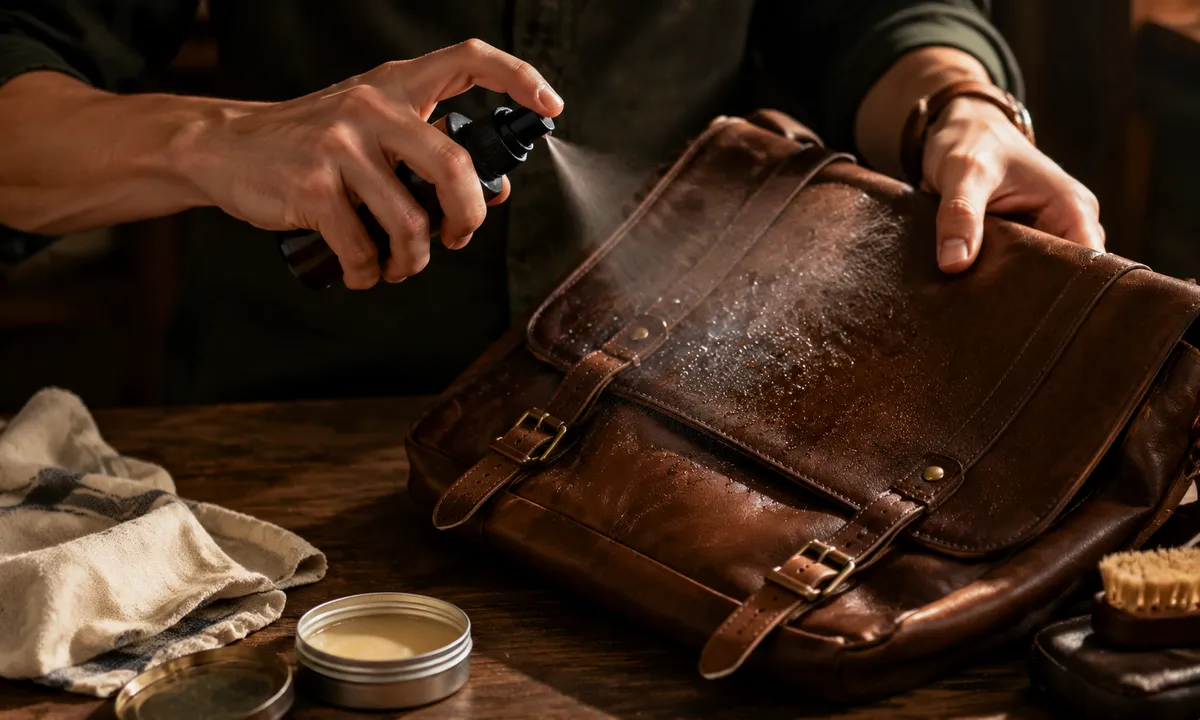
Sprays should be applied in a slow, sweeping motion from about six inches away, covering the entire surface in a thin, even coat. One pass is rarely enough; two or three thin passes outperform one thick one. Pay extra attention to seams and the bottom corners, where the bag contacts surfaces and wherestitching creates small channels for water to enter.
Wax creams need a few minutes of firm buffing to work into the grain. A horsehair brush afterward brings up a light polish and helps seat the wax. The smell is pleasant in the way that old shoe shops are pleasant.
Drying time matters. Let the treated bag sit in a well-ventilated room, away from direct sun and away from any heat source, for at least a few hours before using it. Heatcures a protectant unevenly and can raise the grain of the leather.
When the Bag Gets Wet Anyway
Even a well-maintained bag will get caught in rain eventually. The response in the first few minutes after that happens determines how much damage is done.
Pat the surface dry immediately with a clean, absorbent cloth. Blotting works better than wiping; wiping can push water into the seams rather than lifting it away. Then stuff the bag loosely with dry cloth or clean paper (never newspaper, the ink transfers) to help it hold its shape as it dries. Stand it upright or hang it. Do not lay it flat on its side, which will cause the bottom to dry in a compressed, slightly distorted shape.
Leave it to dry at room temperature. This takes longer than most people expect, often six to twelve hours for a substantial bag. The temptation to speed things up with a hairdryer or by leaving the bag near a radiator is worth resisting. Rapid drying pulls the oils out faster and can cause the leather to crack or warp at the stress points.
Once fully dry, condition the leather. The soaking will have pulled moisture from the fibers and the bag will feel slightly stiffer than usual. A good conditioner restores most of that. Follow up with a protective treatment once the conditioner has fully absorbed.
Hardware, Straps, and the Parts People Skip
The strap is the most overlooked part of a leather bag when it comes to water protection. It flexes constantly, which means the water-repellent layer breaks down faster there than on any flat panel. A bag where the main body is carefully treated but the shoulderstrap has never been conditioned will develop cracking at the strap’s flex points long before the rest of the bag shows any trouble.
Straps deserve their own conditioning pass, applied with particular attention to the area around the hardware attachment points. The leather there is under the most stress and tends to dry out fastest.
Hardware is a separate issue. Brass and nickel findings handle water reasonably well but will develop a patina or, in the case of cheaper plated hardware, begin to flake if left wet consistently. After a soaking, dry the hardware with a cloth. A thin coat of clear carnauba wax on brass findings once or twice a year slows tarnishing without clogging moving parts like buckles or zippers.
Lining and Interior Damage
Water that gets inside a bag through seams, an open zipper, or a soaked-through bottom can damage the lining and, more critically, cause the leather to dry in the wrong shape from the inside out. Canvas and fabric linings that stay damp for more than a day will start to smell. Suede or leather interior patches can stiffen and discolor.
If the interior gets wet, remove the contents immediately and open every pocket. A small amount of baking soda in a cloth sachet placed inside the dry bag overnight will absorb residual moisture and odor without touching the leather directly. Do not apply any leather treatment to the interior fabric lining.
Storage When Rain Is Predictable
A treated leather bag handles light rain well. For sustained downpours, a simple nylon rain cover stored in the back pocket is more reliable protection than any topical treatment. Topical treatments buy time and reduce absorption; they do not make leather truly waterproof. A quality bag deserves both lines of defense.
For longer periods of storage, a cotton dust bag in a cool, dry space keeps the leather from drying out and away from humidity fluctuations that cause surface cracking. Plastic bags trap moisture and should be avoided. A bag stored properly for months should come out feeling close to how it went in, ready for conditioning and a fresh protective coat before it goes back into regular use.
The bags that last decades are the ones whose owners treated the first soaking as a prompt to act rather than a reason to worry. After that, the maintenance becomes routine: condition, protect, dry slowly when needed. The leather keeps most of what makes it worth carrying in the first place.