


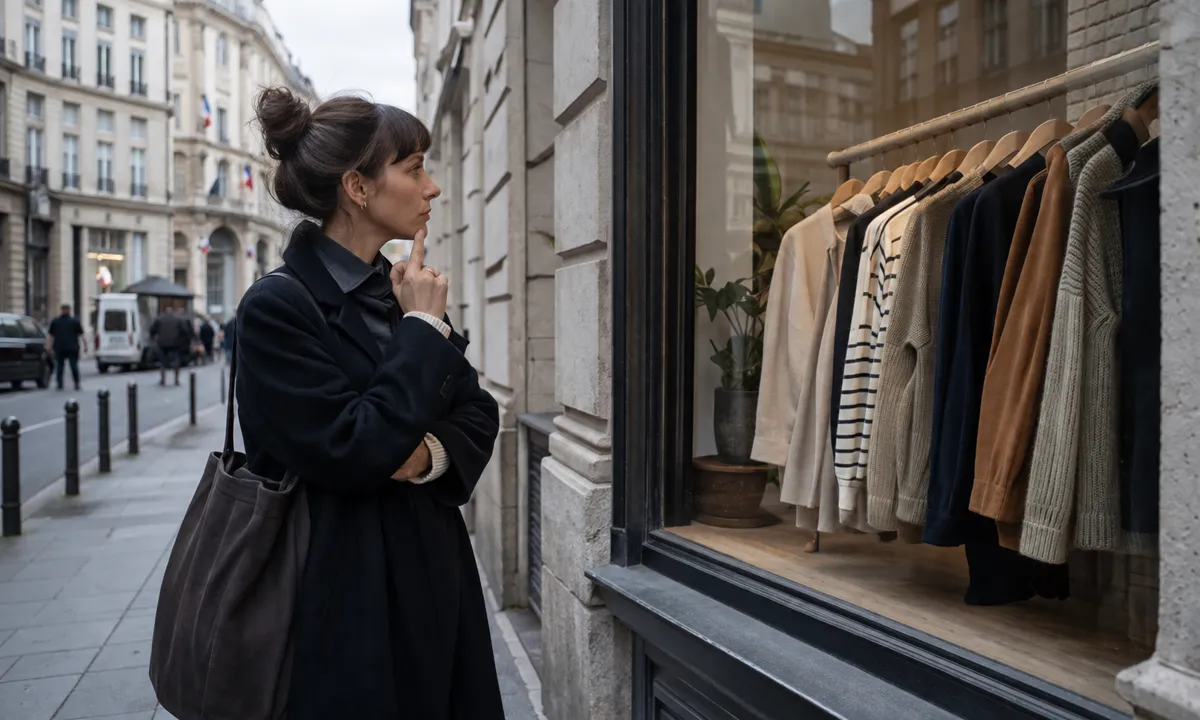
Fashion cycles run on a specific kind of anxiety. A silhouette returns, gets declared essential, then quietly recedes, and the whole mechanism depends on the consumer feeling perpetually behind. The trick is not in the clothes themselves but in the calendar, the manufactured urgency that makes last season feel vaguely embarrassing.
Opting out of that calendar turns out to be less of a political act and more of a practical one. When the cycle stops being the frame of reference, something quieter takes over: what actually fits, what actually gets worn, and what a person actually looks like in the mirror without the noise of what is supposed to be happening right now.
The Cycle Has a Job, and the Job Is Not Dressing You Well
Fashion cycles exist to move inventory. That sounds cynical but it is just economics. A runway season sets a mood, retailers buy into it, editorial coverage amplifies it, and by the time a trend reaches a mainstream price point it is already beginning to turn. The person at the end of that chain, standing in a store trying to figure out what to buy, is the last one in and the first one holding something obsolete.
The more honest version of trend forecasting would say: here is a shape the industry wants to sell this year. That is all it is. A particular trouser leg width or a specific shade of brown carries no inherent superiority over what came before it. The case for it is always made in the language of inevitability, but the decision was made in a boardroom, not handed down from somewhere.
Once that becomes clear, the urgency dissolves. The wide leg is not arriving; it is being sold. That distinction changes everything about how to shop.
What Stays in the Wardrobe and What Leaves
A useful test: pull everything out and ask which pieces have been worn in the last twelve months without any internal negotiation. The negotiation is the giveaway. A coat that requires convincing yourself it still looks right is a coat that belongs to a moment that has passed, whether that moment was dictated by trend or personal circumstance. The ones that get reached for without a second thought are the ones that actually fit the life being lived.
For most people, that category is smaller than expected. A handful of pieces do real work: a dark trouser in a good fabric that moves with the body, a shirt collar that flatters the face, a shoe with a heel height that still feels natural at 9 p.m. The rest fills a wardrobe without filling a day.
The cycle pushes additions. The quieter alternative is subtraction first. Getting rid of the pieces that require negotiation creates a wardrobe that is easier to get dressed from, because everything in it has already passed the test.
Learning to Read Fit Instead of Season
One concrete skill that replaces trend-following: learning what fit actually means for a specific body. This sounds obvious but most people have never been taught it in any systematic way. They know vaguely that something “runs small” or that a brand “works for them,” but they cannot articulate why a jacket makes them look sharper or why a particular neckline shortens the torso.
Fit is mechanical. A shoulder seam that sits at the actual shoulder rather than drooping toward the upper arm creates a cleaner line regardless of the year. A trouser break that falls just to the top of the shoe looks intentional in 2019 and looks intentional in 2026. These things do not age. The clothes that photograph well at every angle are almost always the ones where the construction is doing what it is supposed to do.
The payoff of learning this language is that a person can walk into any store, at any point in any cycle, and immediately know whether something is working. The question changes from “is this on trend” to “does this fit,” and the second question has a reliable answer that does not expire.
The Personal Palette Problem
Color is where cycles do the most damage, because color choices feel personal even when they are being made by someone else. A season that pushes burnt orange or dusty sage can make a person feel genuinely drawn to those colors, then leave them owning a closet full of shades that looked magnetic in October and feel strange by March.
A more grounded approach is to spend a season observing what gets received well and what fades into the background, without buying anything in a new color family. If by the end of the year the thought keeps returning, the interest is probably real. If the pull disappears, it was the season talking.
Most people have a surprisingly tight range of colors that genuinely work against their skin tone and hair, and within that range a further narrow set of tones they actually want to look at every morning. Finding those and staying there feels limiting in theory. In practice it makes every purchase easier to make and almost impossible to regret.
When Secondhand Shopping Becomes a Lab
Buying secondhand has a structural advantage that rarely gets mentioned: it forces an encounter with clothes across multipleeras at once, stripped of their original marketing. A 1990s blazer and a 2015 blazer and a 2023 blazer hang on the same rack with the same price tag. The only question is which one is the best jacket. That environment makes it much easier to see what is actually good, because the seasonal pressure is completely absent.
Shopping that way for a year or two builds a fast instinct for quality and cut. The fabrics that hold their shape reveal themselves quickly. The trousers with enough room in the seat to move in become obvious once a person has tried a hundred pairs. And the specific silhouettes that keep appearing in a person’s own cart, across differenteras, point pretty clearly toward a personal aesthetic that was there all along, underneath the trend noise.
It is worth saying that this is slow. A wardrobe built this way takes a couple of years to feel coherent. The alternative, buying in volume according to the season, produces the coherence of a moment, which looks dated from the outside within eighteen months.
The Pieces That Actually Last
There are clothes that sit outside the cycle almost entirely, and they tend to share a few qualities: they are made in natural fibers or technical fabrics that age well rather than pilling, the construction is simple enough that it reads the same across decades, and the silhouette is close enough to the body that it does not read as belonging to any particular era’s exaggerations. A well-made chore coat in heavy cotton duck. A merino crewneck sweater in a mid-weight gauge. Leather oxford shoes with a low profile and a single piece of leather across the toe.
These things cost more upfront in almost every case. The real math, though, is cost per wear over five or ten years against a cheaper piece bought three times in the same window. The durable version nearly always wins, and it wins while looking better the entire time.
The cycle has no good answer to a coat that is twelve years old and still the best coat in the room.
What “Dressing Like Yourself” Actually Requires
The phrase gets used as though personal style is something that reveals itself naturally, like a talent. For most people it is more like a skill that requires deliberate attention, a few years of paying close attention to what feels right versus what looked appealing on someone else, in a different context, in a different body.
Ignoring the cycle creates the conditions for that attention. When the question is no longer “what is happening this season,” the mind has room to notice smaller things: that a jacket with a slightly longer body feels more comfortable to move in, that a particular shade of navy reads as a neutral in every context while a brighter one always needs to be planned around, that boots with a square toe make a narrow foot look proportional while a pointed toe exaggerates it. These are personal findings. They apply to one person in one body and they hold across every year.
A closet built on those findings does something a trend-driven one never quite manages: it looks like the person wearing it made the choices. Which, at that point, they actually did.