


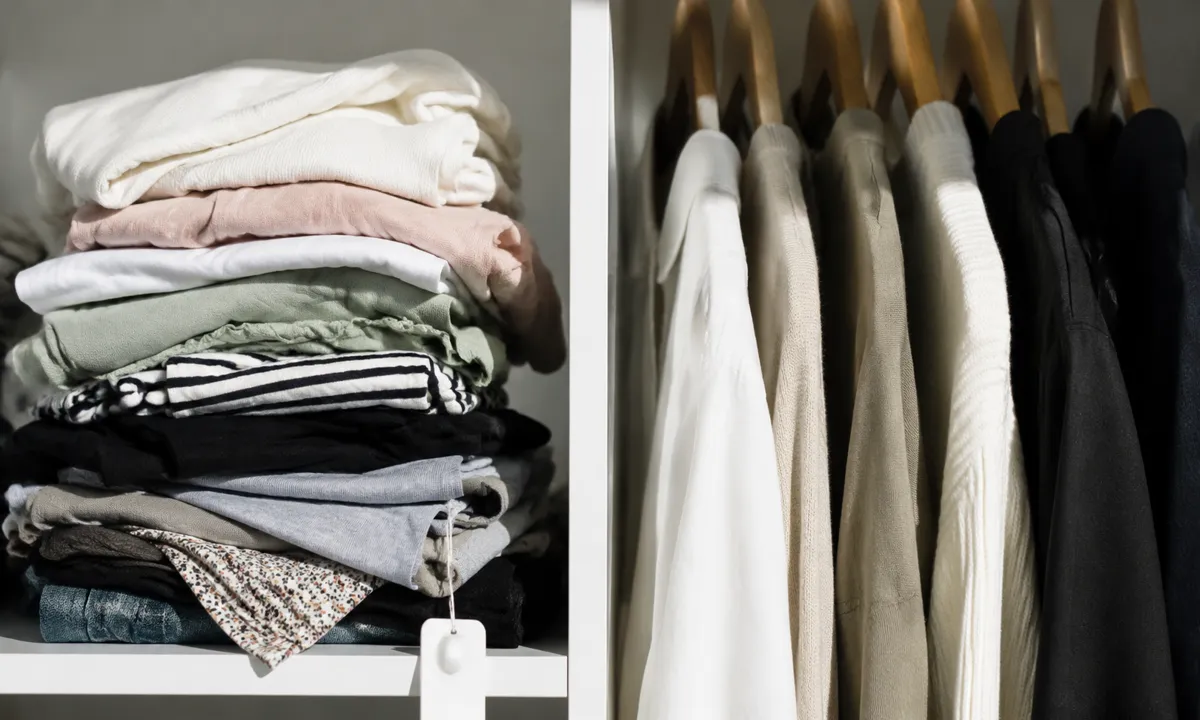
Fast fashion operates on a simple and effective premise: make getting dressed feel like a small decision. A top that costs twelve dollars is not a commitment. If it fades, pills, or falls out of style before the summer ends, the loss is manageable, almost trivial, and the replacement is just as cheap. The whole system is designed to lower the stakes of every individual purchase until buying clothes feels more like stocking a pantry than building anything.
Investing in better basics is the opposite premise. Fewer things, bought carefully, expected to last. A well-made pair of trousers, a cashmere crewneck, a white Oxford shirt cut from thick poplin. These pieces are supposed to carry their weight across years, not seasons, and the higher price is justified on the grounds that it spreads out over a long period of actual use.
Both premises are internally coherent. The argument worth having is which one actually delivers what it promises, and under what circumstances.
What Fast Fashion Actually Costs Over Time
The math on cheap clothing tends to look worse the longer you run it. A thirty-dollar blouse worn eight times before the seams start pulling is roughly $3.75 per wear. A ninety-dollar version of the same silhouette, made from a tighter weave with finished seams, worn sixty times over three years, comes out to $1.50 per wear. The fast fashion piece looked like the deal at the point of purchase. It was not.
That calculation is not a secret. Anyone who thinks about it reaches the same conclusion. The reason people keep buying the cheap version anyway is not ignorance; it is that the ninety-dollar purchase requires confidence. Confidence that the piece actually fits the way a person wants to dress, that the style will still feel right in two years, that the fabric will hold up the way the label implies. Fast fashion removes the need for that confidence by making the stakes low enough that a mistake is survivable. When a trend turns out to be a dead end, the loss is small.
The hidden cost is physical accumulation. A closet refreshed four or five times a year fills up with things that were worn a handful of times and now occupy space without earning it. The practical consequence is that getting dressed gets harder, not easier, because the volume of options obscures the ones that actually work. Plenty of people who shop frequently end up feeling like they have nothing to wear, which sends them back to the store to solve a problem the store helped create.
Where Better Basics Actually Justify Themselves
The investment-piece argument holds most firmly in a specific category: items worn close to the body that need to survive repeated washing. T-shirts, underwear, socks, undershirts. The cheap versions of these deteriorate in a way that is hard to ignore because they are held against skin. A thin cotton tee from a fast fashion retailer tends to become translucent after a dozen washes and develops that slightly sour smell that laundering alone cannot fully fix. A tee made from a heavier jersey, something in the 180 to 200 gram per square meter range, keeps its shape, its opacity, and its neutral smell through significantly more cycles.
Outerwear is another category where the return on a better piece is clear and early. A well-constructed wool overcoat or a properly seam-sealed rain jacket performs at a different level from the start, not just over time. The warmth-to-weight ratio of a coat made with actual wool interlining is not something a polyester blend achieves, regardless of price point. Anyone who has stood outside in January wearing the cheap version already knows this.
Footwear follows the same logic. A pair of leather shoes or boots made on a proper last, with a Goodyear-welt construction or at minimum a solidly cemented sole, can be resoled when the bottom wears through. The upper, if it is real leather and has been occasionally conditioned, can outlast several rounds of new soles. A pair of fast fashion boots made with a split leather upper and a glued-on sole has no such future. When the sole separates, the boot is garbage.
The Case for Cheap, Made Honestly
Fast fashion gets reasonable results in a few specific situations, and it is worth being precise about what those are.
Trend-specific pieces are the clearest case. A wide-leg pant silhouette that has a strong moment in fashion right now may look dated in three years. Buying a fifteen-dollar version to wear during the window when it feels current is a rational decision. Spending a hundred and forty dollars on a beautifully made version of something that will feel wrong by the time it has been fully broken in is a worse use of money, not a better one. The investment logic only works when the piece being bought is actually stable across time.
Occasion-specific items are similar. A dress or blazer bought for a single event, a wedding, a job interview, a reunion, does not need to last a decade. What it needs to do is look good on the day and photograph reasonably well. Spending significant money on something with exactly that use case is difficult to justify unless the piece will genuinely be worn again.
Children’s clothing is fast fashion’s strongest actual argument. Kids grow quickly enough that durability is almost irrelevant; the piece will be outgrown before it wears out regardless of construction quality. Spending serious money on children’s basics makes no sense unless the garment is being passed down to a younger sibling, in which case a slightly more durable version might earn its cost.
The Quality Signal Problem
A significant friction in the invest-in-basics approach is that price and quality have a weak and unreliable relationship in the current clothing market. A sweater priced at two hundred dollars from a brand with strong marketing may be made from the same Chinese-spun merino as a sweater priced at sixty from a less visible label. The higher price often reflects brand positioning, retail overhead, and the cost of aspirational imagery, not a meaningfully better garment.
This means that investing in better basics requires actual research, or at minimum a willingness to handle fabric and scrutinize seams before buying. The things worth checking are consistent and learnable: fabric weight and content (listed on the label), seam finishing on the interior, the quality of buttons and zippers, and whether the pattern, if there is one, matches at the seams. A genuinely well-made piece passes all of these tests. An expensively branded mediocre piece often does not.
Online shopping complicates this further because it removes the ability to handle the garment before committing. The investment strategy works best for people willing to shop in person, or who return things regularly, or who have identified a small number of brands they trust through repeated experience. Without that foundation, it is easy to spend more without getting more.
Style Clarity as the Prerequisite
There is a prerequisite for the invest-in-basics strategy that rarely gets stated plainly: it requires knowing what a person actually wants to wear, on an ordinary Tuesday, in real life. Not in theory, not in the version of life that involves more elegant occasions, but the actual texture of daily existence.
People who do not yet have that clarity tend to make expensive mistakes when they try to invest in quality. The beautiful camel coat hangs unworn because it does not fit the actual commute. The leather Chelsea boots sit in the closet because the workplace turned out to be more casual than expected. The heavy flannel shirts pile up because a person imagined a different version of their weekends than the ones they actually have.
Fast fashion is, in a strange way, a better tool for figuring this out. Cheap clothes bought in volume let a person discover what they actually reach for and what they never touch. The ten-dollar linen shirt that became a constant through one summer communicates more useful information than a hundred-dollar one bought on the hope that linen would suit a life it had not yet been tested against. Once a person knows which shapes, weights, and silhouettes they reliably wear, the invest-in-basics logic clicks into place because they are buying durable versions of things already proven to fit their actual life.
The Wardrobe as Infrastructure
Thinking about clothing as infrastructure rather than consumption changes the math on both sides. Infrastructure requires periodic replacement, some components more often than others. A good road surface is not the same as a good sewer line; the right investment horizon for each is different.
A well-made wool blazer is load-bearing infrastructure. It takes a plain white shirt and dark trousers and turns them into something that can handle a broad range of situations without additional purchases. Buying one that lasts twelve years instead of two is a genuine efficiency. A trendy printed blouse is more like paint: expected to need refreshing, relatively cheap to replace, and not worth investing heavily in.
The wardrobe that works best in practice for most people is neither a fast fashion churn nor a purist capsule of expensive basics. A small core of genuinely well-made pieces, bought deliberately and worn constantly, carries most of the daily work. A looser periphery of cheaper things handles trends, occasions, and the experiments that might or might not pan out. The core earns the investment. The periphery earns the freedom to be cheap. The error, on both sides, is treating the whole wardrobe as if it belongs to one category when it does not.
The white Oxford shirt worn twice a week for four years, soft at the collar from washing, with a small ink mark near the cuff that has become unremarkable, is not a lifestyle statement. It is a piece of infrastructure that has paid for itself several times over, and its successor, whenever it finally comes, will be worth buying well again.