


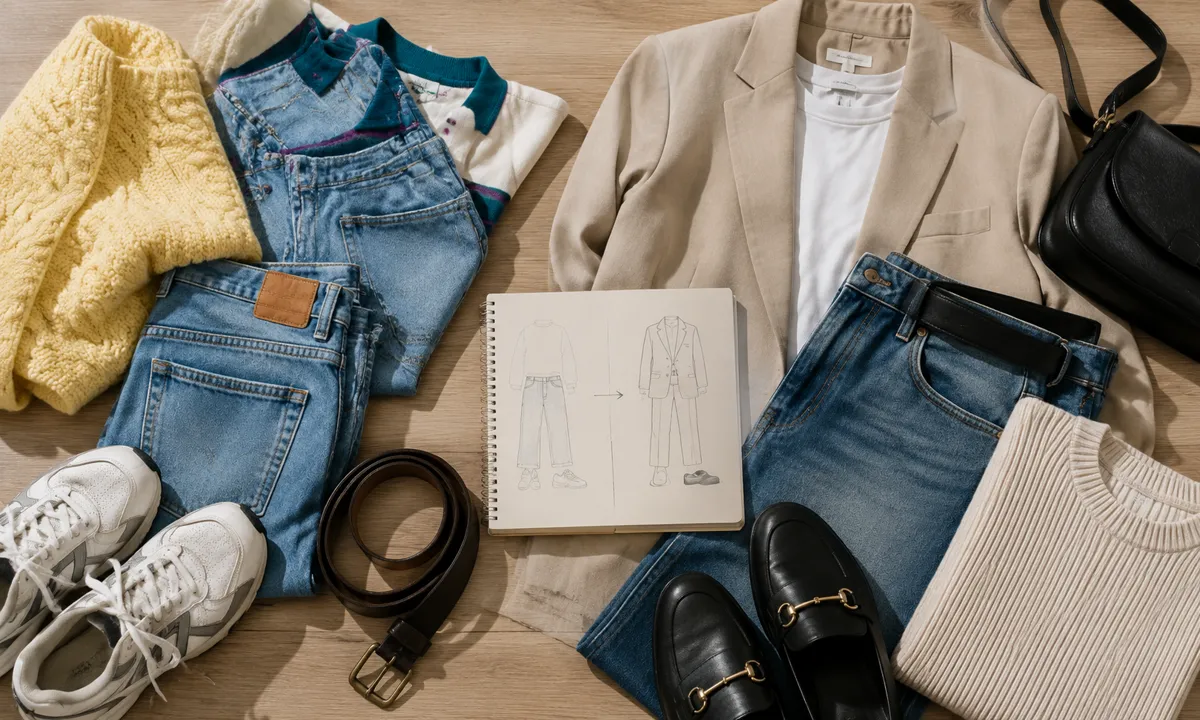
Dated style rarely announces itself. It seeps in slowly, one comfortable habit at a time, until a full-length mirror or an old photograph makes the whole picture suddenly clear. The clothes fit. They are clean. Nothing is technically wrong. But the overall effect reads like it belongs to a decade that has quietly moved on.
This is where most style guides lose the plot. They suggest a capsule wardrobe, or they rank must-have items, or they issue a sweeping verdict about what is “out.” None of that is particularly useful when the problem is more specific: a person who dresses fine by most measures, but whose choices have calcified somewhere around whenever they stopped paying attention.
The fix is less dramatic than a wardrobe overhaul. It is mostly a matter of learning to read a few key signals and making targeted swaps. Here is how to do it without starting over.
Fit Is Doing Most of the Work
No single factor ages an outfit faster than fit. And the most common fit problem is not that clothes are too small. It is that they are too large in ways that feel like comfort: the dress shirt with extra room across the chest, the chinos that balloon just below the seat, the blazer whose shoulder seam sits a full inch past the actual shoulder.
Clothes that were popular in the late nineties and through most of the two-thousands leaned oversized in a way that has since corrected. Current tailoring sits closer to the body without being tight. The test is simple: if there is more than about an inch of pinchable fabric along the side seam of a dress shirt when it is buttoned, the shirt reads old. If trousers break more than once before hitting the shoe, they read old.
A tailor can fix the worst of this for far less than a replacement. Tapering trouser legs, taking in a shirt at the sides, shortening a hem: these alterations cost between ten and forty dollars in most mid-size cities, and they change the read of a garment more than brand or fabric does. Find a tailor, use them once, and the difference will make the economics obvious.
The Specific Pieces That Age First
Some items carry a timestamp more visibly than others. Knowing which ones age fastest is useful because it tells you where a modest budget has the highest return.
Jeans are the most obvious. The mid-to-low rise, straight-leg, slightly distressed jeans that dominated for about fifteen years read immediately as a specific era. The current silhouette runs higher in the rise and somewhat straighter or slightly relaxed through the leg, often without the factory distressing. A single pair of dark, high-rise straight-leg jeans from any brand at any price point modernizes a look that has been sitting in the same decade since around 2004.
Shoes are the second sharpest signal. Heavily squared or heavily pointed toes, platform-sole sneakers in the “dad shoe” exaggerated form, and particularly thick-soled loafers all carry a clear timestamp. The current direction favors a more restrained profile: low-profile leather sneakers, classic loafers with a normal sole height, simple leather derbies or oxfords. None of these are new ideas. They just read clean where the alternatives read period-specific.
The third is outerwear. The mid-length leather jacket with a slightly oversized silhouette and bright silver hardware that was everywhere in the early two-thousands has aged into a costume. Same for certain bombers with loud lining choices. A simple medium-weight wool overcoat in camel, navy, or charcoal looks appropriate across nearly two decades without looking like it is trying. That consistency is a feature.
Color and Print Choices That Read as Stale
Color trends move slowly enough that most people do not notice them working, which makes it easy to get stuck. The early two-thousands had particular affinity for certain combinations: chocolate brown and baby blue together, coral orange as an accent, graphic tees with oversized screenprinted text across the chest. These are not objectively ugly, but they function like a date stamp.
The smarter move is to shift the wardrobe’s center of gravity toward tones that have long neutral staying power: navy, off-white, stone, olive, grey, rust in small amounts. These are not boring. They are useful. They sit well against most skin tones and hold up across a decade without sudden expiration. The one pattern consistently worth the investment is a simple stripe or a clean check at a small scale. Novelty prints, text, and oversized graphics all carry a best-before date that tends to arrive fast.
Accessories Accumulate More Than Clothes Do
The average person replaces their clothes more often than their accessories. This means that belts, bags, glasses, and watches can quietly hold a look in place long after the surrounding clothes have been refreshed.
The most common culprit is eyewear. Glasses get replaced reluctantly because they are expensive and functional. But the wireframe oval lenses popular in the late nineties, the very square heavy plastic frames of the mid-two-thousands, and the aggressively tiny frames that circled back briefly all announce a specific window. The current standard reads slightly larger and more rounded, with a thinner or medium-weight frame. An optician can explain the proportions more clearly than most style guides do, and a good independent eyewear shop will give an honest read on what a new frame does for a face shape. It is worth the consultation even without buying immediately.
Belts deserve a similar look. The wide, often logo-heavy belts with oversized buckles that moved through the two-thousands have softened into a sleeker standard: a belt roughly an inch to an inch and a quarter wide, a restrained buckle, leather in a tone that is close to the shoe rather than deliberately contrasting. The logo-buckle belt read as status shorthand at one point. Now it reads as a relic of that signaling.
Bags: if the primary bag still has visible logos across the exterior from an early-two-thousands trend cycle, or if it is a small backpack in nylon worn two-strapped for daily errands, the signal it sends is more vintage than intentional. A simple tote or a structured bag with clean lines in one neutral color absorbs into an outfit rather than announcing itself.
The Grooming Parallel
Clothes change faster than grooming habits, which means hair and facial hair choices often trail the clothes by half a decade or more. Someone who updated their wardrobe in 2018 may still be carrying a grooming reference from 2008 or earlier.
Spiky gelled hair, the frosted tips that staged a brief return and left again, certain hyper-precise beard outlines drawn well below the actual jawline, the side part held in place with a heavy product: each of these is legible as a specific era to anyone paying attention. This is not about chasing trends in grooming. It is about noticing when a style has migrated from personal expression into period costume. The best grooming advice is consistent: find a barber or stylist who cuts the kind of hair you want to have, show them a reference image, and let them give an honest professional read on what will actually work.
How to Actually Make the Change Without Spending Much
A full wardrobe refresh is rarely necessary. The practical approach is to identify the two or three items doing the most damage to the overall read and address those first. Based on what tends to accumulate: jeans, shoes, and eyewear are almost always the first places to look. These are the high-visibility items with the clearest timestamps.
For jeans and shoes, a single good replacement pair handles most of the work. Many of the most current silhouettes are available at mid-range prices from brands that have been making them the same way for decades. The specific brand matters less than the shape. Pay attention to the shape.
The next step is tailoring whatever remains. Take the five shirts or trousers that get the most wear to a tailor and ask them to look honestly at the fit. Describe the effect you are going for, let them measure, and start with one item to see the result before committing to multiple alterations at once. A properly fitted shirt from a thrift store looks more current than a poorly fitted one from a premium brand.
The last step is a slow edit of accessories over the next six months. No single swap is urgent, but each time a belt or bag or pair of glasses is up for replacement, use the replacement as an opportunity to correct course rather than simply continue the same pattern. Habits this deep do not need to be broken all at once. They just need to be redirected, one decision at a time, toward things that will still read well in ten years rather than things that already stopped reading that way ten years ago.