


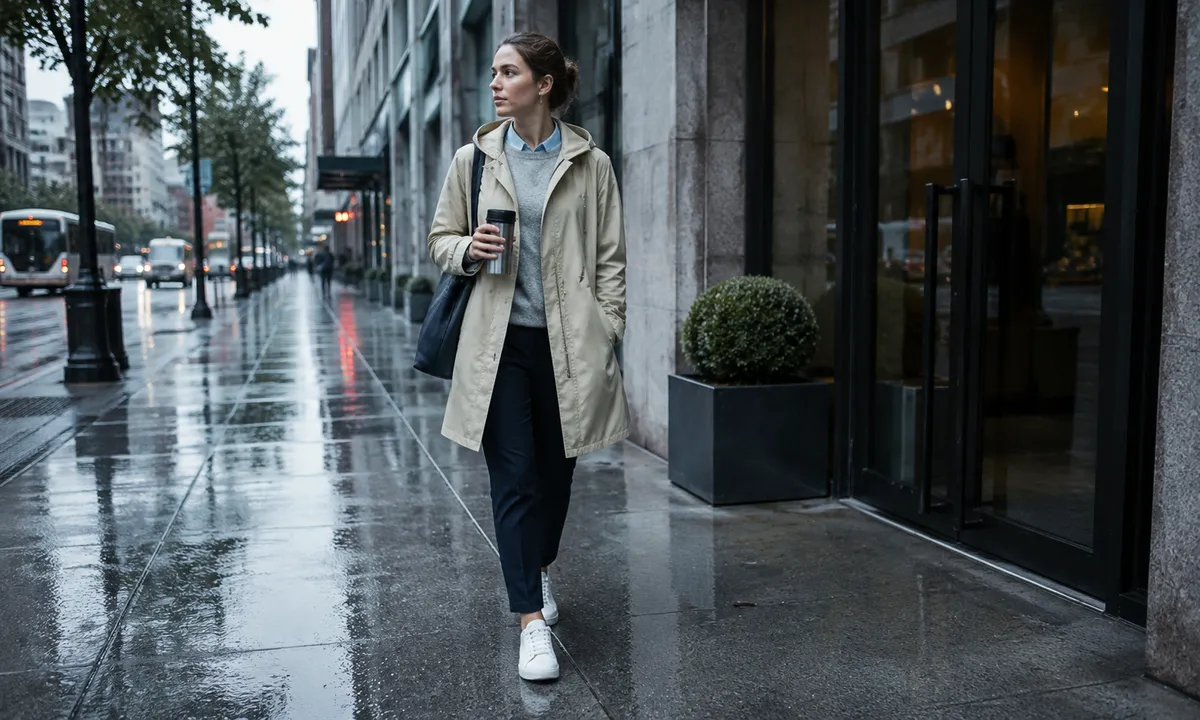
Rain at 7a.m., sun by noon, a cold front rolling in around 3 p.m.: that is a Tuesday in March, and also a Tuesday in October, and also, frankly, a Tuesday in June depending on where a person lives. Dressing for a commute that might span three different weather conditions is a real logistical problem, and the solutions most people reach for, the waterproof parka in an unflattering shade of khaki, the office-emergency umbrella stashed in a bag for six months, tend to trade everyounce of personal style for a mediocre amount of protection. There is a smarter way to think about this.
The seven outfits below are not a capsule wardrobe pitch or a “buy these ten things and you’re done” listicle. They are real combinations built around real conditions, organized by the type of weather problem they solve, and each one is designed to feel intentional rather than defensive.
The Trench Layer for Unpredictable Mornings
A well-cut trench coat does something most “weather-proof” garments refuse to do: it looks like a decision rather than a compromise. Paired with straight-leg trousers in a deep navy, a lightweight merino turtleneck, and leather loafers, this combination moves through light rain without absorbing it, handles the kind of brisk cold that isn’t quite cold enough to justify a heavy wool coat, and reads as completely put-together the moment the weather clears. The cotton-polyester blend in a quality trench wicks surface moisture; it is not a substitute for a rain jacket in a downpour, but it handles the majority of commute conditions most people actually face.
The key is fit. A trench that fits the shoulders correctly will look like it belongs. One that’s a size too large looks borrowed.
The All-Dark Layer Stack for Drizzle Days
Dark clothes have a practical advantage in wet weather that doesn’t get enough credit: a wet sleeve on a black or charcoal piece shows far less than a wet sleeve on tan or light grey. An all-dark stack, black slim trousers, a dark-charcoal knit, a black merino cardigan on top, sidesteps the visual damage that drizzle does to lighter colors while also functioning as a legitimate aesthetic choice. People who build this look intentionally end up with something that reads as minimal and deliberate. People who stumble into it by accident end up surprised at how well it works.
Add a structured black tote and a pair of clean white-soled sneakers for contrast, and the outfit has enough visual interest to carry itself into an afternoon meeting without needing to change.
The Blazer-Over-Puffer for Bitter Cold
Wearing a slim puffer vest under a structured blazer sounds counterintuitive until the logic clicks: the blazer provides the shape, the vest provides the warmth, and the combination keeps the silhouette clean in a way that no bulky outer layer achieves. A charcoal blazer over a matte black puffer vest, worn with dark jeans and Chelsea boots, looks intentional from the outside because it is. The vest traps heat around the core without adding bulk at the arms, which means the blazer drapes correctly.
This works best when the puffer is genuinely slim and matte-finish rather than shiny and quilted in large squares. The shiniest, puffiest vests break the illusion immediately.
The Waterproof Sneaker Outfit That Doesn’t Look Sporty
Waterproof sneakers have improved considerably. Brands like Common Projects and certain Adidas lines now offer styles in Gore-Tex or full-grain treated leather that shed water without the clunky profile of a hiking shoe. The rest of the outfit has to hold up its end: slim cord trousers in olive or rust, a compact mock-neck in off-white, and a wool overshirt worn open as a light jacket. The overshirt provides a layer of warmth and texture without the formality of a blazer or the bulk of a coat. The sneakers keep feet dry through puddles. The cord trousers are thick enough to stay warm at the ankle and look intentional, not accidental.
The overshirt does a lot of work in this combination. A good one in boiled wool or a heavy cotton-wool blend looks like a considered piece rather than a backup layer.
The Midi Skirt and Waterproof Boot Combination
For commuters who prefer skirts and dresses, the standard winter answer tends to be thick tights and ankle boots, which works up to a point and fails completely once there’s real rain or slush on the ground. The better solution: a midi-length skirt in a heavier fabric, a ponte or thick crepe, with knee-high waterproof boots underneath. The boot covers the area most vulnerable to splash and puddle contact, the skirt length means less bare leg exposed to cold air, and the outfit remains distinctly non-athletic and non-utilitarian in its overall impression.
A fitted ribbed turtleneck on top, tucked in, keeps the proportions clean. Add a short structured wool jacket rather than a long coat, and the whole look stays crisp even when the street does not.
The Technical Fabric Outfit Styled to Look Civilian
Performance fabrics have crept into everyday clothing in a way that makes this option genuinely viable now. Slim trousers in a moisture-wicking, crease-resistant fabric look, on the street and in the office, like any other well-made trouser. They are not. They dry in under 20 minutes, they do not wrinkle in the rain, and they do not cling when wet. Paired with a slim merino crew, a structured nylon bomber in a neutral color, and clean leather dress shoes, this outfit handles a genuine rainstorm better than almost anything else on this list while looking like someone who simply got dressed and left.
The bomber is the hinge point. A cheap nylon bomber looks like athletic gear. A well-constructed one with minimal branding, clean seams, and a fitted cut reads as an intentional jacket, full stop.
The Long Wool Coat and Layered Knits for Cold Rain
Wool repels light rain for longer than most people expect. A dense, tightly woven wool coat in camel, charcoal, or forest green will handle a 10-minute rainy walk and emerge looking fine, provided the commuter moves with purpose rather than lingering at crosswalks. Underneath: a fine-gauge turtleneck, a heavier cardigan on top of it, and a slim trouser. The layered knits underneath the coat eliminate the need for a scarf and still keep the chest and neck warm when the coat comes off inside.
This outfit depends almost entirely on the coat. A good long wool coat is expensive, but it is also a garment that works across five months of the year and does not go out of style between seasons. The cost-per-wear math on a quality piece stretches further than on almost anything else in a cold-weather wardrobe. The wool itself communicates something, too: it looks considered in a way that synthetic alternatives rarely do, even when both are technically performing the same function. Wearing something that was made to last tends to look like it.