


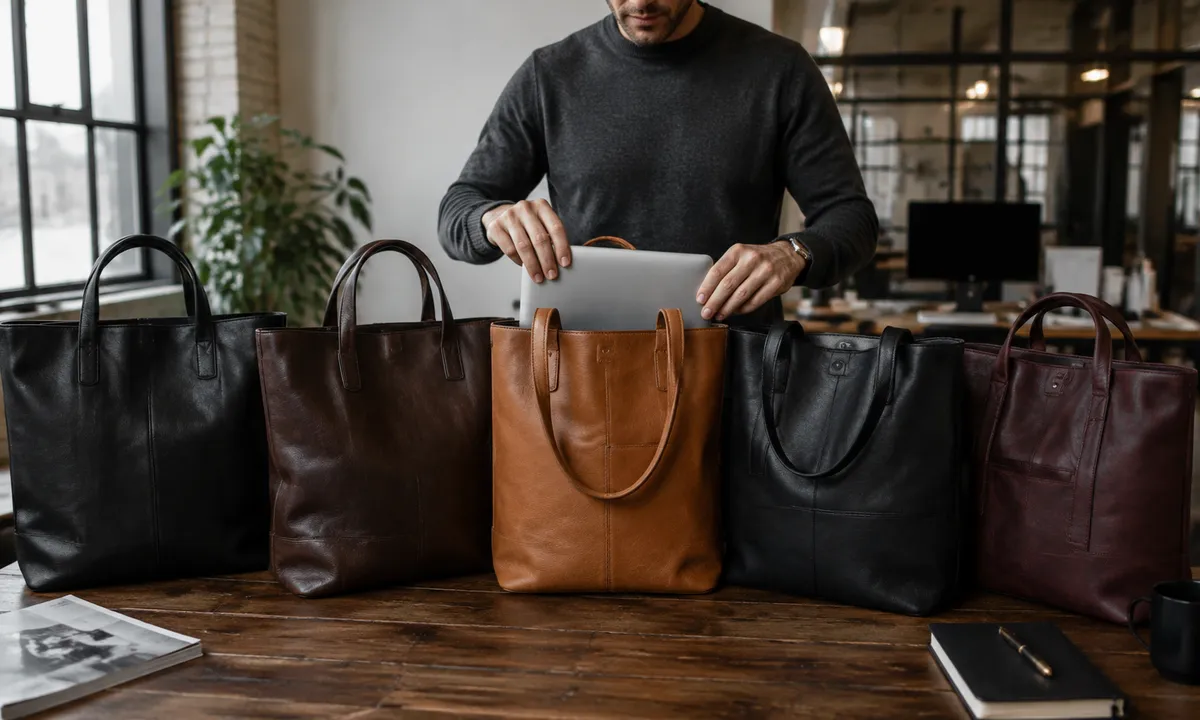
Sixteen inches is a real number. It is not the same as fifteen, and it is definitely not the same as the “fits most laptops” promisestitched into the lining of every optimistic tote that fails the moment a MacBook Pro M 3 Max slides in and the zipper stalls two inches from closed. Designers who build bags around a 15-inch chassis have been doing it for years, and the rest of us have been buying the wrong bags for just as long.
The five bags below were chosen for one non-negotiable: a 16-inch laptop fits fully inside, with the zipper or closure working as intended. Beyond that, the criteria are professional environments, daily carry weight, and the kind of durability that survives a commute five days a week for more than one season. Price ranges from accessible to investment, because not every reader is at the same point in her career.
Madewell The Essential Tote in Leather
Madewell’s Essential Tote has been around long enough to accumulate a genuine reputation, which is rare for an accessible-price leather bag. The interior dimensions sit at roughly 16.5 inches wide, and the structure is semi-rigid: it holds its shape when empty but collapses just enough to tuck under an airline seat without a fight. The leather is pebbled, which hides surface scuffs better than smooth leather would on a bag that gets set down on office floors and coffee shopcounters.
The interior is honest about what it is: one main compartment, a zipper pocket, two open slip pockets. No labyrinth of organization panels that sound useful in product descriptions and collect debris in real life. The laptop slides into the main compartment against a padded back panel, which keeps it from making direct contact with keys and charger cables. The handles are long enough to wear on a shoulder over a coat, which matters roughly eight months of the year in most American cities.
At roughly $200 to $250, this is the entry point of the group. It shows up looking polished and wears well with both a blazer and a sweater, which is the full range of most office dress codes in 2025.
Cuyana Classic Structured Leather Tote
Cuyana built its brand on the “fewer, better” idea, and the Classic Structured Tote is the piece that argument rests on. The silhouette is clean to the point of austerity: no hardware embellishment, no external logo, just smooth full-grain leather with clean seaming. It reads serious in a boardroom without reading stuffy in a creative office, which is a harder balance than it sounds.
The laptop compartment here is dedicated and zippered, separate from the main body of the bag. That matters more than most people think until the day they open the wrong pocket on a conference call and dump their wallet and a protein bar onto the table while hunting for the laptop. The interior structure also includes a magnetic closure on the top, which is faster than a zipper in the moment-to-moment of getting in and out of meetings.
Price lands around $495. The leather softens and develops character over time rather than cracking, and Cuyana’s repair program means this bag has a longer service life than the price alone suggests. For someone who carries the same bag every single day, the per-use math eventually makes sense.
Lo and Sons O.G. 2 Tote
Lo and Sons is a direct-to-consumer brand that sells almost exclusively on function, and the O.G. 2 is the plainest proof of that. The leather version accommodates a 17-inch laptop, which means a 16-inch machine fits with actual room. The bag’s most distinctive feature is a back trolley sleeve that slips over luggage handles, designed for travel, but the same feature turns the bag into an exceptionally stable carry when clipped to a rolling laptop bag during a long airport transit.
The interior organization is the most elaborate of the group: a dedicated padded laptop sleeve, a tablet sleeve, four card slots, a pen loop, and two open pockets. This is the bag for the person whose work requires multiple devices and whose commute is sometimes an airport. The external profile is clean and quiet despite all of that internal structure.
The leather here is not the softest, and the bag has a slightly more utilitarian aesthetic than the Cuyana. It does not age into the same softness, but it resists the kind of surface marking that comes with heavy daily use. Around $370 in leather, it sits in the middle of the price range and punches above it in raw carrying capacity.
Tumi Brive Leather Tote
Tumi occupies the upper end of the work bag market and earns its position through consistency. The Brive is not Tumi’s flashiest bag, and that is precisely the point. The leather is full-grain, the hardware is brushed metal rather than polished, and the proportions are designed around professional carry rather than lifestyle photography. It holds a 16-inch laptop in a padded, zippered sleeve that runs the full height of the back interior panel.
The weight is the honest drawback. Even before packing, the Brive is heavier than any other bag on this list, a consequence of the hardware and the thickness of the leather. For someone who commutes by car or train and sets the bag down rather than carrying it for long stretches, that weight is a fair trade for longevity. For someone covering a lot of ground on foot, it becomes a consideration by the second half of the day.
Tumi’s global repair network is real and functional. A bag like this can be resoled, restrapped, and relined, which matters when you are spending close to $800. The exterior handles and shoulderstrap are both reinforced at their attachment points, which is where cheaper bags start to fail after a year of full laptop weight.
Lotuff Zipper Tote
Lotuff is a small American leather goods company based in Providence, Rhode Island, and the Zipper Tote is the kind of bag that gets handed down rather than replaced. The leather is vegetable-tanned, which means it starts stiff and darkens and softens with use, developing a patina specific to how and where it is carried. After two years of daily use, a Lotuff looks entirely different than it did out of the box, and entirely better.
The interior is deliberately minimal: one main compartment with a zipper across the top, a single interior pocket, nothing else. The laptop sits unsleeved against the back panel. For people accustomed to padded laptop compartments, this will feel like a gap, and the honest answer is that it is one. Adding a standalone padded laptop sleeve, which costs another $30 to $40 from any number of brands, closes that gap entirely and does not compromise anything structurally.
The price is around $750. The Lotuff is not the most functional bag on this list by any measure of pockets and organization panels. What it is, plainly, is the best leather. The stitching, the brass hardware, the way the zipper runs smooth under tension, the thickness of the sides, all of it is a tier above what the other four bags offer. This is a bag for someone who cares about the object itself, not just what it carries.
The Dimension That Actually Matters
Interior width is the measurement that determines whether a 16-inch laptop fits. A bag needs to be at least 16.5 inches wide internally to accommodate the actual machine, not the 16-inch screen but the chassis, which adds roughly an inch and a half on each side of the display. When a product page lists only exterior dimensions, or lists only height and depth and omits width entirely, that is a signal worth paying attention to. Contact the brand directly, or look for a reviewer who has specifically tested with a 16-inch machine, because the standard product photography will not tell you.
Depth matters second. A bag that is wide enough for the laptop but only four inches deep will not accommodate the machine plus a charger brick plus a lunch container plus anything else, and most people working a full day carry more than a laptop. The bags above range from roughly five to seven inches in interior depth, which is the functional range for a bag that doubles as a daily carry without becoming a duffel.
Strap Configuration and the Shoulder-Carry Problem
A fully packed work tote with a 16-inch laptop, a charger, and a day’s worth of incidentals weighs somewhere between eight and twelve pounds. That is a meaningful load, and it changes the way astrap configuration feels over the course of a day. Short handles designed for hand carry become uncomfortable past about twenty minutes of walking. A bag that lacks a removable shoulder strap forces a choice between carrying by hand and not carrying the bag at all.
The Tumi Brive and the Lo and Sons O.G. 2 both include detachable, adjustable shoulder straps as standard. The Cuyana Classic comes with a longer handle drop that makes shoulder carry workable. The Lotuff and the Madewell Essential are primarily hand-carry bags, with shorter handles that sit in the crook of an elbow comfortably but do not work well across the body for a long walk. Knowing how a bag will actually travel during a typical day matters more than how it looks on a studio background, and this is the spec that product pages most reliably fail to address clearly.