


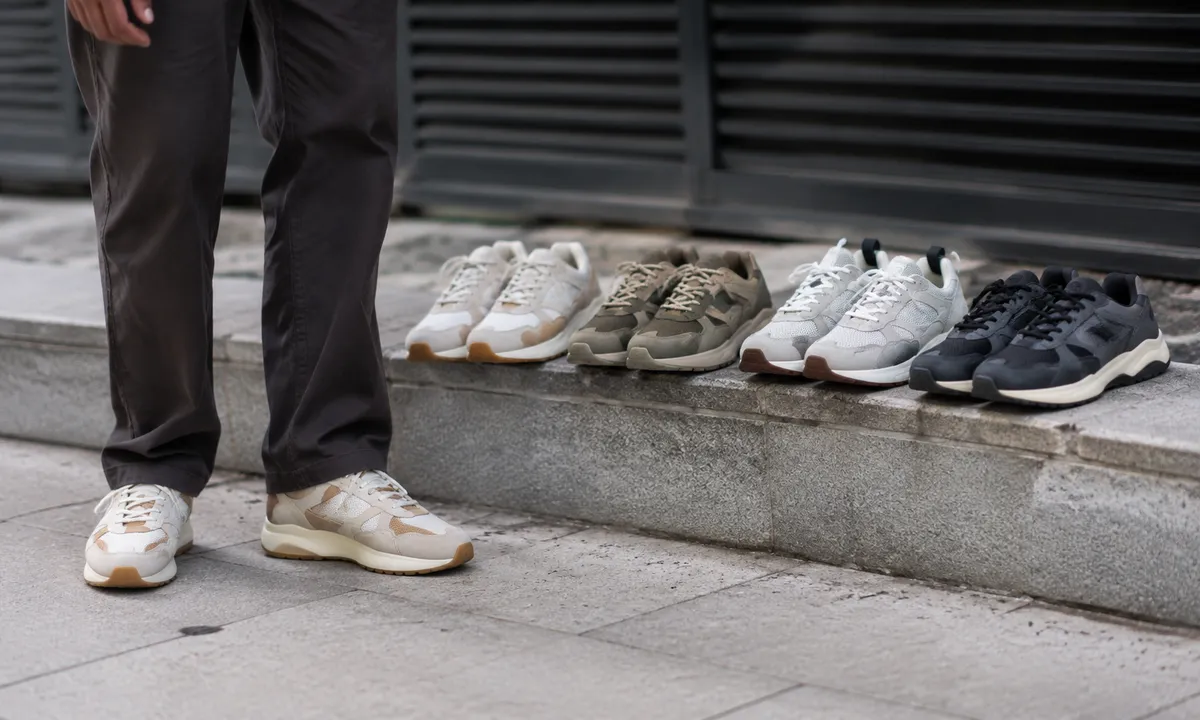
Five brands are worth knowing before spending another hundred dollars on a pair of Nikes that half the internet already owns.
The sneaker market has a noise problem. The loudest brands eat almost all the oxygen: the retro Jordans, the Yeezys, the New Balance 550 sitting on every influencer’s feet at the moment. Most sneaker coverage follows the hype rather than the product. The result is that genuinely good footwear from smaller or less-marketed labels stays invisible, or gets filed away as a “budget option” when the honest description is simply a better deal for someone who does not care about the logo.
These five brands are quieter, cheaper, and in most cases competitive with the big names on the things that actually matter: comfort, build quality, and staying wearable for more than a season.
Saucony Jazz and Shadow: Retro Shape Without the Markup
Saucony is not unknown, but it lives in an odd middle zone: runners know it, sneakerheads sort of know it, and most casual buyers walk right past it. The Jazz Original and Shadow 5000 are two of the best-looking low-profile sneakers available under $80, and they have been around long enough that the silhouette is genuinely vintage rather than artificially aged.
The Shadow 5000 in particular has a slightly chunkier sole and a panel construction in nylon and suede that holds up well over time. These are not shoes built around a single foam technology with a marketing name. They are just well-made, light, and comfortable for all-day wear. The color palette is usually restrained, which is half the point.
Saucony does collaborate and does release limited colorways that spike in price, so the play is to buy the core lineup at retail, which almost always sits between $65 and $90, rather than chasing the special editions where the brand’s otherwise reasonable pricing disappears.
Karhu: A Finnish Brand That Predates Nike
Karhu was founded in Finland in 1916 and is arguably one of the oldest running shoe brands in the world. It is also, in the United States, almost entirely off the radar. That obscurity is unearned.
The Fusion 2.0 and the Mestari are the two models most worth looking at. Both have a clean, low-top profile with just enough cushioning to wear comfortably through a full day. The color combinations tend toward muted earth tones and slate grays with one accent color, which is the kind of restraint that costs money from the hype brands and comes standard here. Prices land around $100 to $130 for most models, which puts them above bargain territory but well below what a comparable New Balance 574 or ASICS Gel-Lyte III would run on a good day.
The brand’s history is legitimately interesting: Karhu apparently sold the Olympic rings logo to the International Olympic Committee in the 1950s for a modest sum and two bottles of whiskey, according to a widely circulated account that the company itself has repeated in interviews. That story has followed them ever since, and it captures something true about the brand’s relationship to hype: indifferent to it, which is part of why the shoes cost what they do.
Diadora: Italian Heritage Sold at a Discount
Diadora was a serious player in European athletic footwear through the 1970s and 1980s, outfitting tennis and soccer players at the highest levels. In the American market today it occupies a strange position: the product is good, the archive is rich, the prices are low, and almost nobody is paying attention.
The N 9000 and the B. Elite are the two models that come up most often among people who have found the brand. The N 9000 has a multi-panel upper, a slightly elevated sole, and a distinctly Italian construction sensibility, meaning the proportions are more tapered and considered than the American tendency toward maximum cushioning and bulk. A pair runs $85 to $100 in most colorways.
The honest limitation is availability. Finding a specific colorway in a specific size requires patience, and Diadora’s US retail presence is thin. The brand’s own website and a handful of specialty sneaker retailers carry the most consistent inventory. For anyone willing to spend fifteen minutes looking, the reward is a shoe with real European archive credibility at a price that does not reflect that.
Walsh: British Workwear DNA in a Running Shoe
Walsh is a Manchester-based brand that has been making fell running shoes since the 1970s. Fell running, for the unfamiliar, is trail running on the steep, wet, rocky terrain of northern England, which means Walsh built its footwear for conditions that would destroy most casual sneakers in an afternoon.
The PB Elite and the Tornado have crossed over into streetwear circles in the UK, and they are starting to show up with more frequency in the US. The silhouette is narrow and flat by modern standards, closer to an old training flat than a contemporary cushioned runner. The uppers are typically canvas or a light nylon with suede overlays, and the construction feels genuinely sturdy in a way that is hard to fake.
Prices are around $80 to $110 depending on the model and where they are purchased. Walsh does not have a significant US retail presence, so most buyers order directly from the UK site or through a small number of independent importers. Shipping adds to the cost, but the final number still compares favorably to anything comparable from a brand with a larger marketing budget.
The appeal here is specific. These are not shoes for someone who wants maximalist cushioning or a thick streetwear sole. They are for someone who wants something that looks original because it is original, built for a real purpose that the shape still reflects.
Mizuno Sportstyle: Running Credibility That Never Became a Fashion Brand
Mizuno is well known to serious runners and entirely invisible to the casual sneaker buyer. The brand has made some of the most technically accomplished running shoes available for decades, and unlike ASICS or New Balance, it never really pivoted into lifestyle territory in a serious way. That lack of a fashion push is exactly what makes the sportstyle line worth looking at.
The Wave Rider and Sky Medal sit in the sportstyle category and carry the brand’s wave plate technology in the midsole, which provides a smooth, stable ride. They look like running shoes from the 1990s because they were engineered like running shoes from the 1990s, just with updated materials. The profile is low, the lines are clean, and there is no marketing story attached to inflate the price.
Most Mizuno sportstyle models retail between $70 and $100. The color options are occasionally loud in a way that reflects the brand’s Japanese design sensibility rather than Western streetwear trends, which will be the wrong call for some buyers and exactly right for others.
The deeper point about Mizuno is what its pricing reflects about the sneaker market generally. A brand with a serious engineering pedigree, real performance history, and durable construction retails at half the price of a retro Jordan simply because it never hired the right celebrities and never generated the right news cycle. For someone buying shoes to wear rather than to display, that gap represents the most straightforward arbitrage in the category.